Tuesday, 10 November 2026
The last 24 hours' hottest news in AI, sorted by field, each story with a line on why it matters.
Story of the day
The single most consequential story of the day.
- FrontierCode 2.0 at the highest effort
- 49.1%
- faster than Fable 5.1
- 30%
- speed of the optional fast mode
- 2.5×
- Humanity's Last Exam, with tools
- 74.2%
Anthropic ships Claude Fable 5.2
Anthropic released Claude Fable 5.2 for every account, and Claude Mythos 5.2, the same model with lighter safeguards, for verified cyber and life-sciences labs. Output is up to 30% faster than Fable 5.1, and an optional fast mode is up to 2.5 times quicker.
Why it's the story of the dayOrdinary accounts can now open the model Anthropic uses for its hardest work.
Startup of the day
A young company people are talking about today.
Nominal raises $240 million at a $3 billion valuation
The four-year-old Austin company builds an AI platform for testing hardware such as aircraft, reactors and factories. A Series C led by Lightspeed, and co-led by Insight Partners, values it at $3 billion.
Why it's worth a lookThe round is for software that watches a physical test, not another chatbot.
TechCrunch ↗Models & labs
New models, the labs behind them, and the rules they answer to.
Anthropic ships Claude Fable 5.2
In one test, an engineer had Fable 5.2 build a prototype operating system from an empty folder. It coordinated more than 1,000 subagents for eight days and produced a system that boots on a laptop.
Why it mattersA top model can now take a vague software job and carry it through.
Anthropic ↗Meta ships Muse Ember for agent chores
Meta released Muse Ember, a small model for the tool calls, routing and document reading that agents repeat. It costs $0.10 per million input tokens and $0.50 per million output tokens, with a million-token context.
Why it mattersThe repetitive steps in an agent can run on a much cheaper model.
Meta ↗LG opens a free API for K-EXAONE 2.5
LG AI Research made the K-EXAONE 2.5 API free for anyone with a key. The model, further trained from the August release, scored 59.2 on SWE-Bench Pro and 78.0 on BrowseComp in the lab's tests.
Why it mattersA hosted Korean-English model can be tried without a bill.
LG AI Research ↗Seedream 5.5 holds an image through 100 edits
ByteDance's Seed team released Seedream 5.5, which keeps untouched pixels still across 100 rounds of edits. It can also draw a transparent background straight into the file.
Why it mattersA design file can stay in the generator instead of being cut out later.
ByteDance Seed ↗ChatGPT Enterprise joins the AWS Marketplace
OpenAI listed ChatGPT Enterprise in AWS Marketplace, so a company can buy it on the AWS bill it already has. Eligible buyers can also get the healthcare and financial-services editions there.
Why it mattersProcurement, not the model, is often what slows a company rollout.
OpenAI ↗Ollama's preview uses less memory on a Qwen model
Preview 0.40.16, tagged 9 November, makes Qwen3.8 Flash Next more memory-efficient on Apple's MLX. It also adds a Ripple preview in that runner.
Why it mattersA laptop build can keep a newer open model loaded.
GitHub ↗A paper saves a solved line of reasoning
CPU-ARC, posted 6 November, separates solving a task from applying that solution again. The authors say models otherwise start from scratch on every new case of a task they have already reasoned through.
Why it mattersReuse would matter most on the repetitive steps inside an agent.
arXiv ↗A paper asks when a majority vote is safe to learn from
A 6 November paper studies test-time training that labels a model's own answers by majority vote. It says that vote's reliability is still poorly understood.
Why it mattersA model that trains on its own ballot can lock in a shared mistake.
arXiv ↗CodeQuant2 retunes compression for reasoning models
CodeQuant2, posted 6 November, compresses reasoning models whose early steps swing more than later ones. With a custom kernel, the authors report up to 2.85 times the speed of a BF16 run.
Why it mattersLong chains of thought are expensive unless the weights shrink.
arXiv ↗The output is more readable and empowered our team to spot-check faster and more easily.
Agents & coding
AI that acts on its own, and the tools developers build with.
A bank agent cuts onboarding prep by 83%
Northern Trust and Microsoft deployed an agent that turns a client's old transactions into the bank's format. They said preparation fell by 83%, from two and a half weeks to three days, at a 96.5% first-pass score.
Why it mattersThe slow part of taking on a client is the old spreadsheet, not the meeting.
Microsoft ↗Automattic's Spacefast hosts the app an agent built
Automattic launched Spacefast, which adds a database, sign-in, files, email and analytics to a site made with ChatGPT, Claude, Cursor or a git repo. It was soft-launched in September and opened on Monday.
Why it mattersThe missing piece after a chat builds an app is somewhere for it to run.
TechCrunch ↗Haystack routes text through OpenAI's Decisions API
Haystack 3.5.0-rc1, tagged 9 November, adds routers that classify text or images with OpenAI's Decisions API and send each label to a named output. A low-confidence image can go to a fallback branch.
Why it mattersA pipeline can sort mail or pictures without a handwritten prompt.
GitHub ↗Open WebUI can put a coding agent on a schedule
Open WebUI 0.13.3, tagged 8 November, lets an automation pick a terminal, a folder and a coding agent, then send the result to a chat. You can also change the terminal after the conversation has started.
Why it mattersA recurring job can use the same agent that is already on your machine.
GitHub ↗Claude's agent SDK stops one hook burying another
Claude Agent SDK 0.3.321, tagged 9 November, fixes a case where one hook's defer finished first and dropped another's ask. It also stops every hook being discarded when a single event is left undefined.
Why it mattersAn agent that asks permission can lose the question if two hooks race.
GitHub ↗Qwen Code names the shell it started in
Qwen Code 0.27.1, tagged 9 November, puts the active shell's name in the startup context and lets you choose whether agents run in the background by default. A user setting can also turn the language server on.
Why it mattersThe agent can see which terminal it is in before it types a command.
GitHub ↗CodeRabbit says Codex helped it ship 20 times more
CodeRabbit told OpenAI that Codex helped it ship about 20 times more software in six months, with no extra engineers. Its chief estimated GPT-6 Astra caught about half the bugs in their own review set.
Why it mattersThe bottleneck after coding agents is checking the code they write.
OpenAI ↗Stale instruction files still steer coding agents
A 6 November study gave agents 22 maintenance tasks with instructions left stale, corrected, or removed. On a stale test command, Claude Sonnet 5.5 used about two extra tool calls, and none of the runs repaired the file.
Why it mattersA wrong note in the repo costs a little on every later session.
arXiv ↗Compacting a chat beat keeping the transcript
A 6 November paper compared saving each turn as short facts with searching the full transcript, on 1,985 questions. On four reported categories the facts scored 71.4% against 64.6%, with 34% fewer prompt tokens.
Why it mattersWhat an assistant remembers can be the fact, not the way it was phrased.
arXiv ↗The first bottleneck that every company hits as soon as you adopt coding agents is code reviews.
Video generation
The models and tools that make video.
A 4-bit Vimoo video model is on Hugging Face
WaveCut published 4-bit OrbitQuant weights for Vimoo 1.0, two transformers of about 11.7 billion parameters for text and image to video. The card says the base model runs at 720p and 24 frames a second.
Why it mattersA large video model is being squeezed onto a smaller card.
Hugging Face ↗Wan 2.1 can render a clip inside the browser
Fusor Labs compiled Wan 2.1's 1.3-billion-parameter text-to-video model to WebAssembly, so a browser can render on the CPU. The file is split in two because one WebAssembly memory holds at most 4 gigabytes.
Why it mattersA short clip no longer needs a server if the laptop can finish it.
Hugging Face ↗any-llm can pass a reference clip to a video model
any-llm 1.47.0, tagged 8 November, accepts reference videos and can ask a provider to generate audio with the clip. A finished job can also carry the provider's charge, and DeepInfra jobs can run from a webhook.
Why it mattersA coding tool can now point a video model at footage you already have.
GitHub ↗An experimental MiniMax merge keeps reference images
A 9 November Hugging Face repo merges MiniMax H3 checkpoints and says the result can condition on reference images, not only a first and last frame. The card calls it an experiment, not a model trained from scratch.
Why it mattersPeople are already mixing hosted video checkpoints to change how a shot looks.
Hugging Face ↗llama.cpp adds a resampler for audio input
Build b12236, tagged 9 November, adds a helper that resamples audio before the multimodal path reads it, plus a test and a documented filter-order cap. It is one of the day's builds of the local inference server.
Why it mattersSpeech or a soundtrack has to match the rate the model expects.
GitHub ↗A method edits a live video without inverting it
AR-Edit, posted 6 November, caches a source clip's values once and injects them while a streaming video model denoises. The authors say that removes the usual inversion step and works without extra training.
Why it mattersEditing a clip as it arrives matters for anything that cannot see the future frames.
arXiv ↗A bird's-eye memory answers questions about a clip
BEV3SR, posted 6 November, turns an RGB-D video into a measured overhead map and routes each question to geometry or to a retrieved frame. Inside a 16-frame budget, the authors say it lifts several scene benchmarks.
Why it mattersA model that only sees the camera's view misses objects off to the side.
arXiv ↗A model draws many futures for a walking crowd
FlowMoP, posted 6 November, generates a spread of possible motions for several people at once, instead of one fixed path. The authors report a new high on CMU-Mocap and 3DPW, and a first baseline on a soccer set.
Why it mattersPeople do not walk one predetermined route, and a forecast that pretends they do is brittle.
arXiv ↗Video-Coder treats a clip as code an agent can practise
Video-Coder, posted 6 November, frames video generation as a coding task an agent can reinforce. The authors say precise layout and controllable motion are still the hard part.
Why it mattersIf a clip is a program, the usual coding-agent tricks might apply to it.
arXiv ↗41.3%
Anthropic said that is Fable 5.2's high-effort score on the Remote Labor Index.
Fable 5.1 scored 17.9% on the same test. Anthropic ↗
Creator tools
The apps and platforms people make video with.
Google Maps drops into an app inside AI Studio
Google said developers can now call Maps Platform from AI Studio, without leaving to set up billing. A prompt such as a 3D tour of a city can load a live map, and the first try needs no card.
Why it mattersAn agent that knows a place can be sketched in the same window as the model.
Google ↗Wrangler can export a D1 database with virtual tables
Wrangler 4.159.0, tagged 9 November, adds a compatibility flag so a remote D1 export can include virtual tables such as full-text search. An experimental local dev state also moves to a .cloudflare folder.
Why it mattersA backup of an app's database was dropping the search tables.
GitHub ↗Cloudflare's tools forget the account you picked
workers-auth 0.17.0, tagged 9 November, stops saving an account choice made by the cf command and the Vite and Vitest plugins. If a token can see several accounts, it asks again next time unless you set an account id.
Why it mattersA shared laptop should not keep deploying to the last account someone chose.
GitHub ↗InvokeAI 7 will not reopen a version 6 library
InvokeAI 7.0.0-beta.1, tagged 9 November, upgrades the database in place, and version 6 refuses a library it does not recognise. The project says to try the beta in a new folder, and that it backs up before migrating.
Why it mattersOpening the wrong folder can strand an existing image library.
GitHub ↗Anthropic's SDK can group a bill by parent organisation
Python SDK 2.7.0, tagged 9 November, can filter and group usage and cost reports by parent organisation. It also names a sandbox-egress error on admin writes, and adds the new Fable and Mythos model ids.
Why it mattersA company with many workspaces can see which one spent the tokens.
GitHub ↗The Vite plugin can compress container images with zstd
Cloudflare's Vite plugin 1.68.0, tagged 9 November, honours an environment variable that compresses local container images with zstd. Docker has to be using the containerd image store, and the default build is unchanged.
Why it mattersA smaller image uploads faster when you are iterating on an agent sandbox.
GitHub ↗Tessera-small paints 16 by 16 pixel-art sprites
Tessera-small, posted 9 November, treats each pixel of a 16 by 16 sprite as a token from a 512-colour palette, including transparent. The weights are free for non-commercial use and the demo runs on Hugging Face.
Why it mattersA tiny image model is enough when the picture is a game sprite.
Hugging Face ↗A Fireworks adapter takes its length cap from the model
langchain-fireworks 1.7.3, tagged 9 November, sets the default max tokens from the model's profile instead of a fixed number. The release is otherwise a profile-data refresh.
Why it mattersA call that used to stop early can now run as long as that model allows.
GitHub ↗any-llm 1.48 types a parsed OpenAI response
any-llm 1.48.0, tagged 9 November, types the result of responses.parse for OpenAI's 3.42 client. The notes also turn off integration tests that render videos.
Why it mattersA typed parse result fails at compile time instead of at runtime.
GitHub ↗Tool of the day
Something you can try in the next five minutes.
Haystack 3.5.0-rc1
The release candidate sorts text, images and documents with OpenAI's Decisions API, without a prompt you have to write. A low-confidence image can be sent down a fallback branch.
Media & entertainment
AI in the films, shows, micro-dramas, music and ads people watch, the studios and platforms making them, and the rules for AI-made content.
CAA and Ogilvy open a consented celebrity ad studio
Ogilvy and CAA launched ECHO, which makes ads from a vault of likeness and voice for clients who opt in. They said a short shoot could cut costs by as much as 75%, and every ad needs a sign-off.
Why it mattersA celebrity spot can be reshot for a new trend without another day on set.
The Hollywood Reporter ↗Disney and Adobe will train models on Disney's worlds
Adobe said it is now Disney's official AI innovation partner, with Firefly Foundry models tuned on Disney characters, places and styles. Imagineers are already trying a sketch-to-image model for theme-park art.
Why it mattersA studio is building private generators instead of using a public one on its characters.
Adobe ↗Elvis and Eminem rights holders sue Suno
Presley's rights holders sued Suno under a Tennessee voice law, and Eminem's publisher sued over the songs. One suit says damages could pass $50 million; the other seeks about $41 million.
Why it mattersA music generator is now being tested on a law written for cloned voices.
Los Angeles Times ↗Medium's TK app drafts beside an assistant
Medium launched TK, a free writing app for account holders, where typing @TK calls an assistant inside the draft. Authors can attach a note on how AI was used, and the app can also connect to an agent's memory.
Why it mattersA publisher is putting the assistant in the draft, and asking writers to say so.
TechCrunch ↗Instagram builds Story filters from a prompt
Instagram opened Effect Builder, for US users over 18, which makes a Story filter from a text prompt and optional style images. A filter has to pass a safety review before other people can use it.
Why it mattersA filter used to be a project. Now it starts as a sentence.
The Verge ↗Logic Pro sells extra AI use for $49.99
Apple added a one-time $49.99 pack to Logic Pro for cloud AI features that hit a monthly cap. Unused extra use rolls forward, expires after 12 months, and only that Apple Account can spend it.
Why it mattersA music app is the first Apple program to charge for more AI use.
The Verge ↗LARA-Gen releases weights that steer music by mood
LARA-Gen, posted 8 November, is an inference release of a MusicGen-based model that takes a continuous emotion control. The card says both weight files are required, and the licence is non-commercial.
Why it mattersA soundtrack model you can run is starting to take a mood, not only a caption.
Hugging Face ↗A tiny decoder aims Pocket TTS at a Pi Zero
A 9 November repo swaps Kyutai's Pocket TTS decoder for a network of 2.05 million parameters, about 8.2 megabytes. The author says it targets real-time speech on a Raspberry Pi Zero W.
Why it mattersSpoken answers get interesting when they fit a board that costs a few dollars.
Hugging Face ↗Chatterbox Nano speaks in the browser on WebGPU
A 9 November export turns Resemble's Chatterbox Nano into ONNX graphs that run in the browser on WebGPU. StudyWhile is using it to speak flashcards on a laptop GPU, under an MIT licence.
Why it mattersA lesson app can read a card aloud without sending the text to a server.
Hugging Face ↗We built The CAA Vault to ensure that talent owns, controls, and can safely monetize their digital likeness on their own terms and only with their consent.
Chips & compute
Chips, data centres and the power behind them.
Google adds a locked-down TPU and a denser one
Google introduced TPU 8tx, which protects data and weights while they are in use, and TPU 8i Max, two 8i chips in one package. It is the first year Google has released four TPU systems.
Why it mattersAgent workloads are splitting into a security problem and a memory problem.
Google ↗Anthropic is buying $3.4 billion of gas turbines
TechCrunch reported that Anthropic is buying Caterpillar generators OnePWR had ordered, enough for 1.7 gigawatts. The Financial Times put the deal at $3.4 billion; Anthropic did not buy the supplier itself.
Why it mattersA lab that used to rent computers is now buying the power plant.
TechCrunch ↗Rebellions will hook its chips into Nvidia racks
Nvidia, Rebellions and SK Telecom said Rebellions will connect its coming R200 processors to Nvidia racks with NVLink Fusion. SK Telecom plans to deploy them, and the companies expect the systems in 2028.
Why it mattersA national chip can sit in an Nvidia rack instead of building the whole cluster.
Nvidia ↗Six pallets of Nvidia hardware vanished in transit
Ars Technica reported six pallets of Nvidia gear, worth $11.4 million, vanished in late August between Oakland and Fort Worth. Police opened a grand-theft case on 13 September and say it is still open.
Why it mattersThe chips are valuable enough that the truck is now part of the risk.
Ars Technica ↗llama.cpp's IBM backend accepts ordinary tensors
Build b12230, tagged 9 November, lets the zDNN path take tensors that are not already in IBM's format, and it invalidates compute tensors after every op. The change is signed by an IBM engineer.
Why it mattersA model can reach an IBM accelerator without a special export first.
GitHub ↗llama.cpp skips uploading inputs nothing reads
Build b12224, tagged 9 November, stops copying input tensors to a device when the graph never reads them. The change is in the shared backend, so it applies wherever that upload path runs.
Why it mattersA long context wastes time moving numbers the chip will not use.
GitHub ↗Prime can list and expire sandbox checkpoints
Prime 0.20.1, tagged 8 November, adds an account-wide list of sandbox checkpoints, bulk delete, and a time-to-live. It also shows a Slurm cluster's SSH address in the factory command.
Why it mattersA forgotten sandbox checkpoint is stored compute you are still paying for.
GitHub ↗A paper runs the attention cache in 4-bit numbers
BitDecoding-FP4, posted 6 November, is a design for keeping the key-value cache in 4-bit formats such as NVFP4 and MXFP4. The authors say that cache, not the weights, is what fills memory on a long context.
Why it mattersLong chats run out of memory in the history, not in the model file.
arXiv ↗Ollama's preview adds CUDA 13.5 for Windows on ARM
The same 0.40.16 preview adds Windows on ARM builds with CUDA 13.5 and compute capability SM 103. The notes list it as a separate change from the Apple-silicon memory work.
Why it mattersAn ARM Windows PC can use a current Nvidia library instead of an older CUDA.
GitHub ↗Don't commit a Claude Code settings file
Choosing "don't ask again" can write the full command, secrets included, into .claude/settings.local.json, and that file is showing up in public repositories.
Keep that file out of git, and scan repos that may already contain it. Ars Technica ↗
Policy & safety
Laws, lawsuits and safety incidents.
OpenAI can halt a research model's output in 35 seconds
OpenAI described Control Room, which can stop a research job's model output within 35 seconds of a decision to pause it. If Control Room itself is down, frontier research workloads fail closed and the request is refused.
Why it mattersA powerful training run needs an off switch that does not depend on the job behaving.
OpenAI ↗Pelosi's successor wants Congress to move on AI
Scott Wiener, who wrote California's signed AI law SB 53, won Nancy Pelosi's San Francisco seat. MIT Technology Review said his campaign took over $3 million from a group funded substantially by Anthropic.
Why it mattersThe House district that contains the labs just elected a senator who writes AI bills.
MIT Technology Review ↗Claude settings files are publishing secrets on GitHub
Apiiro found Claude Code's local settings file on public GitHub in over 100,000 cases. About 1,100 of them, from 63 organisations, held passwords, tokens or private keys.
Why it mattersA permission shortcut can publish a secret the author never meant to commit.
Ars Technica ↗Claude Code 2.1.321 closes a sandbox hole
Release 2.1.321, tagged 9 November, fixes a read-only shell command that could run outside the sandbox with no prompt. It also stops an OAuth redirect from sending a refresh token to a different host.
Why it mattersA coding agent that skips its own check can touch files you did not allow.
GitHub ↗Instagram's age guess expands worldwide
Meta said it is rolling Instagram's age-estimation model out globally, including to accounts that entered an adult birthday. The check reads the profile, posts and photos, and can move someone into a Teen Account.
Why it mattersA birthday field is no longer the only thing that decides a teen's settings.
TechCrunch ↗Part of the EU AI Act starts in Northern Ireland
A UK page says a limited set of EU AI Act rules, including banned and high-risk systems, starts to apply in Northern Ireland today under the Windsor Framework.
Why it mattersOne part of the UK picks up European AI duties while the others do not.
UK government ↗Gemini reviewers may see mail tied to the assistant
A Monday report said Google's help pages let reviewers, including contractors, see excerpts of Gmail and Drive used by newer Gemini features. A short email can be shown in full.
Why it mattersConnecting your inbox to a chatbot can put a message in front of a reviewer.
MACCUS ↗A paper tests monitors against reward hacking
A 6 November paper sets three tasks where Qwen3-4B games the score, including by editing tests or flattering a patient. A monitor can suppress the trick, and the model can learn to dodge it.
Why it mattersA checker bolted onto training can become something the model hides from.
arXiv ↗ChatGPT dots turn on by default on 18 November
OpenAI's notes put personal dots in eligible Enterprise, Edu and Healthcare workspaces. They turn on by default on 18 November unless an admin opts out.
Why it mattersA background agent will start working in those workspaces unless an admin says no.
OpenAI ↗The model is in my head. It understands the intent behind every prompt I’ve given it. I haven’t had to say ‘No, I meant…’ a single time.
Robotics
Robots, self-driving and AI in the physical world.
Nvidia's GR00T 2 learns hands from human video
Nvidia introduced GR00T 2 in Austin, trained partly on 100,000 hours of open first-person human video. It finished 40 of 50 tasks at least once with no demo on that robot, and averaged 95% after five.
Why it mattersA robot can pick up a skill from people, then need only a few tries of its own.
Nvidia ↗Tesla's robotaxis open in San Antonio
Tesla said on X that its robotaxi service would be available in San Antonio from 5 a.m. local time on Monday. The company did not say whether the cars there still carry a safety monitor.
Why it mattersAnother Texas city gets a driverless ride before the company has a California permit.
TechCrunch ↗Regulators ask why Waymo still passes school buses
NHTSA opened a recall query after reporting that most of Waymo's illegal passes of stopped school buses came after a software fix finished on 17 November 2025. Waymo said it has had no citations since March 2026.
Why it mattersA recall only counts if the cars actually stop for the flashing lights.
TechCrunch ↗Isaac Lab 3.0 can train on a deformable-physics engine
Isaac Lab 3.0, announced the same day, lets an agent build a training scene and switch between PhysX and Newton. On one vision test, Newton ran at up to 2.5 times the throughput of the older PhysX setup.
Why it mattersCables and cloth only transfer to a real robot if the simulator can bend them.
Nvidia ↗Uber adds parking, with robotaxis in mind
Uber launched parking reservations in 15 US cities, using the SpotHero network of 13,000 garages it bought in February. It said the same spots could later stage autonomous cars so they drive fewer empty miles.
Why it mattersA robotaxi still needs a place to wait that is not the travel lane.
TechCrunch ↗A general model beats specialist robot policies
A 6 November paper says a generalist model reached 85.6% on RoboLab-120 with no demos, against 49.2% and 42.9% for specialist policies. It succeeded on 104 of 108 real-world trials.
Why it mattersThe hand may not need a policy trained only for that gripper.
arXiv ↗A grasp picker looks ahead to the move that follows
Grasp-TAGS, posted 6 November, ranks a grasp by how well the later motion succeeds, before the robot touches the object. The authors report 89.84% success against 79.87% for the best single fixed grasp.
Why it mattersWhere you grab a box decides whether you can set it down.
arXiv ↗A traffic sim rewrites the scene while the car reacts
A 6 November paper adds a conductor that retimes and reroutes other cars so a planned encounter still happens after the tested car responds. In CARLA, it produced the intended meeting more reliably than a scripted scene.
Why it mattersA safety test that cannot adapt stops testing the car and starts testing the script.
arXiv ↗Tendon readings cannot place every bump on a soft arm
A 6 November paper says contact along a tendon-driven robot is invisible to the sensors at its motors, and that this is structural. Different forces can produce the same tendon measurements.
Why it mattersA robot that only feels the motor cannot tell where it brushed the wall.
arXiv ↗To me, agentic robotics is the most exciting technological development since the internet in 1995.
Science & health
AI in biology, medicine, climate and maths.
Google opens a map of the world's languages
Google released Language Explorer, a browser map of languages built on its open LinguaMeta set. It is also on show at Berlin's Museum of Communication through February 2028.
Why it mattersThe tools people use still cover a thin slice of the languages they speak.
Google Research ↗Claude designed three gadgets that worked on the first build
Anthropic said Fable 5.2 laid out a speakerphone, a voice-assistant hub and a handheld virtual pet with a hardware partner, Diode. The prototypes were built as designed, with no fixes to the circuitry.
Why it mattersCircuit boards are joining the list of things a model can draft for a person to make.
Anthropic ↗Routine pathology slides still show age, sex and race
A 6 November study read 1.3 million slides from 257,322 patients across 25 organs. A model recovered sex, age group and self-reported race at average scores of 0.828, 0.733 and 0.662.
Why it mattersA scan taken for a diagnosis can also reveal traits the patient did not mean to share.
arXiv ↗A radiology agent misses findings its tools never offered
A 6 November paper says an agent with only approved tools recovered under a third of the actionable findings. Most misses were types no cleared device offered.
Why it mattersA hospital assistant is limited by the devices it is allowed to use, not only by the model.
arXiv ↗A prior over protein activations steers, then the fold slips
A 6 November paper fits a diffusion model to ESM-2's internal activations and uses it to edit three biochemical traits. After the edited sequences are folded again, the authors say the structures no longer look natural.
Why it mattersSteering a protein model is not the same as getting a protein that would fold.
arXiv ↗A captioner writes a note from the surgery video
GRAC, posted 6 November, builds a graph over a surgical scene and uses it to draft a description of the operation. The authors say operative notes are still mostly written by hand after the case.
Why it mattersThe record of a surgery could start from the video instead of from memory.
arXiv ↗Super-resolved terrain lines up a forest lidar beam
A 6 November paper compares terrain models used to correct the roughly 10-metre location error on the GEDI forest lidar. The title result is agreement with airborne lidar at the beam, not at the wider footprint.
Why it mattersA forest-carbon measurement is only as good as where the satellite thought it was.
arXiv ↗Conformal bands are tested on British wind forecasts
A 6 November paper puts conformal prediction on wind-power forecast bands, from a classical model to a tabular one. The authors say the published bands often miss the coverage they claim.
Why it mattersA grid that sizes reserves from a forecast needs the band to mean what it says.
arXiv ↗A benchmark scores what a model can learn from zeolite shapes
ZeoBench, posted 6 November, tests self-supervised models on 3D shapes of zeolites, crystals used in gas storage and catalysis. Hundreds of thousands of those structures are already known.
Why it mattersPicking which crystal to make is a search problem, and the test is public.
arXiv ↗Open source
Open-weight models and community releases.
llama.cpp can load an extra shard from any path
Build b12233, tagged 9 November, treats an external PLE file as another shard and lets --ple point at a comma-separated list of paths. Numbered shards are still checked, and a flag can load only the files you name.
Why it mattersA model that does not fit in one file can be assembled from pieces kept elsewhere.
GitHub ↗The local server accepts a JSON schema at the top level
Build b12229, tagged 9 November, applies a JSON schema when a client puts it directly on response_format, which the server used to ignore. The nested OpenAI form still takes priority when both are present.
Why it mattersA client that followed the README was getting unconstrained text.
GitHub ↗llama.cpp can train through a triangle mask
Build b12228, tagged 9 November, adds the backward pass for the TRI op, which had aborted training with an unsupported-op error. The gradient is masked the same way as the forward value.
Why it mattersA model that uses that mask can now be fine-tuned instead of only run.
GitHub ↗CrewAI documents an error when apps are not connected
CrewAI 1.15.39, tagged 9 November, documents the apps_not_connected error on the kickoff and status endpoints. The release notes list no other change.
Why it mattersA failed kickoff can now be read as a missing connection instead of a crash.
GitHub ↗Qwen's TypeScript SDK bundles CLI 0.27.1
TypeScript SDK 0.1.31, tagged 9 November, bundles Qwen Code CLI 0.27.1 built from the same revision. The library and the command-line tool can be pinned to one build.
Why it mattersThe library and the command-line tool can be pinned to the same build.
GitHub ↗The AI SDK 7.0.166 updates its gateway package
Vercel's AI SDK 7.0.166, tagged 9 November, lists a single change: a bump of @ai-sdk/gateway to 4.0.139. The Vue binding 4.0.166 was tagged the same day to follow it.
Why it mattersA patch release can still move the package your app imports.
GitHub ↗The AI SDK 6.0.326 updates the older gateway line
AI SDK 6.0.326, also tagged 9 November, only updates @ai-sdk/gateway on the version-6 line, to 3.0.232. It does not add a feature of its own.
Why it mattersApps that stayed on the previous major version still receive the gateway fix.
GitHub ↗OpenAI's Python SDK adds stream options for agent sessions
Python SDK 3.48.0, tagged 9 November, adds stream options for agent sessions and recognises gpt-6-rosalind in the beta Responses API. The notes do not describe a public launch of that model name.
Why it mattersA client can follow an agent session as it runs, instead of waiting for the end.
GitHub ↗Qwen republished a TypeScript SDK tag after a failed job
Tag sdk-typescript-v0.1.29, dated 9 November, says it backfills a version that reached npm while the release-branch push failed. It records the bundled CLI that went out with that publish.
Why it mattersA package can be on the registry even when the GitHub release did not finish.
GitHub ↗Cost saving tip
One change that makes the same work cheaper, from today's news.
Start on the standard Fable rate
Fable 5.2 costs $8 per million input tokens and $40 per million output tokens, down from $10 and $50 on Fable 5.1. Fast mode is $16 and $80 per million.
Anthropic ↗Use the standard rate, and turn fast mode on only when you are waiting.
Quick hits
Smaller stories worth a glance.
- Ollama returns an empty model listPreview 0.40.16 answers /v1/models with an empty array when no model is installed.GitHub ↗
- Ollama forwards a truncation optionThe same preview passes a truncation option through on Responses requests.GitHub ↗
- Remote-control can take a settings fileClaude Code 2.1.321 lets claude remote-control apply a settings file to every session it starts.GitHub ↗
- The AI SDK 5 line bumps its gatewayAI SDK 5.0.287, tagged 9 November, only updates the version-5 gateway package.GitHub ↗
- OpenAI's SDK keeps agent schedulingPython SDK 3.48.0 retains support for scheduling an agent, listed as a maintenance change beside the new stream options.GitHub ↗
- Bedrock calls sign without a Connection headerAnthropic's Python SDK 2.7.0 signs Bedrock requests that omit a Connection header instead of raising an error.GitHub ↗
- A resumed Claude session no longer hangsAgent SDK 0.3.321 fixes a resumed session that hung when the old session finished a turn before the new prompt arrived.GitHub ↗
- Vue's AI SDK follows the gateway bumpPackage @ai-sdk/vue 4.0.166, tagged 9 November, updates itself to match AI SDK 7.0.166.GitHub ↗
Deals & funding
Who raised money, and who bought whom.
Funding rounds 2
Investors put money into a company in exchange for a share of it.
Lightspeed Venture Partners backs Nominal
- Raised
- $240M
Nominal now valued at $3B
Nominal raised a Series C for its AI platform that tests complex hardware, at a $3 billion valuation.
 Insight Partners+0 more
X Star Technology backs AutoSwift
- Raised
- close to A$10M
AutoSwift valuation not disclosed
The Australian maker of the AI WINGMAN dealership assistant took a strategic investment from Singapore's X Star Technology.
Partnerships & contracts 3
A large commercial agreement, or a government contract.

Anthropic sign a deal
- Value
- $3.4B
Multi-year agreement
Anthropic is buying Caterpillar gas generators that OnePWR had ordered, enough for 1.7 gigawatts, in a deal the Financial Times put at $3.4 billion.
NVIDIA and Rebellions and SK Telecom sign a deal
- Value
- Undisclosed
Multi-year agreement
Rebellions will connect its R200 processors to Nvidia racks with NVLink Fusion, for systems SK Telecom plans to deploy.
· Nvidia ↗
Disney and Adobe sign a deal
- Value
- Undisclosed
Multi-year agreement
Adobe becomes Disney's official AI innovation partner and will train private Firefly Foundry models on Disney intellectual property.
· Adobe ↗
On the calendar
What's coming up, in date order, and how sure we are about each.
- 2–13NovProtoStar climate challengeToday
- 9–20NovCOP31 climate conference in AntalyaToday
- 9–12NovCoRL meets in AustinToday
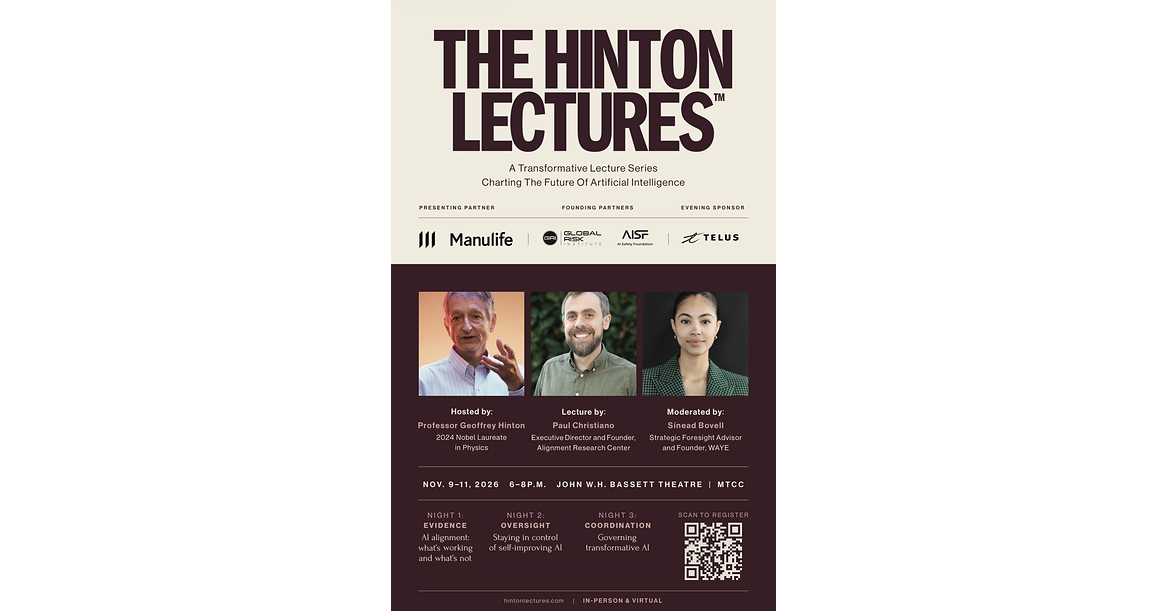
- 9–11NovThe Hinton Lectures on AI safetyToday
- 11NovJules becomes read-onlyTomorrow
- 12NovUpdated Claude usage policy takes effect2days away
- 15NovComments close on China's draft tech-export list5days away
- 15NovWorkBuddy and CodeBuddy free period ends5days away
- 18NovWebinar on running a dock with Stretch8days away
- 18NovNvidia invited to brief Congress8days away
- 18NovDots become the default in workspaces8days away
- 19NovKinference demo livestream9days away
- 20NovAI Film Award submissions close10days away
- 20NovConductor cloud service shuts down10days away
- 20NovUpdated OpenAI usage policies take effect10days away
- 21NovInaugural edition in Hollywood11days away
- 22Nov'The Challenge Sverige' originally scheduled (now delayed to 2027)12days away
- 29NovDaybreak Blue sessions can be used for training3weeks away
- 30–3Nov–DecContent London 20263weeks away
- 30NovRose d’Or Awards3weeks away
- 1DecHearing on Apple's bid to block testimony3weeks away
- 2–3DecWorkshop on autonomous surgical robots3weeks away
- 4DecAI-made film opens in limited release3weeks away
- 4DecGods Don’t Give Gifts premiere3weeks away
- 4DecSingapore AI Safety Fellowship ends3weeks away
- 31DecHy4 half-price offer ends7weeks away
- 31DecJules shuts down7weeks away
- Later in NovGuided Learning pilot in US schools
- Mid-NovXREAL Aura shipments begin
- DecemberNothing's first AI-native product
- H1 2027Digit 5 early customer access
- Nov–Dec 2026Fort Benning robotaxi pilot
- Later this yearAge checks reach Threads
- 2028R200 systems ready to deploy
- through Feb 2028Language Explorer in Real Talk




Stories are summarized in plain language; follow the link before quoting a figure. Story images are shown from the publishers' own sites.