Monday, 9 November 2026
The last 24 hours' hottest news in AI, sorted by field, each story with a line on why it matters.
Story of the day
The single most consequential story of the day.
- when the board announced it
- Sunday
- directors will run the review
- Independent
- reason yet to think secrets leaked
- No
Nvidia's board opens a review of Huang
TechCrunch said Nvidia's board is starting an independent review after reports that Jensen Huang was targeted by a Chinese spy operation. The board said it has no reason to believe company secrets were compromised.
Why it's the story of the dayThe chief executive of the main AI chip supplier is under a formal board review.
Startup of the day
A young company people are talking about today.
Brava raises $15 million to test what a defence would miss
Brava came out of stealth on 4 November with a $15 million seed led by F2 and Pitango. Its agents invent the logs an attack would leave, then check whether today's detections would catch them.
Why it's worth a lookA security agent can only investigate an attack the logs actually recorded.
Brava ↗Models & labs
New models, the labs behind them, and the rules they answer to.
Deep Principle releases Hydrogen-1.0
A 6 November release says Deep Principle introduced Hydrogen-1.0 on 4 November, an open-weight model post-trained from GLM-5.3 for chemistry and materials. Weights, an API and the Mira scientist app are the ways in.
Why it mattersA lab model for planning experiments is something you can download.
PR Newswire ↗Google's Gen AI SDK now calls v1 by default
Python Gen AI SDK 3.0.0, tagged 6 November, switches the default Gemini Developer API from v1beta to v1. The notes mark that change as breaking.
Why it mattersA script that assumed the beta endpoint can start failing after the upgrade.
GitHub ↗A paper resamples the step that went wrong
StepBack, posted 5 November, resamples only the reasoning step that looks wrong, instead of drawing many full chains. The authors say usual shortcuts mostly stop early or spread a fixed budget.
Why it mattersYou can spend the extra samples on the broken step, not the whole answer.
arXiv ↗LiteLLM's dev tag 1.110 is signed
LiteLLM published 1.110.0-dev.2 on 8 November. The notes say every Docker image is signed and can be checked with cosign against the project's public key.
Why it mattersA pre-release image can be verified before it is pulled into a cluster.
GitHub ↗OpenCL checks a compact matrix multiply
llama.cpp b12200, tagged 8 November, improves OpenCL checks for q8_0 and for small mixture-of-experts multiplies. The notes add a kernel for that q8_0 path.
Why it mattersA compact format can be tested on OpenCL before you trust the numbers.
GitHub ↗SYCL refuses a buffer that would overflow video memory
Build b12195, tagged 8 November, makes the SYCL backend refuse a device buffer that would exceed the GPU's memory. The check happens before the allocation.
Why it mattersA model that does not fit fails immediately, instead of dying mid-load.
GitHub ↗SYCL rounding matches on three compact formats
Build b12196, tagged 8 November, uses exact rounding when copying into Q4_1, Q5_1 and Q8_0 on SYCL. It is a numerical match, not a new model.
Why it mattersThose formats should land on the same values the reference path produces.
GitHub ↗Metal group-norm handles a larger batch
Build b12189, tagged 7 November, fixes group norm on Metal when the batch dimension is greater than one or the input is not contiguous. The old kernel ignored that dimension.
Why it mattersA vision batch on a Mac no longer has to be one image at a time for that op.
GitHub ↗66.7%
OpenAI said that is GPT-6 Astra's average score on 100 routine wet-lab tasks.
GPT-5.6 Sol scored 43.8 percent on the same benchmark. OpenAI ↗
Agents & coding
AI that acts on its own, and the tools developers build with.
A real-task test leaves coding agents unfinished
The Decoder said Alibaba's Co-Design Bench uses change requests that already tripped agents. GPT-6 Astra, the best of ten models, fully finishes 26.4 percent of tasks.
Why it mattersA high score on an old coding test can hide the cleanup a person still does.
The Decoder ↗Claude Code sends long MCP tasks to the background
Claude Code 2.1.319, tagged 6 November, moves an MCP tool that runs as a task into the background and reports the result when it finishes. Auto mode asks or refuses when a server-side check cannot run.
Why it mattersA slow tool no longer has to freeze the turn, and an unchecked action does not slip through.
GitHub ↗Open WebUI puts coding agents in the picker
Version 0.13.1, tagged 8 November, lists agents such as Claude Code, Codex and Pi as models you can chat with or call by voice. A desktop app, Tether, lets them work in files on your own computer.
Why it mattersThe coding agent shows up where the chat model used to be, including on a machine you already have.
GitHub ↗OpenHands draws each automation as a diagram
OpenHands 1.37.0, tagged 6 November, explains an automation with a Mermaid diagram. The same release keeps a generated title visible while a session is starting up.
Why it mattersYou can see the shape of a saved workflow without reading the whole definition.
GitHub ↗CrewAI's default model is now GPT-6 Luna
CrewAI 1.15.38, tagged 8 November, makes GPT-6 Luna the default model. An agent can also read a spreadsheet URL and walk the rows with tools.
Why it mattersA new crew starts on a named model, and it can open the sheet instead of a paste.
GitHub ↗OpenAI's agents SDK keeps the older runtime
Agents SDK 0.24.0-alpha.7, tagged 8 November, lets you import the retained v0 runtime as agents.classic and run those workflows next to the native executor. The notes say write defaults also change.
Why it mattersA workflow built for the previous runtime does not have to be rewritten on day one.
GitHub ↗OpenCode can share one MCP connection
OpenCode 2.2.6, tagged 6 November, can pool an MCP server so projects with the same setup share one connection. The notes say that means fewer processes and a faster start.
Why it mattersTen projects no longer have to open ten copies of the same tool server.
GitHub ↗The Claude agent SDK can background an MCP task
SDK 0.3.319, tagged 6 November, runs an MCP task in the background when streaming input and an env flag are set. The notes say this path is not on Bedrock, Vertex or Foundry.
Why it mattersA long tool call can finish later, except on those three hosted Claude setups.
GitHub ↗Tool-call arguments lose illegal UTF-8
llama.cpp b12199, tagged 8 November, sanitises invalid UTF-8 inside tool-call arguments before they are parsed. A bad byte no longer has to break the call.
Why it mattersAn agent tool receives text the parser can actually read.
GitHub ↗Tool of the day
Something you can try in the next five minutes.
Open WebUI 0.13.1
The 8 November release lists coding agents such as Claude Code, Codex and Pi in the model picker. Tether, a desktop app, lets those agents work in files on your own computer.
Video generation
The models and tools that make video.
Wizstar ships its own video model
Wizstar said on 6 November that Wizshot 1.0, its first in-house reference-to-video model, is live for every logged-in user. It takes up to nine reference images and makes 5 to 15 second clips at 720p.
Why it mattersA smaller studio can generate the clip without a paid membership on that platform.
PR Newswire ↗Diffusers can run Kandinsky speech-to-video
A Diffusers pull request merged on 3 November adds Kandinsky S2V 1.0. Given one frame and a speech track, it animates the whole figure, not only the head. Audio is an input, not an output.
Why it mattersThe talking-avatar model is now a pipeline in a library many video apps already use.
GitHub ↗vLLM-Omni lines up with vLLM 0.33
vLLM-Omni 0.33.0rc1, tagged 4 November, is the first release candidate of that line. It tracks the final vLLM 0.33.0 runtime, and the wheel is on PyPI. Docker images were still building.
Why it mattersA server that generates more than text can stay on the same runtime as the text stack.
GitHub ↗llama.cpp folds its image encoder into one module
Build b12211, tagged 8 November, removes clip.h and consolidates that code into mtmd. It is a refactor of the multimodal path, not a new model.
Why it mattersVision and text now share one module, which is where the next fix will land.
GitHub ↗A video model learns first-person action
EgoGeneralist, posted 5 November, adapts a pretrained video generator so it can make egocentric video from an action, estimate pose, and do both together. The point is to represent the action in the video itself.
Why it mattersA clip from a head-mounted camera is a training signal, not only a playback file.
arXiv ↗A cascade rebuilds a moving scene from ordinary video
SM4RT, posted 5 November, reconstructs a dynamic scene from RGB video by first building the 3D geometry and then the motion. The authors say single-frame motion estimates have to swallow the camera move as well.
Why it mattersSplitting shape from motion makes the camera path someone else's problem.
arXiv ↗Visual plans skip spelling out every coordinate
VFlash, posted 5 November, is a way to emit visual plans, such as points, boxes and paths, for robots and driving. The paper says writing those plans one coordinate token at a time gets expensive as they get richer.
Why it mattersA model that has to point at the world should not pay a token per number.
arXiv ↗A paper asks when pointing in the reasoning helps
A 5 November paper studies grounded reasoning, where a model writes coordinates into its chain of thought. The authors say the habit is common on visual problems, and where it actually helps is still unclear.
Why it mattersA box in the reasoning trace is not automatically a better answer.
arXiv ↗Log-mel for audio now runs inside the compute graph
llama.cpp b12193, tagged 7 November, moves log-mel, the step that turns a waveform into features, into the main compute graph. It lives in the multimodal module.
Why it mattersSpeech features are scheduled with the rest of the model, not beside it.
GitHub ↗Cognee now blocks a pasted database URL
Cognee 1.6.7 refuses raw database connection strings and unsafe file paths by default, so a password in that field is not stored.
Pass a credential reference, not the connection string. GitHub ↗
Creator tools
The apps and platforms people make video with.
ElevenLabs' SDK can describe a workflow in code
The Python SDK 2.77.0, tagged 6 November, adds agent workflows as code, plus an auth parameter on speech-engine create and update. The rest of the release regenerates the client.
Why it mattersA branching voice agent can live in the repo, next to the rest of the app.
GitHub ↗Supervision still counts a line crossing it briefly loses
Supervision 0.31.5, tagged 5 November, lets a line counter keep an object that disappears for a few frames while it crosses. Arabic and Hebrew labels render with a new right-to-left extra.
Why it mattersA person walking behind a pole is no longer dropped from the tally.
GitHub ↗Wrangler can keep Artifacts on your laptop
Wrangler 4.158.0, tagged 5 November, lets an Artifacts binding use a local simulator when remote is set to false. Tests use that simulator unless you opt into the live resource.
Why it mattersA trial run no longer has to write into the real repository.
GitHub ↗Ultralytics lowers the default overlap cutoff
Ultralytics 8.4.208, tagged 8 November, uses 0.5 as the default NMS overlap for prediction and tracking. Validation keeps its 0.7 default.
Why it mattersThe boxes you see at inference are filtered more loosely than the ones in the score report.
GitHub ↗Ultralytics can tile a large image end to end
Ultralytics 8.4.204, tagged 6 November, makes high-resolution tiling available for training, validation and prediction. The same release also touches FastSAM prompts and exports.
Why it mattersA big photo can be cut into tiles in the same command that trains or runs the model.
GitHub ↗LangGraph's command line can show a deploy
LangGraph CLI 0.4.42, tagged 6 November, adds a deploy metrics command. The same tag also bumps dependencies for security fixes.
Why it mattersYou can ask the tool what a deployment is doing without opening another dashboard.
GitHub ↗The AI SDK stops logging provider web addresses
AI SDK 7.0.165, tagged 7 November, sanitises provider request URLs before results reach telemetry. It also drops transcription word timings from telemetry when outputs are not being recorded.
Why it mattersA trace of a call no longer has to include the address of the model host.
GitHub ↗LangChain merges a streamed reply once
LangChain core 1.7.6, tagged 5 November, merges streamed message chunks once while a runnable stream is accumulating. It also stops a partial-JSON parser from retrying one character at a time.
Why it mattersA long streamed answer does less repeated work before it reaches the app.
GitHub ↗LangChain ships a package for typed middleware
langchain-typesafe 0.0.2, tagged 5 November, accepts a classifier in experimental middleware. The package's first release, 0.0.1, landed the day before.
Why it mattersA check on the shape of a tool call can sit in the middleware instead of after the fact.
GitHub ↗I owe my family and all of you an apology. I was unfaithful to my wife.
Media & entertainment
AI in the films, shows, micro-dramas, music and ads people watch, the studios and platforms making them, and the rules for AI-made content.
Karpathy built a video site from Hacker News
The Decoder said Karpathy used Claude Opus 5.5 to turn 20 years of Hacker News comments into HackerTube, 6,454 videos and no login. TristanTube, built in about three minutes, holds 47,000 videos.
Why it mattersThe recommendation is the comment thread, not the thumbnail the platform optimised.
The Decoder ↗Spotify is lining up a paid AI remix
A music briefing for 31 October to 6 November says the Financial Times reported a Spotify remix tool for early 2027, priced at $4 to $5 a month. The briefing says Universal has signed on to that tool.
Why it mattersA remix of a real song is becoming a subscription feature, not only a grey-market upload.
AI Musicpreneur ↗Universal's chief says AI tracks are paid like hits
The same briefing says Lucian Grainge told investors on 29 October that streaming treats AI slop as the same as the greatest songs. He wants Universal's deals with streaming services to change.
Why it mattersThe fight is over the pool of royalties, not only over whether the tool exists.
AI Musicpreneur ↗A French director finishes a film with no cast
A 7 November industry roundup said Bruno Dumont has completed The End, an English-language science-fiction thriller made entirely with generative AI. The note is about a feature with no actors and no crew on set.
Why it mattersA working director, not a demo account, has shipped a full film this way.
Further and Better ↗RTL+ is adding vertical romance dramas
The same roundup said German streamer RTL+ is bringing in vertical romance microdramas through a partnership with Inkitt CandyJar. The pieces are built for a phone, not a television schedule.
Why it mattersA broadcast streamer is buying the format that short-video apps already run.
Further and Better ↗Splice has shipped a workstation, a briefing says
The 31 October to 6 November music briefing lists Splice's first digital audio workstation among the week's releases. It does not spell out a price in that line.
Why it mattersA company musicians already use for samples is now selling the program the track is made in.
AI Musicpreneur ↗Suno can start a song from a MIDI file
The same briefing says Suno started songs from MIDI files during that week. A MIDI file is the notes a musician already wrote, not a text prompt.
Why it mattersThe model can begin from a part someone played, not only from a sentence.
AI Musicpreneur ↗A paper looks at AI-drawn figures in research
A 5 November paper looks at 371 motivation and framework figures from 200 papers, and at what generative tools change about them. The question is whether the picture still explains the idea.
Why it mattersThe figure at the top of a paper is now something a model can draw, and that is the point of the study.
arXiv ↗Sber opens a talking-avatar model to developers
IT Russia said on 5 November that Sber made Kandinsky Avatar 1.0 available, including for commercial use, under the MIT licence. A clip can run up to a minute at 24 frames a second from an image, audio and a scene line.
Why it mattersThe avatar is a file you can fine-tune, and it does not clone a voice.
IT Russia ↗Chips & compute
Chips, data centres and the power behind them.
Nvidia's board opens a review of Huang
TechCrunch said Nvidia's board is opening an independent review after reports that Jensen Huang was targeted by a spy operation. He apologised for an affair. The board sees no sign that secrets were compromised.
Why it mattersThe chief executive of the main AI chip supplier is under a formal board review.
TechCrunch ↗TSMC says it is staying a logic foundry
Tom's Hardware said TSMC denied a report that it is exploring 3D DRAM at Nvidia's request. A spokesperson said the company stays focused on being a logic foundry for chips that others design.
Why it mattersThe foundry that prints Nvidia's chips is pushing back on a move into memory.
Tom's Hardware ↗llama.cpp speeds a Zamba2 scan on the GPU
Build b12207, tagged 8 November, adds a GPU fast path for a state size of 64, which Zamba2 uses. The notes say throughput on Zamba2-7B-Instruct rose from 11 to 15.1 tokens a second, about 35 percent.
Why it mattersA model that was falling back to the CPU for every scan step can stay on the GPU.
GitHub ↗llama.cpp makes a tied top-k pick deterministic
Build b12208, tagged 8 November, updates the CUDA and Metal top-k kernels so a tie is chosen the same way every time. The change is in how the key is ordered, not in the scores themselves.
Why it mattersThe same prompt should not shuffle which token wins a tie between two runs.
GitHub ↗llama.cpp stops the CPU waiting on cached experts
Build b12206, tagged 8 November, changes the mixture-of-experts cache so the CPU side does not wait for experts that are already cached. The note is a one-line performance fix.
Why it mattersA cache hit should not still pay for a stall.
GitHub ↗llama.cpp repacks MXFP4 for a SpacemiT chip
Build b12210, tagged 8 November, enables a dense MXFP4 repack on SpacemiT's IME2. It is a CPU kernel for that chip, not a new model.
Why it mattersA compact number format can run on a chip that is not an Nvidia GPU.
GitHub ↗llama.cpp adds two number formats on vxe
Build b12209, tagged 8 November, implements bf16 and q8_0 for vxe in the llamafile path. The change is signed by an IBM engineer.
Why it mattersThose two formats can run on that CPU path instead of being converted first.
GitHub ↗A benchmark moves an ML repo onto another chip
XStack, posted 5 November, is a benchmark for migrating machine-learning repositories between PyTorch on Nvidia GPUs and JAX on Google TPUs. The authors say the move is both a practical need and a test.
Why it mattersThe score is whether the same project still runs after you change the chip.
arXiv ↗Build b12202 follows the reference precision
llama.cpp build b12202, tagged 8 November, makes the text and multimodal paths follow the reference precision of accumulation calls. It is a numerical-match fix, not a new architecture.
Why it mattersA result on one backend should agree with the reference when the precision flag is set.
GitHub ↗I owe my family and all of you an apology. I was unfaithful to my wife.
Policy & safety
Laws, lawsuits and safety incidents.
OpenAI brings Hacktron in to test its systems
OpenAI said on 6 November it is partnering with Hacktron to look for bugs in OpenAI's own systems, especially where they meet outside services. Hacktron gets wider access to frontier models through Daybreak Red.
Why it mattersThe lab is hiring the outside testers, and giving them the stronger cyber models.
OpenAI ↗Pydantic AI patches a high-severity web fetch flaw
Pydantic AI 1.107.10, tagged 4 November, includes a high-severity fix for the web fetch tool and the WebFetch capability, tracked as GHSA-m5vj-8mcw-82qx. The release notes file it under security.
Why it mattersAn agent that can fetch a page is a place a serious bug is worth patching immediately.
GitHub ↗A survey asks what interpretability can say about safety
A 5 November survey argues that more capable models raise the cost of not knowing how they work. It reviews the state of mechanistic interpretability as a safety tool.
Why it mattersThe safety case still depends on a method that cannot yet explain every behaviour.
arXiv ↗A paper asks when a test can see the mechanism
A 5 November paper says audits increasingly depend on how a system computes, not only what it outputs. Experiments see that only through a finite set of noisy interventions, and the paper asks when that is enough.
Why it mattersA passing test is not the same as knowing why the system did it.
arXiv ↗A paper models an attacker that changes habits
A 5 November paper models an attacker whose habits persist and can switch, and whose next action depends on state. The aim is a probability for that move before it happens.
Why it mattersA defender's forecast has to allow the attacker to change pattern mid-episode.
arXiv ↗Qwen's TypeScript SDK bundles CLI 0.27
The TypeScript SDK tag sdk-typescript-v0.1.30, published 8 November, bundles Qwen Code CLI 0.27.0. That CLI can keep several questions open in one session.
Why it mattersInstalling the SDK brings the same CLI build, so the two do not drift apart.
GitHub ↗LiteLLM tagged the LTS patch 1.108.2
LiteLLM tagged 1.108.2 on 6 November and says the lts image tag tracks the latest long-term support patch. The image is signed.
Why it mattersThe long-term support line moved again the day before 1.108.3.
GitHub ↗Cognee refuses a raw database connection string
Cognee 1.6.7, tagged 6 November, refuses raw database connection strings and unsafe file paths by default. Scoped search is also faster on PGVector, Turso and LanceDB.
Why it mattersPasting a password into the ingestion step is now rejected, not stored.
GitHub ↗Qwen Code can hold several questions in one session
Qwen Code 0.27.0, tagged 7 November, lets a managed-agent session hold several child questions at once and answer them in any order. Drafts and errors stay with the child they belong to.
Why it mattersA follow-up question no longer has to wait for the one already on screen.
GitHub ↗The future of cybersecurity won't be defined by who has the largest security team, but by who can best combine human creativity with AI-driven capabilities.
Robotics
Robots, self-driving and AI in the physical world.
Serve opens its robot stack to other builders
Serve said on 5 November it is selling a link from robots to off-board models, a tool for rare training moments, and sidewalk data. Bedrock Robotics is a launch customer.
Why it mattersThe delivery robot's plumbing is now a product for companies that build other machines.
Serve Robotics ↗Serve lifts its revenue outlook to $12 million
Serve's 5 November results put third-quarter revenue at $2.8 million, up 313 percent from a year earlier, and raised the full-year outlook to $12 million. Cash was $198 million.
Why it mattersThe new software line sits on a delivery business that is still small, and still growing fast.
Serve Robotics ↗Forterra and May Mobility reach a base-shuttle trial
Forterra said on 5 November that it and May Mobility advanced to phase three of a challenge worth up to $30 million, with four other vendors. A month-long Fort Benning pilot follows November mapping.
Why it mattersSelf-driving rides are being tested on an Army post, with a safety operator still aboard.
Forterra ↗A robot policy learns a correction it can reuse
OopsieRecover, posted 5 November, studies how a vision-language-action model gets back on track after a miss. The authors say tying each fix to the exact scene it was shown in does not travel.
Why it mattersThe useful lesson is the recovery, not another demo of the same grasp.
arXiv ↗A humanoid is trained to move with a partner
Social Humanoid, posted 5 November, generates whole-body motion on a 29-joint Unitree G1 that responds to a human partner's movement. The authors say most humanoids are still trained as if nobody else is in the room.
Why it mattersThe hard part is the other person, who is already adjusting to the robot.
arXiv ↗A monitor tries to see a robot failure coming
A 5 November paper argues that vision-language-action models need a runtime check that a failure is coming, especially when the scene shifts. The check has to be fast enough to run on the machine itself.
Why it mattersThe useful alarm is the one that fires before the arm hits something.
arXiv ↗A training-free cut drops extra camera tokens
T3R, posted 5 November, says each robot decision reads hundreds of visual tokens, often from several cameras, including background that does not matter. The method drops redundant tokens without extra training.
Why it mattersThe arm can decide faster if it is not rereading the empty part of the frame.
arXiv ↗Detectors are scored in the dark, the rain and the dust
A 5 November paper benchmarks four object detectors on roads under darkness, rain and Harmattan dust, and tests a low-light enhancer on those frames. The setting is a car that still has to see a hazard.
Why it mattersA model that works in daylight is not the one you ship for a night drive.
arXiv ↗A prior from simulation teaches a robot hand
A 5 November paper reuses control learned in simulation, where the robot can see the full state, as a prior for dexterous manipulation from a few visual demonstrations.
Why it mattersThe fingers can practise in simulation before anyone films a demonstration.
arXiv ↗We are raising our full-year revenue guidance to $12 million.
Science & health
AI in biology, medicine, climate and maths.
OpenAI scores lab work a model can misread
OpenAI on 6 November published BioBasicsBench, 100 routine wet-lab tasks built with Ligo. At the highest effort setting, GPT-6 Astra scored 66.7 percent of the credit, against 43.8 percent for GPT-5.6 Sol.
Why it mattersThe miss that matters is a gel or a control read wrong, not a trivia question.
OpenAI ↗A graph memory tries to keep a patient's chart current
MedGraph, posted 5 November, keeps a patient's state as a graph across visits. The authors say other memories go stale, mix in another person's facts, or drop a safety fact the answer needs.
Why it mattersA health assistant that remembers the wrong visit is worse than one that forgets.
arXiv ↗A paper asks what a molecule fingerprint actually keeps
A 5 November paper says fingerprints and learned embeddings are usually judged by how a downstream model scores, not by what the representation itself preserves. The authors run a broader look at that gap.
Why it mattersA representation can win a benchmark and still throw away the chemistry.
arXiv ↗Papers become environments an AI scientist can run
Scientist World, posted 5 November, turns research papers into executable environments so an AI scientist can work the open problem, not only read it. The pipeline pulls the open-ended task out of each paper.
Why it mattersThe literature is a place to run the experiment, not only a PDF.
arXiv ↗A test asks if synthetic cancer data still looks biological
A 5 November paper sets out how to judge synthetic multi-omics cancer cohorts: whether they keep biological structure a real cohort would have. The authors say the bottleneck is the test, not another generator.
Why it mattersA fake patient table is only useful if the biology is still in it.
arXiv ↗Symmetries of an equation are read from samples
A 5 November paper looks for continuous symmetries of differential equations from sampled data, without a closed-form equation. The authors frame it as an operator problem on jet-space samples.
Why it mattersA pattern in the samples can stand in for the equation you do not have.
arXiv ↗A lab display changes softness and temperature together
A 5 November paper describes a tactile display that varies softness and temperature at the same time, for touch in virtual reality. Most displays, it says, still change only one of those cues.
Why it mattersA virtual object can feel warm and yielding in the same touch, not in two devices.
arXiv ↗LiteLLM tags a long-term support patch
LiteLLM tagged 1.108.3 on 7 November and says the lts image tag points at the latest long-term support patch. The notes also point at the key used to check the image signature.
Why it mattersA gateway pinned to the LTS tag picks up this patch without a version chase.
GitHub ↗New Cloudflare projects default to the 4 November date
workers-auth 0.16.0, tagged 5 November, sets the default compatibility date for new projects to 4 November when none is configured. New logins also request a PlanetScale setup scope.
Why it mattersA project generated this week starts on a compatibility date you can name.
GitHub ↗Open source
Open-weight models and community releases.
Fireworks streams report usage once
LangChain's Fireworks partner 1.7.2, tagged 4 November, reports streamed token usage once and names the served model in response metadata.
Why it mattersA streamed bill should not count the same tokens twice.
GitHub ↗Semantic Kernel for .NET tags 1.82.0
The .NET line of Semantic Kernel tagged 1.82.0 on 7 November, in the same ship as the Python release that drops 3.10.
Why it mattersThe two language lines moved on the same day, and the .NET package has a new number.
GitHub ↗LangGraph's SDK can refuse a stale resume
LangGraph SDK 0.4.14, tagged 6 November, adds strict_resume to create, stream and wait. Stream modes can also include tools and lifecycle events.
Why it mattersA client can decline to resume a run whose question has already moved on.
GitHub ↗The AI SDK can keep tool choice set to none
AI SDK 5.0.286, tagged 7 November, keeps toolChoice set to none when SDK tools are omitted or empty, so a provider can turn its own tools off.
Why it mattersAsking for no tools survives the request, instead of the SDK filling some back in.
GitHub ↗Open WebUI 0.13.2 fixes chat on plain HTTP
Version 0.13.2, tagged 8 November, loads chats over plain HTTP on a LAN or Docker address. They had been stuck on a spinner because crypto.randomUUID was missing.
Why it mattersA local install without TLS can open a conversation again.
GitHub ↗A LangGraph run can say why it was cancelled
LangGraph SDK 0.4.13, tagged 5 November, adds cancel_reason on a run. The stream example's end event can also show the run's status.
Why it mattersA stopped agent can say why it stopped, not only that it did.
GitHub ↗Hermes opens the desktop workspace in a browser
Hermes Agent 0.23.0, tagged 5 November, serves the whole desktop workspace from your own gateway in a browser tab. The CLI, desktop, editors and bots share that one session.
Why it mattersThe same conversation is no longer a different agent in every app.
GitHub ↗Hexagon can load its runtime without old environment variables
Build b12197, tagged 8 November, loads the Hexagon library without the legacy environment variables. It also accepts a non-ASCII directory and a long path.
Why it mattersA phone chip's runtime starts from the library path, not a hand-set variable.
GitHub ↗The server quiets per-request proxy logs
Build b12198, tagged 8 November, downgrades per-request proxy logs to trace level. Ordinary runs no longer print a line for every proxied call.
Why it mattersA busy local server stays readable when it is forwarding requests.
GitHub ↗Cost saving tip
One change that makes the same work cheaper, from today's news.
Render the cheap cut first
Wizstar said Wizshot 1.0 costs 5 credits a second, and that generation is 72 percent cheaper than Seedance 2.0. Any logged-in user can try it without a paid plan.
PR Newswire ↗Make the first cuts on Wizshot, then spend on a pricier model.
Quick hits
Smaller stories worth a glance.
- LiteLLM signs its dev imagesDev tag 1.110.0-dev.1, published 7 November, says the Docker image is signed and can be checked with cosign.GitHub ↗
- The AI SDK hides metadata on the 6.0 lineAI SDK 6.0.325, tagged 7 November, hides provider metadata from telemetry when outputs are not being recorded.GitHub ↗
- LangGraph's older CLI tag only bumps dependenciesCLI 0.4.41, tagged 5 November, is the build before the deploy-metrics command and mostly updates locked dependencies.GitHub ↗
- Qwen Code's nightly records a provider docThe 7 November nightly documents Wally as an OpenAI-compatible provider in the docs.GitHub ↗
- LiteLLM 1.108.1 is the earlier LTS patchTag 1.108.1, published 5 November, is the long-term support patch that 1.108.2 replaced the next day.GitHub ↗
- A draft model skips the expert cachellama.cpp b12201, tagged 8 November, does not apply the mixture-of-experts cache to the draft model in speculative decoding.GitHub ↗
- LiteLLM's 1.107 candidate is signedRelease candidate 1.107.0-rc.3, tagged 5 November, is built from a reviewed merge and published with a signed image.GitHub ↗
- Hexagon thread counts follow the chipBuild b12194, tagged 8 November, sets Hexagon's HVX and thread counts from the chip architecture so it does not oversubscribe.GitHub ↗
Deals & funding
Who raised money, and who bought whom.
Partnerships & contracts 1
A large commercial agreement, or a government contract.
Forterra and May Mobility sign a deal
- Value
- Undisclosed
Multi-year agreement
Forterra and May Mobility were selected for phase three of DIU's ROADS challenge, an effort worth up to $30 million, alongside four other vendors.
On the calendar
What's coming up, in date order, and how sure we are about each.
- 2–13NovProtoStar climate challengeToday
- 9–20NovCOP31 climate conference in AntalyaToday
- 9–12NovCoRL meets in AustinToday
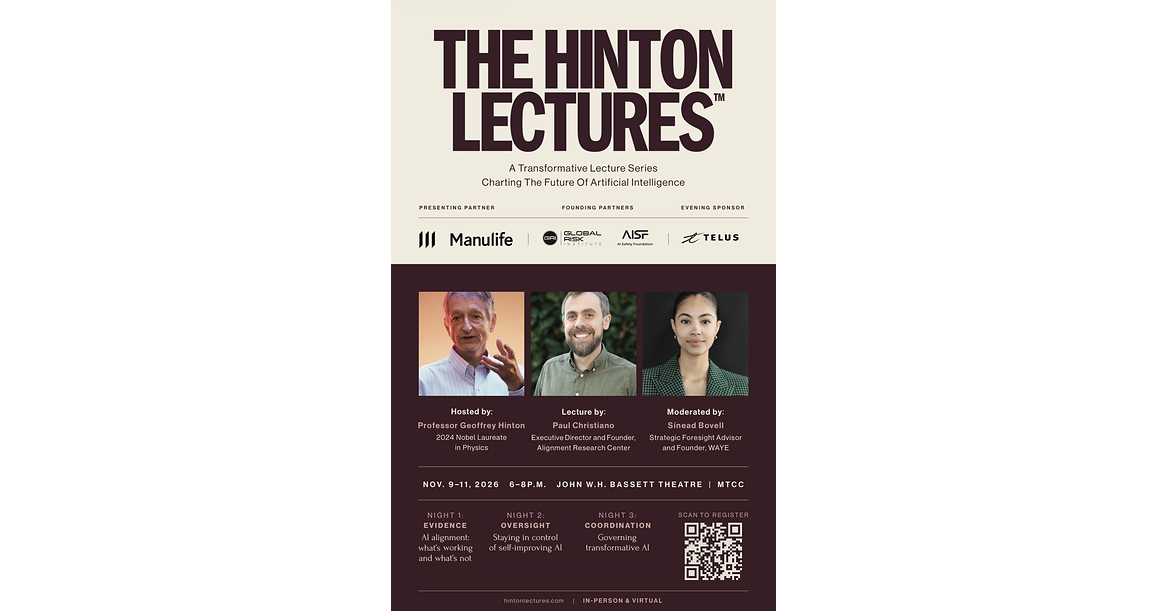
- 9–11NovThe Hinton Lectures on AI safetyToday
- 9NovCharmed By a Southern Monster premieresToday
- 10NovEU AI Act starts to apply in Northern IrelandTomorrow
- 11NovJules becomes read-only2days away
- 12NovUpdated Claude usage policy takes effect3days away
- 15NovComments close on China's draft tech-export list6days away
- 15NovWorkBuddy and CodeBuddy free period ends6days away
- 18NovWebinar on running a dock with Stretch9days away
- 18NovNvidia invited to brief Congress9days away
- 19NovKinference demo livestream10days away
- 20NovAI Film Award submissions close11days away
- 20NovConductor cloud service shuts down11days away
- 20NovUpdated OpenAI usage policies take effect11days away
- 21NovInaugural edition in Hollywood12days away
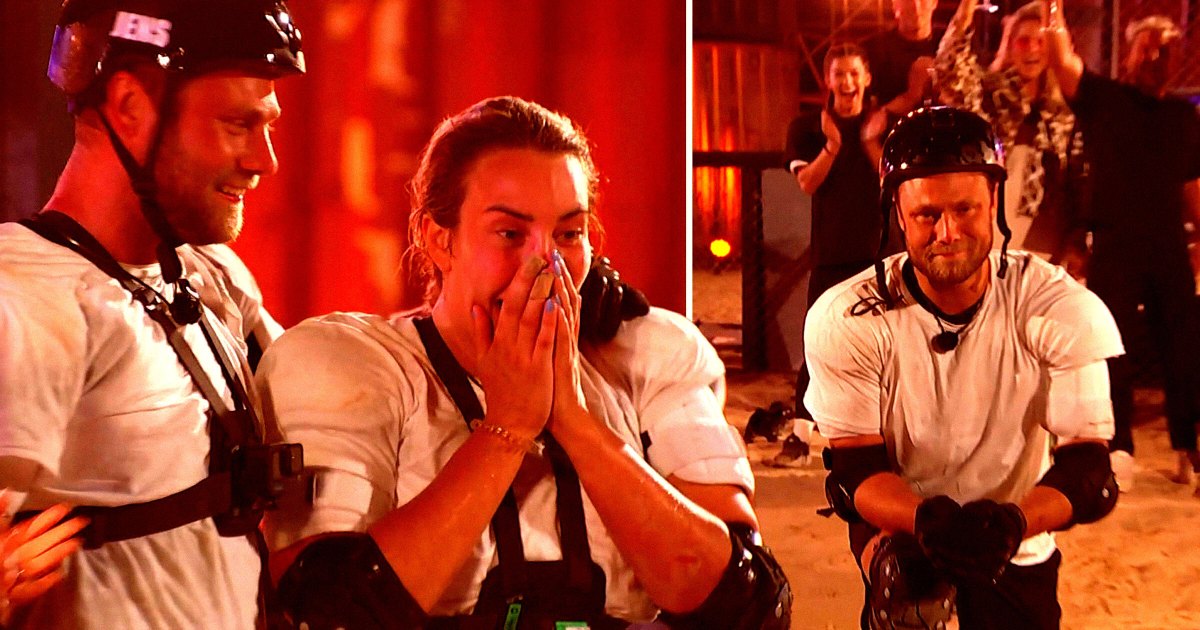
- 22Nov'The Challenge Sverige' originally scheduled (now delayed to 2027)13days away
- 29NovDaybreak Blue sessions can be used for training3weeks away
- 30–3Nov–DecContent London 20263weeks away
- 30NovRose d’Or Awards3weeks away
- 1DecHearing on Apple's bid to block testimony3weeks away
- 2–3DecWorkshop on autonomous surgical robots3weeks away
- 4DecAI-made film opens in limited release4weeks away
- 4DecGods Don’t Give Gifts premiere4weeks away
- 4DecSingapore AI Safety Fellowship ends4weeks away
- 31DecHy4 half-price offer ends7weeks away
- 31DecJules shuts down7weeks away
- Later in NovGuided Learning pilot in US schools
- Mid-NovXREAL Aura shipments begin
- DecemberNothing's first AI-native product
- H1 2027Digit 5 early customer access
- Nov–Dec 2026Fort Benning robotaxi pilot





Stories are summarized in plain language; follow the link before quoting a figure. Story images are shown from the publishers' own sites.