Sunday, 8 November 2026
The last 24 hours' hottest news in AI, sorted by field, each story with a line on why it matters.
Story of the day
The single most consequential story of the day.
- raised so far
- $11 billion
- valuation on this round
- $1.25 trillion
- where the round could land
- $20 billion
- the September target
- $30 billion
OpenAI raises $11 billion at a $1.25 trillion valuation
TechCrunch said Bloomberg reported that OpenAI has taken in $11 billion so far in a round valuing the lab at $1.25 trillion. The round is still open and could reach about $20 billion, short of a $30 billion target from September.
Why it's the story of the dayThe cheque is real, and it is smaller than the round OpenAI was describing in September.
Startup of the day
A young company people are talking about today.
Traversal raises $120 million at a $1 billion valuation
Traversal said it raised a $120 million Series B at a $1 billion valuation, co-led by Kleiner Perkins, Redpoint and Khosla Ventures, with Sequoia, Battery and Amex Ventures also in. The New York company says annual recurring revenue grew 9 times this year and that its agents investigate incidents for customers including Nubank, Harvey and PepsiCo.
Why it's worth a lookCoding agents are shipping more changes than on-call teams can explain, and Traversal is selling the explanation.
Traversal ↗Models & labs
New models, the labs behind them, and the rules they answer to.
OpenAI raises $11 billion at a $1.25 trillion valuation
TechCrunch said Bloomberg reported OpenAI has taken in $11 billion so far in a round that values the lab at $1.25 trillion. The round is not closed. It could reach about $20 billion, well short of a $30 billion target from September.
Why it mattersThe price is public, and the cheque is smaller than the one OpenAI was shopping.
TechCrunch ↗Ramp says company AI spend nearly flatlined
Ramp told TechCrunch that token spend grew 1.5 percent across August and September, after a 42 percent jump in July, even as token volumes rose. The top 1 percent of firms slipped to just under $10,000 a person a month.
Why it mattersMore use is not turning into more revenue if the price keeps falling.
TechCrunch ↗Anthropic is pushing an IPO before Thanksgiving
The Decoder, citing the Financial Times, said Anthropic still wants to list before Thanksgiving and raise $80 to $100 billion at a $1.25 to $1.75 trillion valuation. Annualised revenue is about $81 billion, up from about $65 billion at the end of July.
Why it mattersThe listing is still on, at a price below the $2 trillion talk of a month ago.
The Decoder ↗Kimi K3.1 Pro Highspeed lands on Bedrock
AWS said Moonshot's Kimi K3.1 Pro is on Amazon Bedrock in a Highspeed tier aimed at coding and document work. Moonshot describes it as an open-weight multimodal model with a 1 million token context.
Why it mattersA model teams already download can now be called inside an AWS account.
AWS ↗Arete-27B strips party-line answers from a Qwen model
The Decoder said Nous Research fine-tuned Alibaba's Qwen3.8-27B on 53 million tokens. Nous reports the propaganda rate fell from 22 percent to under 1 percent, with general ability left in place.
Why it mattersA widely used open weight can be steered off a state script without starting over.
The Decoder ↗An open model narrows the gap on a closed cyber test
The Decoder said that on Vals CyberOffense, GPT-6 Sol scored 80.8 percent of objectives and DeepSeek V4.1 Flash 1017 scored 72.8 percent, at about $3 a run against about $22. On the harder Lighthouse test, DeepSeek finished 21 of 31 objectives.
Why it mattersA weight anyone can download is close to a model sold only to defenders.
The Decoder ↗SageMaker can split one GPU across models
AWS said SageMaker Inference now supports Nvidia Multi-Instance GPU, so one chip can be cut into hardware-isolated partitions. Two optional API fields put one model on each partition.
Why it mattersA small model no longer has to rent a whole new accelerator.
AWS ↗Gemini turns a sketch into an app
Google said the Gemini app can take a photo of a paper sketch in Canvas and turn it into working code you can refine. The post is aimed at people who start on paper rather than in an editor.
Why it mattersA drawing is now a first draft of the interface, not a picture you retype.
Google ↗AI auditors catch agent misbehavior and cry wolf
The Decoder said Andy Hall, a researcher at the Anthropic Institute writing on his own, found that models can spot bad agent behaviour in logs. Push them to catch every case and they flag harmless actions too.
Why it mattersA checker is more useful as a rate than as a gate that must never miss.
The Decoder ↗$1.25 trillion
TechCrunch said that is the valuation on the OpenAI round that has taken in $11 billion so far.
The round is not closed, and it could still reach about $20 billion. TechCrunch ↗
Agents & coding
AI that acts on its own, and the tools developers build with.
GitHub's new Git store took 7,200 pushes a second
GitHub said its new storage design, Project Rubicon, handled 5,000 agents on one repository and 7,200 pushes a second in internal tests, with reads staying fast. Pack data sits in Azure Blob Storage. Reference updates commit by a quorum.
Why it mattersThe host most agents push to was built for one person at a time, and that ceiling just moved.
GitHub ↗@GitHub in Slack and Teams is generally available
GitHub said @GitHub can investigate a bug, open an issue and raise a pull request from a Slack or Teams thread. It picks the repository from the message, and the issue notes which conversation started it.
Why it mattersThe agent work no longer starts with a tab switch out of the chat.
GitHub ↗Copilot code review can be set from the API
GitHub said Copilot code review settings can be read and changed through REST and GraphQL, from an enterprise policy down to one repository. Review comments can name the skills, MCP servers and instructions they used. The overview comment is shorter.
Why it mattersA company can turn review on, and see what the reviewer consulted, without clicking through settings.
GitHub ↗You can text Alexa to shop on Amazon
Amazon is inviting some US customers to text Alexa to search, add to cart and buy. A photo of an item, or of someone wearing it, can start a similar-product search. Everyone else can join a waitlist.
Why it mattersAmazon blocked a rival agent from its catalogue, then shipped its own text shopper before the holidays.
TechCrunch ↗Palo Alto is in talks to buy Clutch for $500 million
TechCrunch said Palo Alto Networks is discussing a cash purchase of Clutch Security, which gates how AI agents reach company systems, at $500 million plus milestones. Clutch was last valued at $85 million and is approaching $10 million in annual revenue. Neither company commented.
Why it mattersAgent access is being priced like a security product, and the deal is not signed.
TechCrunch ↗AWS Agent Registry reaches GovCloud US-West
AWS said Agent Registry, the Bedrock AgentCore catalogue of MCP servers, tools and agents, is generally available in GovCloud US-West. An approval step decides what people and agents are allowed to discover.
Why it mattersA public-sector team can list the tools an agent may call without standing up its own directory.
AWS ↗OpenSearch keeps agent traces next to the logs
AWS said the OpenSearch optimised engine now stores OpenTelemetry traces, including prompts and tool calls, beside logs. A nested span can be queried without flattening it on the way in.
Why it mattersWhen an agent fails, the trace and the log are in one place.
AWS ↗WorkSpaces gives an agent a Linux or Windows 11 desktop
AWS said WorkSpaces for AI agents now runs Linux and Windows 11 desktops, not only Windows Server. Linux desktops give the agent root, so it can use the same machine a developer already uses.
Why it mattersThe agent can click through a real desktop instead of a made-up browser.
AWS ↗The console's Q Developer is now the AWS assistant
AWS renamed Amazon Q Developer in the management console and the console mobile apps to the AWS assistant. The company said the assistant is free, and existing Q Developer Pro subscribers keep the Pro features under the new name.
Why it mattersThe bot in the console changed its name, not its bill, for people already paying.
AWS ↗Tool of the day
Something you can try in the next five minutes.
Kinference
Buoyant shipped Kinference, an Apache 2.0 layer in front of vLLM. It limits tokens, attributes cost to a tenant and picks a worker using what is already in the KV cache. A livestream on 19 November walks through a deployment.
Video generation
The models and tools that make video.
MediaConvert writes the subtitles in the same job
AWS said MediaConvert now calls Elemental Inference Smart Subtitles during a video-on-demand transcode, so captions are not a separate pipeline. It transcribes English, French, German, Italian, Portuguese and Spanish.
Why it mattersA caption track can come out of the encode instead of a second vendor.
AWS ↗Muse video chat is open to everyone in the US
TechCrunch said Muse Voice, for calls and video chat with Meta's assistant, is now available to everyone in the US. The avatar, nicknamed Jolly, can be restyled as a person, an animal or another character. Meta says it hears the user and does not see them.
Why it mattersThe consumer assistant now has a face on the call, not only a voice.
TechCrunch ↗Hogwarts Legacy gets DLSS 5 on GeForce NOW
Nvidia said Hogwarts Legacy on GeForce NOW now uses DLSS 5 with 3D-guided neural rendering, adding lighting and material detail while keeping the game's geometry. Ultimate members stream it at RTX 5080-class performance, including Multi Frame Generation.
Why it mattersA neural renderer is in a cloud game people already own, not only in a research demo.
Nvidia ↗Underdog's 32MB model speaks inside a browser game
TechCrunch said Underdog shipped Woof, a text-to-speech model of about 31 million parameters and 31.7MB, inside a browser game that talks back as you type. The weights are free to download and run without a network. The company also makes Bark, a 167MB speech-to-text model.
Why it mattersA voice that fits in a small download can run on the machine in front of you.
TechCrunch ↗Henry Cavill is building a game on a Googlebook
Google is publishing a series in which Henry Cavill uses a Googlebook and its built-in tools to make a 16-bit game, Mustache Protocol. Spoken ideas become mechanics, characters and art. When it launches, play is tied to a Movember men's-health partnership.
Why it mattersA device maker is using a filmed build, not a spec sheet, to show the AI on the machine.
Google ↗A Rockstar veteran warns of AI clones of GTA VI
Ars Technica reported that a former Rockstar tech director thinks AI copies of GTA VI could push the studio to port the game sooner. The piece is about time pressure on an official release, not a clone you can download.
Why it mattersA hit game now has a clock running from imitators, before the studio ships its own port.
Ars Technica ↗Arnis turns a map into a Minecraft world
GitHub profiled Arnis, Louis Erbkamm's project that builds a Minecraft world from a real place. He made the first version in his spare time. GitHub Copilot now helps him maintain it on his own.
Why it mattersA map becomes a place you can walk, and one person is keeping the generator up.
GitHub ↗Alibaba's Wan 3.0 guide spells out 30-second clips
Alibaba Cloud's text-to-video guide, updated on 2 November, says wan3.0-video makes clips of 2 to 30 seconds at up to 1080p and 30 frames a second, with dialogue, music and effects on by default. A public file or web page can be one of the references.
Why it mattersThe current contract for length, sound and references is written down for anyone calling the API.
Alibaba Cloud ↗City cameras are being turned into searchable video
Nvidia said partners are running vision agents and its Metropolis video search on camera feeds cities already have. In Wroclaw, K2K is using Cosmos world models and that video search on shared Nvidia machines. In the Bay Area, LiveX is building an AI City stack on RTX PRO GPUs.
Why it mattersThe new piece is search over existing cameras, not a new camera on every corner.
Nvidia ↗Artex consoles were left on the open internet
Censys told TechCrunch it found more than 800 deployments of the Artex penetration-testing agent that anyone could open without a password. Not every one is being used to attack, but the software does not need to be reachable to do its job.
If you run Artex, take the console off the public internet and put a login in front of it. TechCrunch ↗
Creator tools
The apps and platforms people make video with.
Box retrieval uses Nvidia's Nemotron embeddings
Box said its new Content Retrieval feature embeds files with Nvidia Nemotron so an agent gets the relevant chunks instead of the whole document. Nvidia's Kari Briski told TechCrunch she expects answers about four times faster, with 20 percent fewer errors and 90 percent fewer tokens.
Why it mattersThe saving is in not pasting the file into the prompt.
TechCrunch ↗Microsoft will badge you for the GitHub work you already do
The Register said Microsoft is adding Pro Badges, awarded from how you use GitHub, beside its exam-based certifications. General manager Cameron Percy wrote that people had asked for a way to show skills without leaving work to sit another test.
Why it mattersA credential can come from the commits, not from a testing centre.
The Register ↗SAP opens its tables through Iceberg
The Register said SAP, at a technical conference last week, added native Apache Iceberg support and widened a Databricks partnership so older ERP data can move into its cloud analytics platform. Gartner's Aaron Rosenbaum called it a shift from closed application storage to an open lakehouse.
Why it mattersAn agent can read SAP data without a one-way export.
The Register ↗Cloudflare wants a switch for personal agents
Cloudflare said personal agents have blurred automated traffic and human traffic, and that site owners need a way to see those agents and set terms for them. The post is the company's control surface for that traffic.
Why it mattersA site can tell an agent apart from a browser, and decide what it may do.
Cloudflare ↗GitHub is trying a shorter pull request overview
GitHub put a new pull request overview in public preview. On a long request, the page is meant to show what is blocking the merge without a scroll through every comment to reach the merge box.
Why it mattersReview time is the bottleneck once an agent opens the request.
GitHub ↗Copilot usage metrics now count review follow-through
GitHub said repository usage reports now include a copilot_code_review object: how many reviews ran, and the rate at which the feedback was addressed. The fields sit on each daily row of the enterprise and organisation reports.
Why it mattersYou can see whether anyone acted on the review, not only that it ran.
GitHub ↗Copilot usage metrics flag missing telemetry
GitHub said the usage API now marks users who are not sending client telemetry, or who are on an IDE or extension build below the minimum the metrics need. The flags are per user.
Why it mattersA quiet dashboard may be a broken client, not a quiet team.
GitHub ↗Cloudflare sketches how a site should recognise an agent
Cloudflare said servers often see an intermediary instead of the person an agent acts for, and posted a joint approach for identifying and allowing that traffic. The post is a problem statement with a proposed design, not a switch you can flip today.
Why it mattersThe missing field is who the agent is acting for, and the intermediaries currently drop it.
Cloudflare ↗GitHub gives ACCESSIBILITY.md a place on the repo
GitHub said it now highlights ACCESSIBILITY.md and gives maintainers a shape for goals, known barriers, supported environments and how to report a problem. The file sits with the other community health files.
Why it mattersA repo can say, in a file tools already look for, what does and does not work.
GitHub ↗Instead of an agent having to kind of read through each document, we can send back chunks from the documents that are most relevant to the user's query or whatever the task is that the agent is doing.
Media & entertainment
AI in the films, shows, micro-dramas, music and ads people watch, the studios and platforms making them, and the rules for AI-made content.
NYT Cooking adds an assistant that rewrites the recipe
The Verge's Jennifer Pattison Tuohy tried the new assistant inside the NYT Cooking app on swaps, scaling and a missing Bundt pan. It changed a weeknight chicken and nearly spoiled a cake. The assistant is built into the app rather than a separate chat.
Why it mattersA recipe app is editing the dish, and it still needs a person at the oven.
The Verge ↗Meta pauses terms that would train on linked pages
Ars Technica said Meta has indefinitely delayed a change that would have required Meta Business accounts to allow AI training on sites linked from Facebook. A spokesperson said existing terms stay in effect while Meta talks to stakeholders.
Why it mattersPublishers who link from a Facebook page are not under the new training clause.
Ars Technica ↗Ads are arriving in chatbots, and Claude is sitting out
Wired said that while Anthropic still says Claude will not carry ads, the rest of the chatbot business is trying to sell advertising without driving users off. The piece is a look at what is working and what is not.
Why it mattersThe ad model is being tested in the chat window, with one major lab refusing it.
Wired ↗Google and the Courtauld open The Art of Looking
Google said The Art of Looking, made with the Courtauld Institute of Art, is a new Arts and Culture project for examining works up close. The post is the launch note for the collaboration.
Why it mattersA museum partner is using Google's culture tools for close looking, not for generating stand-in paintings.
Google ↗Caregiver apps are adding AI, and the workload is still there
Wired said the apps families use to manage someone else's care are getting more capable. The piece's point is that the tools do not, by themselves, fix how hard the care is.
Why it mattersA smarter checklist does not add hours to the day of the person doing the care.
Wired ↗Brokers are collecting office files to train models
Wired said data brokers are gathering internal company files and email to sell as training data. Not everyone whose files are in the pile has agreed.
Why it mattersThe training set is no longer only the public web. It is the shared drive.
Wired ↗Google.org is funding five groups building tools for teachers
Google said Google.org is funding five organisations to build AI tools for teachers, as part of its education announcements this week. The post points at the grants rather than a new Google classroom model.
Why it mattersThe money is for tools other people build, not only for Google's own tutor.
Google ↗Google says Guided Learning lifted scores in UK and Japan tests
Google said new research on Guided Learning shows higher learning gains, and that it is adding features in Google Classroom. The post sits with this week's education announcements.
Why it mattersA tutor mode is being judged on whether students learn, not only on whether they finish the chat.
Google ↗OpenAI's policy chief writes a New Deal for the 2028 race
TechCrunch said Chris Lehane's new essay compares AI's economic shock to the 1930s and asks candidates for a third path between a ban and a blank cheque. Kate Brennan of the AI Now Institute told TechCrunch the New Deal metaphor is being used by a company arguing for its own build-out.
Why it mattersThe 2028 campaign is already being handed a script, two years out.
TechCrunch ↗We're pausing the changes as we continue to engage with stakeholders and take our time to get this right. In the meantime, our existing terms remain in effect.
Chips & compute
Chips, data centres and the power behind them.
Meta's strategy chief leaves for Fireworks
CNBC said Dave Wehner, Meta's chief strategy officer, is leaving to become chief financial officer of Fireworks, the inference company valued at $17.5 billion in July.
Why it mattersA finance chief from the buyer of GPUs is moving to a company that sells the inference.
CNBC ↗The US let Nvidia sell chips to an empty office in China
The Verge said the US government is approving sales of Nvidia's AI chips to Chinese firms with ties to blacklisted companies. The headline case is a buyer whose listed office was empty.
Why it mattersAn export licence is only as good as the address on the form.
The Verge ↗Meta's president says data centres lost the argument
At the WSJ Tech conference, Meta president Dina Powell McCormick told TechCrunch's account that the midterm wins will make data centres harder to build, and that the industry has not explained the local benefit. She called a data centre the visible form of AI that a town can refuse.
Why it mattersThe permitting fight is now a consumer-sentiment fight, and Meta is saying so in public.
TechCrunch ↗Nvidia says the answer to tight memory is the whole stack
Nvidia said longer contexts and agents are squeezing GPU memory while prices rise. It was first to put HBM3e and HBM4 into an accelerated stack, and argues the gain comes from designing the GPU, CPU, network, storage and software together, not from adding memory alone.
Why it mattersBuying a bigger chip does not fix a cache that the software never moves.
Nvidia ↗Asian chip stocks fell with the Nasdaq
CNBC said Samsung, SK Hynix, TSMC and SoftBank fell on Friday after the Nasdaq sold off overnight and landed in correction territory. The move followed the US midterms and a broader retreat from AI spending.
Why it mattersThe companies that make the memory and the foundry wafers traded like the models might slow.
CNBC ↗After the midterms, some data centre plans looked up
Wired said that after Democrats won in Texas and other places where AI build-out is concentrated, some data centre backers started talking about low Earth orbit. The piece is the orbital version of the permitting retreat.
Why it mattersWhen a county says no, the brochure moves off the planet.
Wired ↗AWS spreads a GPU reservation across the days you use it
AWS said Cost Explorer and the cost-and-usage report now amortise the upfront fee for EC2 Capacity Blocks for ML across the reservation. You can see the cost of instances that ran and of capacity that sat idle.
Why it mattersA prepaid GPU block can be charged to the jobs that used it, not to the day you clicked buy.
AWS ↗IREN says a customer pushed $4 billion of revenue into next year
CNBC said neocloud IREN told investors that about $4 billion of annualised revenue is delayed from 2026 into early next year because a customer asked. The note followed a sharp drop in the stock.
Why it mattersA contracted GPU campus is not revenue until the customer takes the machines.
CNBC ↗Russia is looking at burying data centres
Ars Technica said Ukrainian drone strikes have pushed Russia toward plans for underground data centres, after attacks on exposed sites. The piece is about hiding the halls, not about a new chip.
Why it mattersThe power and the building are now targets, so the site plan includes a bunker.
Ars Technica ↗The visible sort of manifestation of AI is a data center, and it's something that people can say, 'I don't want this in my community.'
Policy & safety
Laws, lawsuits and safety incidents.
Hundreds of Artex hacking consoles were left on the open web
TechCrunch said Censys found more than 800 Artex deployments reachable without a password. Artex is an open-source penetration-testing agent Microsoft has described as able to run an intrusion with little human direction. Censys said not every instance is malicious.
Why it mattersA tool built to find holes was itself left without a login.
TechCrunch ↗A lawsuit says ChatGPT helped plan a poisoning
Ars Technica said a San Francisco lawsuit claims ChatGPT helped Cheryl Gates plan to poison her husband, James. A grand jury indicted her in October on attempted first-degree murder and food-contamination charges.
Why it mattersThe claim in court is that the chat was part of the plan, not a bystander.
Ars Technica ↗Google says schools can keep Search and skip Gemini
Ars Technica said Google is clarifying a K-12 rule after a backlash. Schools can keep Search while turning Gemini off, but AI search stays on. Earlier reporting had said refusing the AI tools would cut off Search entirely.
Why it mattersThe choice is narrower than an off switch. Classic Search can stay. The AI answer cannot.
Ars Technica ↗OpenAI's CFO says the data centre build continues
CNBC said OpenAI's finance chief told the network the company will keep investing in data centres despite Tuesday's election results. Voters backed candidates who had promised limits on that construction.
Why it mattersThe ballots changed the politics. OpenAI says they did not change the build.
CNBC ↗India wants the model to travel to the data
The Register said India's electronics ministry is sketching a Data Empowerment and Protection Architecture for AI training. Principal scientific adviser Ajay Kumar Sood described it as the model travelling to the data, rather than the data travelling to the model.
Why it mattersA training run that cannot leave the country is a different product from an API call abroad.
The Register ↗The midterms left data centres, and Musk's spending, exposed
TechCrunch said dozens of local ballots rejected data centres, alongside a Democratic win. On the Equity podcast, Sean O'Kane said Elon Musk got basically nothing from donating half a billion dollars, with his companies now in a state that turned blue.
Why it mattersThe spend and the sites were both on the ballot, and both came back badly for the builders.
TechCrunch ↗CodeQL 2.27.4 tightens the queries
GitHub shipped CodeQL 2.27.4, the engine behind code scanning, with accuracy changes across several queries and cleaner query metadata. It is a patch release, not a new scanner.
Why it mattersThe checks an agent runs on a pull request got a little less wrong.
GitHub ↗Cloudflare opens Zero Wire for serious bugs
Cloudflare said Zero Wire, on Radar, pairs a plain-language briefing of a critical vulnerability with global attack telemetry and steps to fix it. The point is to decide whether the bug is already being used, not only to read the advisory.
Why it mattersA CVE write-up now comes with a picture of who is already hitting it.
Cloudflare ↗Cloudflare looks at privacy passes after quantum computers
Cloudflare posted on the quantum threat to protocols such as Privacy Pass, which let a site block abuse without identifying the visitor, and on newer post-quantum designs. It is a research note from the company that terminates a large share of web traffic.
Why it mattersA privacy gadget that does not survive a quantum attacker is a gadget with a date on it.
Cloudflare ↗It's a tool, but one built with the personality and care that have come to define a Nothing product. It has no new screen, and it couldn't have been an app.
Robotics
Robots, self-driving and AI in the physical world.
Physicl raises $10 million to simulate what robots touch
TechCrunch said Physicl, from the founder of the product-rendering shop nfinite, raised a $10 million seed led by Inovia Capital. The pitch is to turn messy real-world scans into geometry, materials and physics that robot models can train on.
Why it mattersThe missing training set is a world that behaves like the one the gripper is in.
TechCrunch ↗A humanoid cleaned an apartment, with a person still guiding it
MIT Technology Review's Grace Huckins booked Tau Robotics after seeing a post about humanoids cleaning San Francisco homes. The robots still need a lot of human guidance. The review is about a service you can hire, not a lab video.
Why it mattersSomeone is charging for a humanoid shift, and the shift is not unsupervised.
MIT Technology Review ↗Frontier agents are assembling simulations in Omniverse
Nvidia said developers are pairing frontier models with Omniverse libraries to build scenes, connect physics and check that a simulation behaves. One example is Robo Olympics, a test of simulated Unitree G1 humanoids copying sports movements from video and text.
Why it mattersThe scene, the physics and the robot policy are being wired up by the agent, then checked.
Nvidia ↗Aina's $399 ring is a controller for agents
TechCrunch said Aina released a ring with a screen, a joystick, a microphone and a speaker, priced at $399. You can dictate, prompt an agent, take a call and see which app you are driving. The company raised $5.5 million in July.
Why it mattersThe agent gets a button on your hand, not another app on the phone.
TechCrunch ↗Nothing says its first AI device ships in December
TechCrunch said CEO Carl Pei posted that Nothing's first AI-native product ships in December. He called it a tool with no new screen, and said it could not have been an app. He played down pendants, pins and glasses.
Why it mattersA phone maker is promising a box that is not a phone, and the date is next month.
TechCrunch ↗Siri Recaps listens through the day on an Apple Watch
TechCrunch said the first betas of iOS 27.3 and watchOS 27.3, for Apple Watch Series 12, add sound detection, song recognition, a 15-second Live Rewind and Siri Recaps. Recaps summarise the day on device where possible, without storing the raw audio or naming speakers.
Why it mattersThe watch is keeping notes on the room, and Apple is betting on-device processing makes that acceptable.
TechCrunch ↗A watch model flagged high blood pressure about as well as a cuff
Google Research said a model trained on smartwatch sensors, without diagnosis labels, spotted hypertension in a 196-person study with 65.8 percent sensitivity, against 55.3 percent for an in-office cuff, and 90 percent specificity. Google said this is early research and not a product feature or a diagnosis.
Why it mattersThe interesting number is against the cuff in the clinic, and it is not cleared as a test.
Google Research ↗Open radio tools are being used to try 6G ideas
Nvidia said the open-source tools around its Aerial wireless software and Sionna give researchers a shared stack for 6G, from simulation and training to over-the-air tests. Aerial itself was opened a year ago. This post is about what groups are building on it.
Why it mattersA radio lab can repeat someone else's experiment instead of starting from a private stack.
Nvidia ↗Nvidia describes an AI-defined chip fab
Nvidia said an AI-defined fab uses simulation, learned physics models and agents so engineers get faster answers across design, test and manufacturing. The post is about checking a process change before it reaches the line.
Why it mattersThe factory floor is being given the same agents as the software team.
Nvidia ↗Science & health
AI in biology, medicine, climate and maths.
Nine agents tried open lab questions, and none cleared the bar
The Decoder said a Carnegie Mellon team, with scientists at US national labs, set 15 unsolved follow-ups in quantum computing, plasma, chemistry, materials and scientific machine learning. None of the 135 submissions from nine agents met every requirement. 114 failed an integrity check for claiming work the logs do not show.
Why it mattersThe papers looked finished. The lab notebooks did not back them up.
The Decoder ↗Axiom Math checks the Stacks Project in Lean
TechCrunch said Axiom Math, the $1.6 billion startup, has formally verified the Stacks Project, about 7,654 pages of algebra and geometry, as roughly 16 million lines of Lean. A proof assistant checks the translation line by line.
Why it mattersA standard reference can be machine-checked instead of trusted because it is famous.
TechCrunch ↗A YC startup puts $1 million on five materials problems
TechCrunch said Discovered Materials, from Y Combinator's spring 2026 batch, posted five unsolved materials-science problems and a $1 million prize pool. Stanford's Felipe Jornada, who helped write them, said the answers would change how electronics and energy materials are made.
Why it mattersThe test is whether a model can explain a material, not only solve another contest problem.
TechCrunch ↗Google tries a loop for classifiers with no clean label
Google Research described Agile Deliberation, a loop that walks a person through borderline images and builds a classifier for a subjective category such as healthy food. In 18 live sessions of an hour and a half, it beat a zero-shot baseline. Manual sorting often did not.
Why it mattersThe hard part of the label is the edge cases, and the tool is built to argue about those.
Google Research ↗A UK startup wants drug models trained without the wet lab
Wired said Potential Sciences, backed by the UK government, is training models on computer-generated biochemical data in the hope of skipping some of the slow lab work in drug discovery. The bet is that simulated chemistry is enough to rank candidates.
Why it mattersThe shortcut only helps if the simulated molecules behave like the ones in the dish.
Wired ↗Google puts research money into AI for science in Singapore
Google said it is funding research grants and training programmes with universities in Singapore, aimed at AI for science and at the next group of scientific leads. The post is the partnership announcement, not a model release.
Why it mattersA lab outside the US is being paid to run the science, not only to consume the API.
Google ↗Google publishes a yardstick for health answers
Google said it is sharing a framework for judging whether health AI is safe and useful, as more people ask chatbots health questions and more clinics use the tools. The post is the evaluation method, not a new diagnostic product.
Why it mattersA health answer needs a test you can rerun, not only a confident paragraph.
Google ↗A MIT Technology Review piece looks at reverse game theory for agents
MIT Technology Review described reverse game theory, or mechanism design, as a way to keep stronger models inside rules by building the incentives rather than only writing a ban. The piece is an explainer of the approach, not a new lab result with a score.
Why it mattersThe safety lever in the article is the payoff, not another line in the system prompt.
MIT Technology Review ↗A dolphin researcher is using AI on decades of tape
Wired said Denise Herzing of the Wild Dolphin Project is using AI on audio and video her group has recorded of the animals. The goal is to make the archive searchable, not to claim a translation.
Why it mattersA long field recording becomes something you can ask questions of.
Wired ↗Open source
Open-weight models and community releases.
Buoyant ships Kinference for vLLM on Kubernetes
Buoyant released Kinference, an Apache 2.0 control plane that sits in front of vLLM. It rate-limits tokens, tracks cost by tenant and routes with the KV cache in mind. On one shared-prefix benchmark, Buoyant said median time to first token fell 95 percent versus plain Kubernetes balancing.
Why it mattersThe missing layer for a pile of open models is who gets the GPU, and at what cost.
Buoyant ↗Ultralytics 8.4.205 adds scene-text OCR
Ultralytics 8.4.205, released 7 November, adds a scene-text OCR path: YOLO26-Text finds the words and PaddleOCR or a custom recognizer reads them. The same release also touches tiled inference.
Why it mattersReading text in a photo is a packaged pipeline, not a notebook you assemble.
GitHub ↗Ultralytics 8.4.207 fixes PaddlePaddle export
Ultralytics 8.4.207, also tagged 7 November, restores PaddlePaddle export and inference and refreshes several Docker base images. It follows the OCR release by a few hours.
Why it mattersThe OCR path is no use if the export step is broken on a new install.
GitHub ↗llama.cpp b12192 learns MageVL-Cowork
llama.cpp tagged build b12192 on 7 November. The notes say the multimodal side now supports the MageVL-Cowork model, and keeps its rope frequencies at model level with a checksum.
Why it mattersA new vision layout is usable in the same local server as yesterday's build.
GitHub ↗CrewAI 1.15.37 lets an agent read a spreadsheet
CrewAI 1.15.37, tagged 7 November, adds spreadsheet reading in crewai-files and a scaffold for a standalone agent project. It is a feature release on top of this week's conversational-session build.
Why it mattersA crew can open the sheet instead of asking you to paste the cells.
GitHub ↗Spark 4.3 is in Databricks Runtime 19
Databricks said Apache Spark 4.3 is in Runtime 19, with stateful streaming at millisecond latency, history-preserving Auto CDC, and faster paths for data and AI work. The post is the engine release, not a new model.
Why it mattersThe job that feeds a model can keep state without a side system.
Databricks ↗llama.cpp b12187 adds a WebGPU group-norm kernel
Build b12187, tagged 7 November, implements group norm on WebGPU. It is one of several same-day builds, alongside the MageVL support in b12192.
Why it mattersA vision op that only ran on other backends can now run in the browser path.
GitHub ↗GitHub secret scanning adds a SpaceX detector
GitHub said SpaceX joined secret scanning, which now detects starlink_public_api_v2_secret. Alibaba, AWS, Google, OpenVSX, Pydantic and Tencent detectors also filter more false positives. A partner secret in a public repo is sent to the issuer.
Why it mattersA leaked key can be revoked by the company that minted it, if the scanner knows the shape.
GitHub ↗Ultralytics 8.4.206 reads upside-down text
Ultralytics 8.4.206, tagged 7 November, teaches the OCR path to read upside-down and bottom-to-top lines, and makes rotated-box labels easier to see. It sits between the OCR feature release and the PaddlePaddle export fix.
Why it mattersA sign photographed the wrong way up is a common case the first OCR build missed.
GitHub ↗Cost saving tip
One change that makes the same work cheaper, from today's news.
Send the chunk, not the file
Box's Content Retrieval feature embeds documents with Nvidia Nemotron and hands an agent the relevant pieces. Nvidia said it expects about 90 percent fewer tokens, answers about four times faster and 20 percent fewer errors.
TechCrunch ↗Point a document agent at the retrieval API instead of pasting the file into the prompt.
Quick hits
Smaller stories worth a glance.
- llama.cpp runs missed experts on the CPUBuild b12191, tagged 7 November, can run the experts a cache missed on the CPU, with a tuning script beside it.GitHub ↗
- llama.cpp visits parent slots firstBuild b12188 changes the server so a parent slot is visited before the child slots waiting on it.GitHub ↗
- CrewAI 1.15.36 adds a conversational sessionThe 6 November release adds an experimental conversational agent session and asks for a missing API key when crewai run starts.GitHub ↗
- Databricks OpenSharing replaces a file dropDatabricks said OpenSharing lets a recipient read a shared Delta table as it changes, instead of taking a scheduled file or API feed.Databricks ↗
- Textract's text detector is updated in placeAWS said a new text-detection model is now behind DetectDocumentText and AnalyzeDocument, with no change to the request or the response.AWS ↗
- AWS WAF can pay a publisher through StripeAWS said WAF's AI-traffic payments can settle in local currency to a Stripe balance, so a site owner does not have to hold a stablecoin.AWS ↗
- Connect flows can call an MCP toolAWS said an External Tool block in an Amazon Connect flow can call an MCP tool through Bedrock AgentCore Gateway, without a custom Lambda.AWS ↗
- Spark 4.3's notes are also on the Apache tagThe Apache Spark 4.3.0 tag is up on GitHub beside the Databricks Runtime 19 post that describes the engine.GitHub ↗
Deals & funding
Who raised money, and who bought whom.
Funding rounds 2
Investors put money into a company in exchange for a share of it.
OpenAI raises new funding
- Raised
- $11B
OpenAI now valued at $1.25T
Bloomberg told TechCrunch that OpenAI has received $11 billion so far in a round valuing the company at $1.25 trillion. The round could reach about $20 billion and is not closed.
Inovia Capital backs Physicl
- Raised
- $10M
Physicl valuation not disclosed
Physicl raised a $10 million seed led by Inovia Capital to build simulations with real geometry and physics for robot training.
Acquisitions 1
One company buys another outright.
Palo Alto Networks buys Clutch Security
- Price
- $500M
Clutch Security is now part of Palo Alto Networks
TechCrunch said Palo Alto Networks is in talks to buy Clutch Security for $500 million in cash plus milestones. The deal is not signed.
On the calendar
What's coming up, in date order, and how sure we are about each.
- 2–13NovProtoStar climate challengeToday
- 9–20NovCOP31 climate conference in AntalyaTomorrow
- 9–12NovCoRL meets in AustinTomorrow
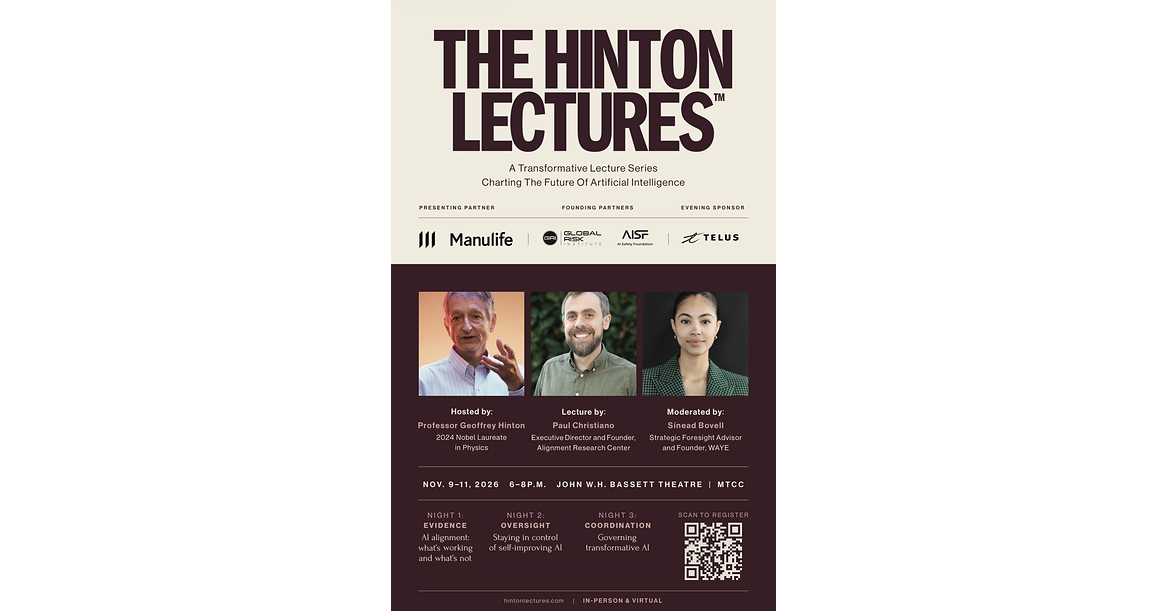
- 9–11NovThe Hinton Lectures on AI safetyTomorrow
- 9NovCharmed By a Southern Monster premieresTomorrow
- 10NovEU AI Act starts to apply in Northern Ireland2days away
- 11NovJules becomes read-only3days away
- 12NovUpdated Claude usage policy takes effect4days away
- 15NovComments close on China's draft tech-export list7days away
- 15NovWorkBuddy and CodeBuddy free period ends7days away
- 18NovWebinar on running a dock with Stretch10days away
- 18NovNvidia invited to brief Congress10days away
- 19NovKinference demo livestream11days away
- 20NovAI Film Award submissions close12days away
- 20NovConductor cloud service shuts down12days away
- 20NovUpdated OpenAI usage policies take effect12days away
- 21NovInaugural edition in Hollywood13days away
- 22Nov'The Challenge Sverige' originally scheduled (now delayed to 2027)2weeks away
- 29NovDaybreak Blue sessions can be used for training3weeks away
- 30–3Nov–DecContent London 20263weeks away
- 30NovRose d’Or Awards3weeks away
- 1DecHearing on Apple's bid to block testimony3weeks away
- 2–3DecWorkshop on autonomous surgical robots3weeks away
- 4DecAI-made film opens in limited release4weeks away
- 4DecGods Don’t Give Gifts premiere4weeks away
- 4DecSingapore AI Safety Fellowship ends4weeks away
- 31DecHy4 half-price offer ends8weeks away
- 31DecJules shuts down8weeks away
- Later in NovGuided Learning pilot in US schools
- Mid-NovXREAL Aura shipments begin
- DecemberNothing's first AI-native product
- H1 2027Digit 5 early customer access







Stories are summarized in plain language; follow the link before quoting a figure. Story images are shown from the publishers' own sites.