Thursday, 5 November 2026
The last 24 hours' hottest news in AI, sorted by field, each story with a line on why it matters.
Story of the day
The single most consequential story of the day.
- opposed a local data centre
- 76%
- measures that restrict them
- 33 of 45
- governor-elect wants a pause
- Texas
- exit poll The Verge cites
- NBC News
Data centers lost the midterms
Voters rejected unrestrained data-centre building in Tuesday's elections. The Verge, citing an NBC News exit poll, said 76 percent opposed a data centre in their community, and 33 of 45 local measures will restrict development.
Why it's the story of the dayThe buildings that run AI just became a voting issue, and many of the new limits passed.
Startup of the day
A young company people are talking about today.
Sentra raises $150 million to watch what agents can reach
Sentra said Capital One Ventures led a $150 million investment, with a board seat, after reported growth of more than 300 percent. It classifies data where it sits and maps which people and agents can reach it.
Why it's worth a lookAgents are a new kind of user, and this round is for locking the data before they arrive.
PR Newswire ↗Models & labs
New models, the labs behind them, and the rules they answer to.
Tencent launches Hy4 with vision and computer use
Tencent released Hy4 on 4 November, adding image understanding and computer use, and said weights and a system card will follow. The API price is unchanged, about $0.90 per million input tokens.
Why it mattersA flagship Chinese model is shipping new senses before its weights are public.
Tencent ↗ChatGPT can make and edit animated GIFs
The Verge said ChatGPT now makes a GIF from a prompt or a photo, and can change its speed or a single frame. The update rides with Images 2.6, and OpenAI says people generate over 4 billion images a week.
Why it mattersA chat box can now hand back a moving image, not only a still.
The Verge ↗Google's AI search is growing faster than its ads
The Verge said search-revenue growth slowed to 12 percent in the third quarter, from about 17 percent. Paid-click growth slowed from 13 percent to 8 percent, and AI Mode pays less than ordinary search.
Why it mattersMore questions in the AI box are not yet more money for the ad business.
The Verge ↗OpenAI's Python SDK adds a 12-hour response cache
Python SDK 3.45.0, published 4 November, adds 12-hour Responses caching and reports cache-write usage. It also adds project service-tier settings.
Why it mattersA repeat request can reuse a stored response instead of paying for it again.
GitHub ↗Unsloth adds Qwen3.8-Flash-Next and FP8 LoRA
Unsloth 0.1.915-beta, released 4 November, adds Qwen3.8-Flash-Next and says the dynamic build gains 10 to 15 percent accuracy. It also trains LoRA in FP8 and lets a model click files in the built-in browser.
Why it mattersA local trainer can fine-tune a new Qwen with less GPU memory.
GitHub ↗SGLang 0.5.23 serves a new batch of models
SGLang 0.5.23, released 2 November, adds Muse Spark Open, Beam-1.0, MiniMax-M3.1-Flash and MiniCPM-V 4.7, plus diffusion models including FastH3 Omni and FLUX.3 Image Klein. The notes cite 1,007 pull requests.
Why it mattersNew open models can be served from one engine instead of a custom stack.
GitHub ↗A study reruns Direct Nash Optimization on two small models
A paper reimplements Direct Nash Optimization on Llama 3.1 8B Instruct and Mistral 7B Instruct. On AlpacaEval 2.0, with GPT-4o as judge, three iterations raise the length-controlled win rate.
Why it mattersA preference method is being checked on models people can actually run.
arXiv ↗Three small transformers learn a label map in one pass
A paper says three transformers of 3 to 4 billion parameters do few-shot classification with arbitrary labels as a key-value memory over label tokens. Each label token stores the class of the demonstration before it.
Why it mattersIn-context learning is being pinned to a circuit, not only a score.
arXiv ↗Agents & coding
AI that acts on its own, and the tools developers build with.
OpenAI is acquiring Pierre Computer Company
The Verge said OpenAI is buying Pierre, the startup behind Code Storage, whose tools are already inside Codex. OpenAI says the deal should connect the code a company ships with the decisions behind it.
Why it mattersThe coding agent is buying the Git tools its reviewers already use.
The Verge ↗Uber booked 4 AI-agent rides in its busiest week
TechCrunch said Uber handled about 320 million trips and orders in the week of Halloween, and AI agents booked 4 rides. Agents placed about 500 Uber Eats orders, which the CEO called very limited traction.
Why it mattersThe agent that was meant to book the car is barely being asked.
TechCrunch ↗Baseten Grid routes coding-agent traffic
Baseten opened Grid in public preview on 4 November, a layer that picks a model, meters use and applies guardrails. The company says its router cut cost per coding task by up to 70 percent in early tests.
Why it mattersA firm can stop every coding agent from calling the most expensive model.
Baseten ↗Sysdig will block an agent action before it runs
Sysdig AI Defense, generally available 4 November for Mac and Windows, watches an agent from the laptop to the cloud. It can allow an action, ask a person, or block it, and records what ran at the kernel.
Why it mattersSecurity software is starting to police agents the way it polices servers.
Sysdig ↗GitHub Copilot can take tasks inside JetBrains Air
GitHub said on 3 November that Copilot is in JetBrains Air over the Agent Client Protocol. Local sessions use a Copilot subscription, and Air Teams cloud tasks run in a fresh Docker VM billed to that plan.
Why it mattersA JetBrains user can hand Copilot a job without buying a second AI seat.
GitHub ↗Dify 1.19 traces a workflow inside the tool it called
Dify 1.19.0, released 4 November, puts the steps inside a workflow tool under the call that invoked them, including the prompt, in tools such as Langfuse. Workflow tools can also travel inside an app package.
Why it mattersAn agent builder can see the nested call, not only the outer one.
GitHub ↗LangChain 1.4.9 standardizes a model refusal
LangChain 1.4.9, released 4 November, requires langchain-core 1.7.5 or newer so a refusal uses one content-block shape. The core change is what the dependency bump is for.
Why it mattersA refusal from the model can be handled the same way in every chain.
GitHub ↗Claude Code asks before it sends your email
Claude Code 2.1.317, released 3 November, asks before a web or shell tool sends your account email. It also warns when a new scheduled cloud task attaches connectors you did not request.
Why it mattersA coding agent has to check before it gives a site your address.
GitHub ↗A paper distills noisy skill memories into an agent
MDSKILL tries to internalize skill memories when those memories are noisy, redundant or in conflict. The authors say plain distillation can waste a small training budget or even make the agent worse.
Why it mattersAn agent that learns from its own notes needs a way to ignore the bad ones.
arXiv ↗Video generation
The models and tools that make video.
Runway puts its video API inside coding agents
Runway said on 2 November that a plugin connects Claude Code, Codex or Cursor to a Runway Dev account over MCP. The agent can read the project's models and credits and build a video feature in the editor.
Why it mattersA coding agent can now call a video model without a key pasted into the repo.
Runway ↗ComfyUI 0.44 adds MiniMax H3 video controls
ComfyUI 0.44.0, released 4 November, adds MiniMax H3 nodes for recast, extend, reframe, lip sync and camera control. It also raises Flux video-upscale targets and can save ProRes.
Why it mattersA node editor can restage a clip and export it like a finishing tool.
GitHub ↗City of Light, a Seedance 2.5 short
glu.tv lists Jean Raymond's City of Light, a 7:35 short added 5 November with 37K views, made with Seedance 2.5. The title also tags it to the Higgsfield Global Film Festival.
Why it mattersA festival short is being cut on a current video model, not a stills tool.
glu.tv ↗First Date, cut with Seedance and GPT Image
glu.tv lists Raul P. Films' First Date, a 5:29 short added 5 November with 41K views. The page says it was made with GPT Image, Seedance 2, Seedance 2.5 and Seedream 5.
Why it mattersOne short is stacking a stills model and two video models in the same cut.
glu.tv ↗PaleRoad's music video uses Flow, Gemini and Suno
glu.tv lists PaleRoad's Kicking Up the Dust, a 4:09 music video added 4 November. The page says it was made with Flow, Gemini and Suno.
Why it mattersA song and its picture are both coming out of generative tools.
glu.tv ↗See Me pairs Midjourney pictures with Suno
glu.tv lists Echos Surreal AI Art's See Me, a 5:29 piece added 4 November with 126K views. The page says it was made with Midjourney and Suno.
Why it mattersA surreal clip with a six-figure view count is credited to two named tools.
glu.tv ↗The Champion's Slap, a 31-second Seedance spot
glu.tv lists a 0:31 sports spot added 2 November, credited to Seedance 2.5. The page says that is the tool it was made with.
Why it mattersA half-minute ad is short enough to show what one model does in a single shot.
glu.tv ↗Dr. Kern's Secret Room is made with Flow and Kling
glu.tv lists AI Movies Yanina Koroleva's 46-minute film, added 3 November. The page says it was made with Flow and Kling.
Why it mattersA long hospital story is credited to two video generators.
glu.tv ↗The Lesbian Matchmaker, a Seedance 2.5 short with 385K views
glu.tv lists LUMOSCURIA's The Lesbian Matchmaker, an 8:04 film added 1 November with 385K views. The page says it was made with Seedance 2.5.
Why it mattersA romance short on one video model is drawing a large audience.
glu.tv ↗Creator tools
The apps and platforms people make video with.
AT&T security cameras answer to Gemini
The Verge said AT&T Connected Life is the first home-security system on Google Home Premium. On the $29.99 plan, Gemini can describe an event, search the recording and give a daily summary.
Why it mattersA security camera can be asked what happened, not only scrubbed by hand.
The Verge ↗Pangram Image 1.0 marks where a picture was generated
Pangram said on 4 November that Image 1.0 scored 99.96 percent on 1,200 synthetic copies of 100 photos from 12 generators, and draws a heatmap. A faster Flash model checks video frame by frame.
Why it mattersA detector is being sold on a heatmap, not only a yes-or-no label.
Pangram ↗InvokeAI 6.14.3 adds editable vector layers
InvokeAI 6.14.3, released 1 November, lets the canvas hold a vector layer of shapes and splines that can be rasterized for image-to-image. It also keeps a partial model download restartable after a crash.
Why it mattersA generative canvas can take a drawn shape, not only a painted patch.
GitHub ↗InvokeAI 7 alpha will not go back to a v6 database
InvokeAI warned that 7.0.0-alpha.4, released 2 November, upgrades the database if it is pointed at an existing root, and that database will no longer open in v6. The note tells people to read that before installing.
Why it mattersTrying the next major build can close the door on the stable one.
GitHub ↗Zed writes commit messages in the repo's own style
Zed 1.27.0, released 4 November, drafts an AI commit message from the three most recent commits in the repository. The agent panel also defers tool-call diffs until they are opened, to use less memory.
Why it mattersThe suggested message can match how this repo already writes history.
GitHub ↗ElevenLabs' Python SDK can redact entities in live speech
The ElevenLabs Python SDK 2.76.0, released 4 November, adds entity redaction to the realtime speech-to-text wrapper. The rest of the release is a regenerated SDK.
Why it mattersA live transcript can be asked to hide names and other entities as it runs.
GitHub ↗CrewAI 1.15.34 can list a team's skills
CrewAI 1.15.34, released 1 November, adds a skill search that lists the organization's skills and passes run inputs into a Python flow. It also stops offering shut-down Gemini models in crewai create.
Why it mattersA crew can be pointed at skills the org already published.
GitHub ↗AutoGPT moves payments to a setting that defaults off
AutoGPT platform beta 0.11.0, released 4 November, makes payment enforcement the backend setting ENABLE_PLATFORM_PAYMENT, default off. The old feature flags no longer turn charging on.
Why it mattersA self-hosted install will not start billing unless someone sets it.
GitHub ↗Wonder 4 sends each image patch to five experts
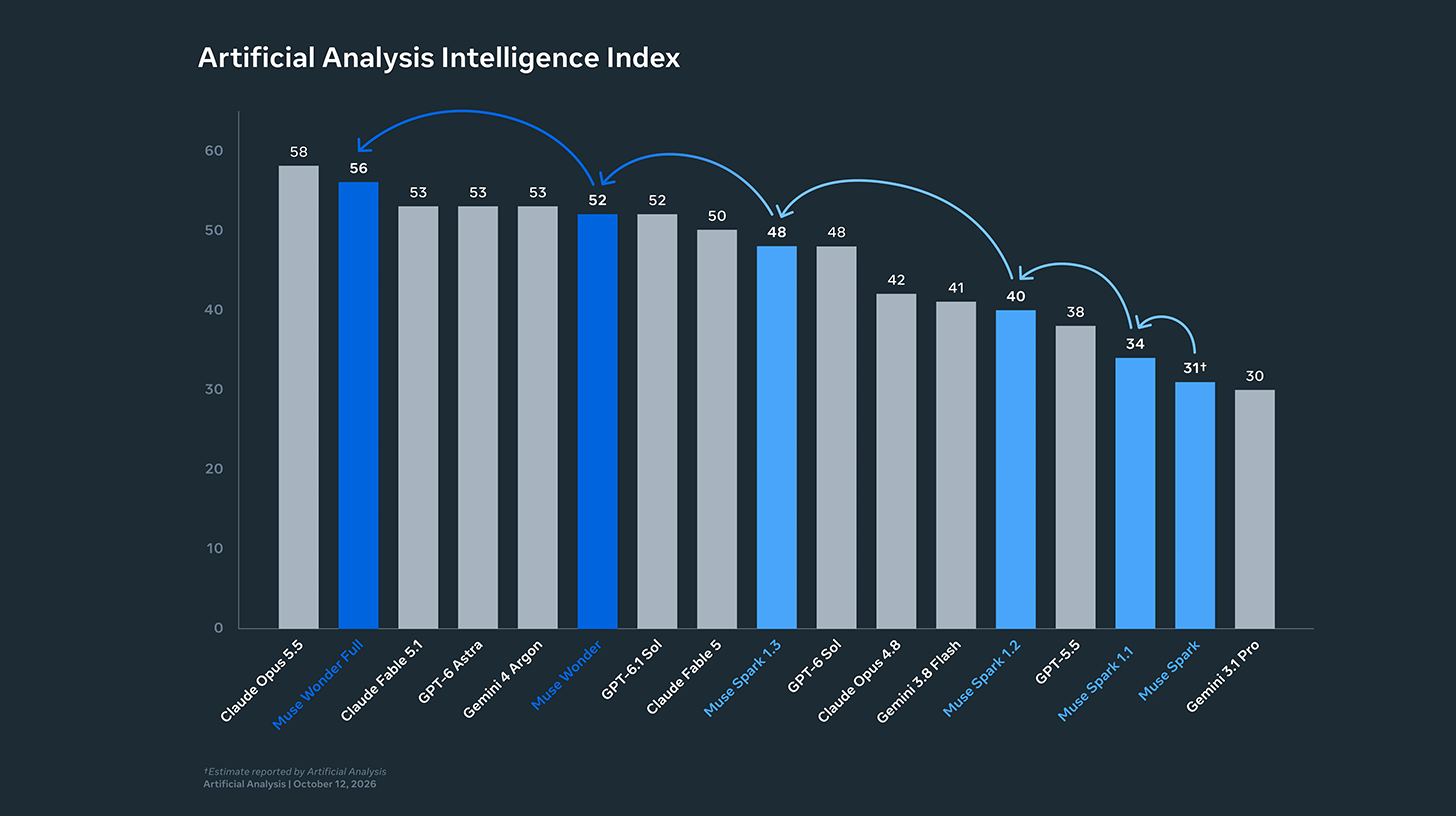
Wonder 4 is a mixture-of-experts enhancer with 13 experts in every block. A router sends each patch to 5 of them so blur, grain, compression and low resolution can be fixed where they sit, without a defect mask.
Why it mattersOne enhancer is trying to fix several different flaws in one photograph.
arXiv ↗Media & entertainment
AI in the films, shows, micro-dramas, music and ads people watch, the studios and platforms making them, and the rules for AI-made content.
NBCUniversal backs EloElo's microdrama app
TechCrunch said EloElo raised $80 million in a Series C from Hornbill Capital and NBCUniversal, at a $500 million valuation, taking its total to $130 million. Story TV has over 33 million active users.
Why it mattersA Hollywood studio is funding phone-length drama built with AI tools.
TechCrunch ↗AERO is a Vista desktop music video made with Claude
Latent Matinee says anabology directed AERO, a 3-minute music video added 4 November, with Claude in Claude Code credited for production. It names Midjourney v8.2 and GPT Image 2.5 as well.
Why it mattersA disclosed credit splits the director from the coding agent that assembled it.
Latent Matinee ↗Dead End Job, a punk video made with Higgsfield and Wan
glu.tv lists Mad World TV's Dead End Job, a 2:15 music video added 4 November. The page says it was made with Higgsfield and Wan.
Why it mattersA two-minute punk clip is credited to a specific pair of generators.
glu.tv ↗Who Stole Joey's Joy mixes ChatGPT, Pixverse and Seedance
glu.tv lists Grey Chan's Lab's 19-minute film, added 4 November. The page says it was made with ChatGPT, GPT Image, Pixverse and Seedance.
Why it mattersA longer adventure is stacking chat, stills and two video tools.
glu.tv ↗Melt With Me uses Veo 3 and Suno
glu.tv lists Chris and Crystal AI Art's Melt With Me, a 3:03 video added 3 November with 14K views. The page says it was made with Midjourney, Nano Banana, Suno and Veo 3.
Why it mattersThe picture, the grade and the song are each pinned to a named tool.
glu.tv ↗The Forest, a Higgsfield short with 87K views
glu.tv lists Black Lion Studios Hawaii's The Forest, a 9:09 film added 3 November with 87K views. The page says the whole movie was made with Higgsfield.
Why it mattersA nine-minute film is being presented as one tool's work.
glu.tv ↗The Eternal Haunting uses ElevenLabs and Kling
glu.tv lists GUS ARTMAN AI's The Eternal Haunting, a 2:15 film added 3 November. The page says it was made with ElevenLabs and Kling.
Why it mattersThe voice and the picture are credited to two different generators.
glu.tv ↗Human Factor stacks ChatGPT, Grok, Suno and ElevenLabs
glu.tv lists AJ - Prompt and Motion's Human Factor, a 5:51 film added 2 November. The page says it was made with ChatGPT, ElevenLabs, GPT Image, Grok and Suno.
Why it mattersOne short names five tools, including two rival chat models.
glu.tv ↗The Last Nursery runs for an hour on Runway and Seedance
glu.tv lists The Last Nursery of Elderwall, a 1:04:20 film added 1 November with 63K views. The page says it was made with Runway and Seedance 2.5.
Why it mattersAn hour-long feature, not a sketch, is credited to two video tools.
glu.tv ↗Chips & compute
Chips, data centres and the power behind them.
AMD puts a $2.9 billion price on Taalas
The Globe and Mail said AMD's Wednesday filing priced the cash-and-stock purchase of Toronto chip startup Taalas at about $2.9 billion, with $1.4 billion contingent. The August deal has not closed.
Why it mattersA specialized inference chip now has a number, and it is not a small one.
The Globe and Mail ↗Anthropic's compute commitments hit $895 billion
CNBC said Anthropic's amended filing put third-quarter revenue at about $17 billion and the quarter's net loss at $23.29 billion. Purchase and lease commitments, mostly compute, were about $895.4 billion.
Why it mattersThe IPO story is now a bill for chips as much as a revenue story.
CNBC ↗Fireworks shows 1,500 tokens a second on Blackwell
Fireworks said its 3 November Ultra-fast preview, on Nvidia Blackwell, hit 1,500 tokens a second on DeepSeek V4.1 Flash. A 30-turn agent task in its test fell from about a minute to 8 seconds.
Why it mattersSpeed is being sold as its own tier, with a measured agent task attached.
Fireworks ↗vLLM 0.33 drops CUDA 12.9 wheels
vLLM 0.33.0rc3, released 2 November, moves to PyTorch 2.14 and ships release wheels for CUDA 13 only. The notes say the CUDA 12.9 wheels and images are dropped.
Why it mattersA serving stack is leaving the last CUDA 12 line behind.
GitHub ↗llama.cpp 0.9.0 adds FP8 and four new architectures
llama.cpp 0.9.0, released 4 November, adds OCP FP8 E4M3 quantization and support for Clover, Limite, Metis-1.6 and Mistral Large 4. It also adds Chatterbox speech and a flash-attention op for multi-sequence caches.
Why it mattersThe local runner's versioned release is a format change, not only a patch.
GitHub ↗Ray 2.60 makes shuffle v2 the default
Ray 2.60.0, released 4 November, uses shuffle v2 by default for joins and aggregations. Parquet reads size tasks from row-group metadata, and Serve can start replacements before stopping old replicas.
Why it mattersA data engine used under training jobs is changing how it moves rows.
GitHub ↗MariaDB 2027 adds agent memory and a faster peak
MariaDB said Enterprise Platform 2027, out 4 November, measured 56 percent higher peak throughput. It adds shared agent memory, a semantic cache and vector search in the engine.
Why it mattersA database is selling itself as the place an agent remembers and looks up.
MariaDB ↗LoopVQ quantizes a looped model's cache across steps
A paper says looped transformers store keys and values at every loop, so the cache grows with the loops. LoopVQ codes channels from several loop steps together and fine-tunes the codebooks toward full precision.
Why it mattersThe memory bill of a looped model is being treated as its own compression problem.
arXiv ↗Fireworks plans European Nvidia capacity for 2027
Fireworks said it will expand in Europe on Nvidia's Vera Rubin and Grace Blackwell platforms, with DSX and Spectrum-X, beginning in 2027. The note came at its Forge conference on 3 November.
Why it mattersA specialist inference cloud is booking next year's chips outside the US.
Fireworks ↗Policy & safety
Laws, lawsuits and safety incidents.
OpenAI says a run found 948 Linux privilege bugs
OpenAI said on 4 November that one research run validated 948 local privilege-escalation bugs in Linux and drafted patches, at an API cost of $1.2 million. People reviewed the output before reports went to maintainers.
Why it mattersA lab is pricing automated bug-finding in the millions, and publishing the count.
OpenAI ↗AI political groups had a mixed election night
TechCrunch said two industry PACs spent $4.8 million backing South Carolina's Darline Graham, who lost. Leading the Future spent $27.38 million in the primaries.
Why it mattersIndustry money and safety-group money both won some races and lost others.
TechCrunch ↗DuckDuckGo tells schools it can turn AI off
TechCrunch said DuckDuckGo is pitching schools after Google's classroom change, and its CEO pointed to docs for switching the default. noai.duckduckgo.com turns AI answers and images off.
Why it mattersA rival search box is selling the off switch Google's schools say they lack.
TechCrunch ↗Axon is sued over AI licence-plate cameras
The Verge said a class action filed Tuesday claims Axon did not disclose how its plate cameras collect and share data under California law. The suit calls the network almost impossible to avoid.
Why it mattersThe fight over automated plate readers has moved from one vendor to the category.
The Verge ↗Pydantic AI patches two high-severity bugs
Pydantic AI 2.66.0, released 4 November, fixes high-severity bugs in its web-fetch tool and in secret redaction. The fetch bug matters when someone else can choose the URL.
Why it mattersAn agent framework's fetcher and its redaction both needed urgent fixes.
GitHub ↗Ray 2.59.1 reacts to a compromised certificate authority
Ray 2.59.1, released 4 November, says the eMudhra intermediate certificate authority keys were reported compromised on 20 October. The release is marked as a security fix because pip trusts its own certificate bundle.
Why it mattersA training framework is patching trust in certificates, not only its scheduler.
GitHub ↗A paper tests whether a bad habit can be made to stay gone
Researchers train two models to misbehave, one only when a cue is in the prompt and one more broadly after insecure-code tuning. They then compare ways to suppress that behaviour without losing general ability.
Why it mattersStopping a model from cheating once is not the same as stopping it for good.
arXiv ↗A common rule reads a model's layers too early
A paper says a three-layer probe rule reported an onset 19 stages too early on synthetic curves with transformer-like correlation. The authors offer an estimator with a calibrated error rate.
Why it mattersA lab can mis-time when a model 'knows' something if neighbouring layers move together.
arXiv ↗Robotics
Robots, self-driving and AI in the physical world.
Liber-0 tries new robot tasks without a fresh demo
LiberAI said Liber-0, trained on 2.2 million hours of human video, succeeded on 36 percent of 600 trials across 60 new tasks. Pick-and-place succeeded 63.5 percent of the time.
Why it mattersA startup is claiming a robot can attempt a task nobody showed it on the robot.
LiberAI ↗PolicyIK learns inverse kinematics as a control policy
PolicyIK is a reinforcement-learning policy that turns a target pose into joint commands and is built to hold millimetre error. It is meant for arms that vision-language-action models have to drive.
Why it mattersThe last centimetre of a robot reach is being trained, not hand-tuned.
arXiv ↗GUILD tells a teleoperator what to record next
GUILD chooses which demonstrations to collect so the data is more useful to the policy, instead of filtering a pile afterwards. It alternates proposing a task with scoring the new data.
Why it mattersRobot data collection is being aimed, not left to the operator's hunch.
arXiv ↗A coding agent stands in for the person driving the robot
PyRUA-DataFarm gives a coding agent one calibration clip and a request, then has it rebuild the task in simulation and render the rollout as video. The paper says a policy can train on that labelled video.
Why it mattersThe expensive part of robot data, a person at the controls, is the target.
arXiv ↗PACT designs a robot finger's tendons and its motors together
PACT picks tendon routes, moment arms and capstan sizes at once so a finger does not gain force by giving up speed. It is applied to a finger with four degrees of freedom, under the pose where force is weakest.
Why it mattersThe hand's strings and its motors are being chosen as one design, not two.
arXiv ↗PadLoc places a sensor on a floor plan without training
PadLoc localizes a moving sensor in a known floor plan without training a new model. It uses the walls' main directions to build a small set of poses, instead of searching a dense grid.
Why it mattersA robot can use the building plan it already has, not a fresh neural map.
arXiv ↗RoboTryOn turns a human video into a robot demonstration
RoboTryOn treats human-to-robot translation as a virtual try-on, so a human video can stand in for a teleoperated demo. The authors say overlaying a robot or retargeting a pose still leaves a gap on high-degree hands.
Why it mattersThe scarce input for a robot policy is a person driving it, and this tries to skip that.
arXiv ↗An asynchronous policy lets a robot think off the control loop
A paper splits a vision-language robot so semantic reasoning does not sit inside the fast control loop. The aim is to keep a larger model without making the arm wait on every token.
Why it mattersA slower planner can run beside the loop that actually moves the robot.
arXiv ↗Science & health
AI in biology, medicine, climate and maths.
OpenEvidence opens a free study tool for clinicians
OpenEvidence launched Learn on 4 November, free to its users, with more than 50,000 board-style questions, case tutoring, flashcards and CME credits. Johns Hopkins and Penn's Perelman school are the named partners.
Why it mattersThe chatbot doctors already query is growing a classroom next to the clinic.
OpenEvidence ↗OpenBrain ships MRI labels with a confidence score
OpenBrain releases parcellations for 35,838 OpenNeuro MRI scans from 607 datasets. Each case has a confidence tier and a risk score so a user can drop weak labels without rerunning the segmenter.
Why it mattersA generated brain map is only as useful as the note that says which ones to trust.
arXiv ↗BEND 2.0 asks if a DNA model can guide a design
BEND 2.0 tests whether genomic models predict the effect of a DNA change and whether that prediction can steer a design. Across eight tasks, a linear readout on a frozen model can match the model's own scores.
Why it mattersA DNA model is being graded on edits, not only on reading a sequence.
arXiv ↗MedPhysBench scores dose calculations and planted errors
MedPhysBench builds medical-physics problems, including a calibration worksheet, with answers from the protocols themselves. On a 1,200-item split, 12 models scored from 33.3 percent to 100 percent on calculation.
Why it mattersA model that will touch a radiation plan is being tested on the arithmetic first.
arXiv ↗A tuned classical filter estimates EEG phase in real time
A paper tunes a biquad filter with Bayesian optimization for real-time EEG phase in the theta band, aimed at closed-loop stimulation. It tests the filter on recordings taken during peripheral vibration.
Why it mattersThe phase estimate that drives a stimulator may not need a deep network.
arXiv ↗A small transformer adds up why it chose a class
Reading Why builds a small transformer whose attention is a Born measurement, so each word's share of an answer adds up exactly. They test it on e-SNLI.
Why it mattersAn explanation that has to add up to the answer is a different claim from a heatmap.
arXiv ↗ManifoldVelo ties a cell's path to its RNA speed
ManifoldVelo learns a cell's coordinates, a continuous RNA path and regulatory rates from one static transcriptome. It targets cycles and branching differentiation, where a global path and a local change disagree.
Why it mattersVelocity and pseudotime are being fit together, not one after the other.
arXiv ↗HistoTx reads a slide and its gene map together
HistoTx fuses microscope images with spatial transcriptomics, including at more than one gene-map resolution. It is aimed at reading tissue shape and gene activity as one sample.
Why it mattersA pathology slide and the genes measured on it can be scored together.
arXiv ↗A browser maps 1,396 fly gene groups
A paper describes a web app that places any of 1,396 FlyBase gene groups on the fruit fly's chromosome map and lists each gene's neighbours. It measures how those families are spaced.
Why it mattersA lab can see whether a gene family clusters without building a new plot.
arXiv ↗Open source
Open-weight models and community releases.
Moonshot publishes Kimi K3.1 Pro weights
Kimi K3.1 Pro is on Hugging Face with 2.8 trillion parameters, 104 billion active, and a 1,048,576-token context. It takes text and images. Moonshot names vLLM, SGLang and TokenSpeed as runners.
Why it mattersA 3-trillion-class model can now be hosted outside Moonshot's own API.
Hugging Face ↗Ultralytics saves a stream at the camera's own frame rate
Ultralytics 8.4.202, released 4 November, writes RTSP, webcam and multi-stream predictions at each stream's own frame rate instead of assuming 30 fps. Video files and screen capture are unchanged.
Why it mattersA detection overlay no longer plays a live camera at the wrong speed.
GitHub ↗Reference MCP servers publish a 4 November set
The Model Context Protocol servers release on 4 November publishes filesystem 2.2.0, memory 2.1.0 and sequential-thinking 2.1.1, plus PyPI packages for fetch, git and time dated 2026.11.4.
Why it mattersThe sample servers agents actually call got a coordinated version bump.
GitHub ↗Gemini CLI's nightly keeps a chosen flash model
A 4 November Gemini CLI nightly handles a broken stream while an extension release downloads, and keeps an explicit gemini-2.5-flash choice during dynamic model resolution. It also maps a SubagentStop hook.
Why it mattersA command-line agent stops swapping the model you already named.
GitHub ↗Mistral's tokenizer maps the developer role to system
mistral-common 1.13.1, released 2 November, remaps an OpenAI-style developer role to system when converting a chat. The rest of the notes move tests around.
Why it mattersA chat exported from one API can be read by Mistral's stack without a role error.
GitHub ↗Anthropic's Python SDK adds typed errors
Anthropic's Python SDK 2.5.0, released 4 November, adds error classes for HTTP statuses and API codes. On Bedrock it rejects an empty model name before sending the request.
Why it mattersA failed Claude call can be caught by type instead of by parsing the body.
GitHub ↗Weaviate 1.39.15 ships a security bump and no new features
Weaviate 1.39.15, released 4 November, lists no breaking changes and no new features. The notes include a security dependency bump and a test that waits for authz logs.
Why it mattersA vector database patch is about the certificate bundle, not a new query.
GitHub ↗llama.cpp sends a realtime error instead of crashing
Build b12119, released 4 November, makes the server send an error event when a realtime handler throws, instead of crashing. Websocket handlers are also routed through one error path.
Why it mattersA live session reports the failure instead of dropping the process.
GitHub ↗CrewAI 1.15.35 refreshes its model catalog
CrewAI 1.15.35, released 3 November, updates the litellm model catalog and adds the changelog for 1.15.34. The notes name no behaviour change beyond that bookkeeping.
Why it mattersThe follow-up build is a catalog refresh, not a new agent feature.
GitHub ↗Quick hits
Smaller stories worth a glance.
- We Go Higher names Veo 3 and Sunoglu.tv lists Chris and Crystal's 4:04 film, added 2 November, made with Midjourney, Nano Banana, Suno and Veo 3.glu.tv ↗
- TAHGEE Roots credits FFmpeg with two generatorsglu.tv lists Mad World TV's 4:58 music video, added 1 November, made with FFmpeg, Higgsfield and Wan.glu.tv ↗
- Extraordinarily Unordinary uses the same four toolsglu.tv lists another Chris and Crystal film, 4:16 and 63K views, added 1 November, made with Midjourney, Nano Banana, Suno and Veo 3.glu.tv ↗
- llama.cpp speeds OpenCL flash attentionBuild b12118, released 4 November, uses more workgroups for a quantized gate and handles flash attention for two group sizes.GitHub ↗
- She Protected the Beast draws 37K viewsglu.tv lists Golden Movies AI's 17-minute sequel, added 3 November, with 37K views.glu.tv ↗
- The Signal, a short with 894K viewsglu.tv lists Sword Speed's 3:52 sci-fi anime short, added 4 November, with 894K views.glu.tv ↗
- Ragnarok Online part 4 passes 131K viewsglu.tv lists Sony Hidayat AI Films' 5:40 continuation, added 4 November, with 131K views.glu.tv ↗
- Gog and Magog, a 27-minute listingglu.tv lists Future Frame Movies' 27:42 film, added 3 November, with 5K views.glu.tv ↗
Deals & funding
Who raised money, and who bought whom.
Acquisitions 1
One company buys another outright.
Meta buys Conductor
- Price
- Undisclosed
Conductor is now part of Meta
TechCrunch said Meta bought Conductor, whose agents work in parallel. Its cloud service shuts down on 20 November. Terms were not disclosed.
Partnerships & contracts 1
A large commercial agreement, or a government contract.
Nooks sign a deal
- Value
- $500M
Multi-year agreement
Nooks said General Catalyst's Customer Value Fund committed $500 million in growth capital, repaid from the value that spend creates, as it launched Node for sales reps.
· Nooks ↗
On the calendar
What's coming up, in date order, and how sure we are about each.
- 2–13NovProtoStar climate challengeToday
- 5–7NovThird LA Vertical Drama MarketToday
- 5–6NovBoxWorks 2026 in San FranciscoToday
- 5NovAgility expected to start trading as AGLTToday
- 5NovHogwarts Legacy adds DLSS 5Today
- 6NovOllie assistant shuts downTomorrow
- 7NovTerry McMillan Presents: Paradise with You premieres2days away
- 9–20NovCOP31 climate conference in Antalya4days away
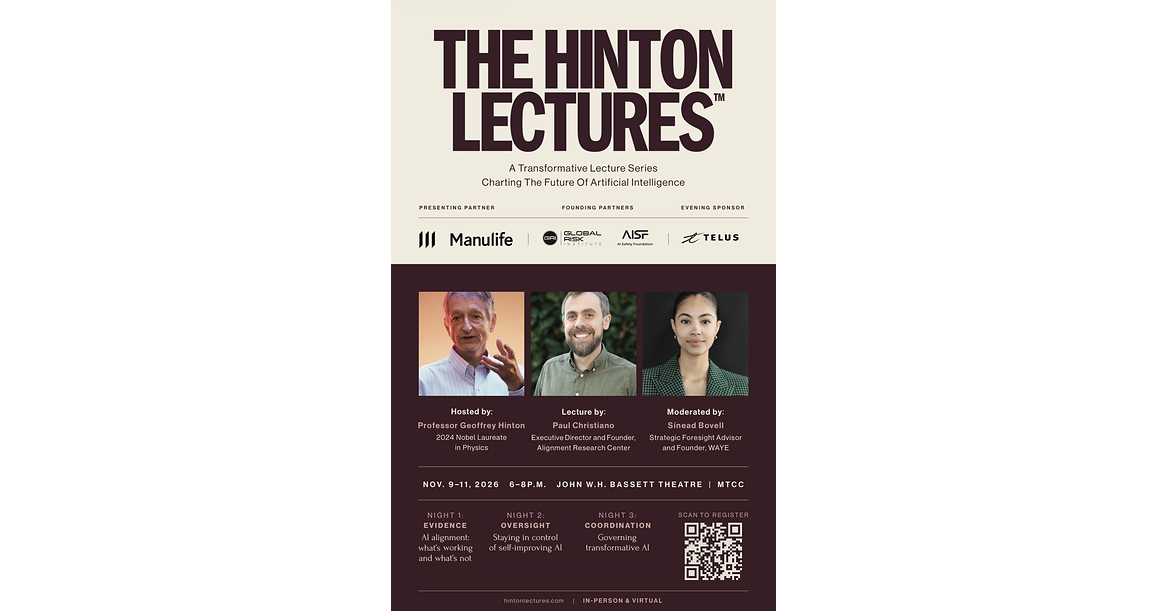
- 9–11NovThe Hinton Lectures on AI safety4days away
- 9NovCharmed By a Southern Monster premieres4days away
- 11NovJules becomes read-only6days away
- 12NovUpdated Claude usage policy takes effect7days away
- 15NovComments close on China's draft tech-export list10days away
- 15NovWorkBuddy and CodeBuddy free period ends10days away
- 20NovAI Film Award submissions close2weeks away
- 20NovConductor cloud service shuts down2weeks away
- 20NovUpdated OpenAI usage policies take effect2weeks away
- 21NovInaugural edition in Hollywood2weeks away
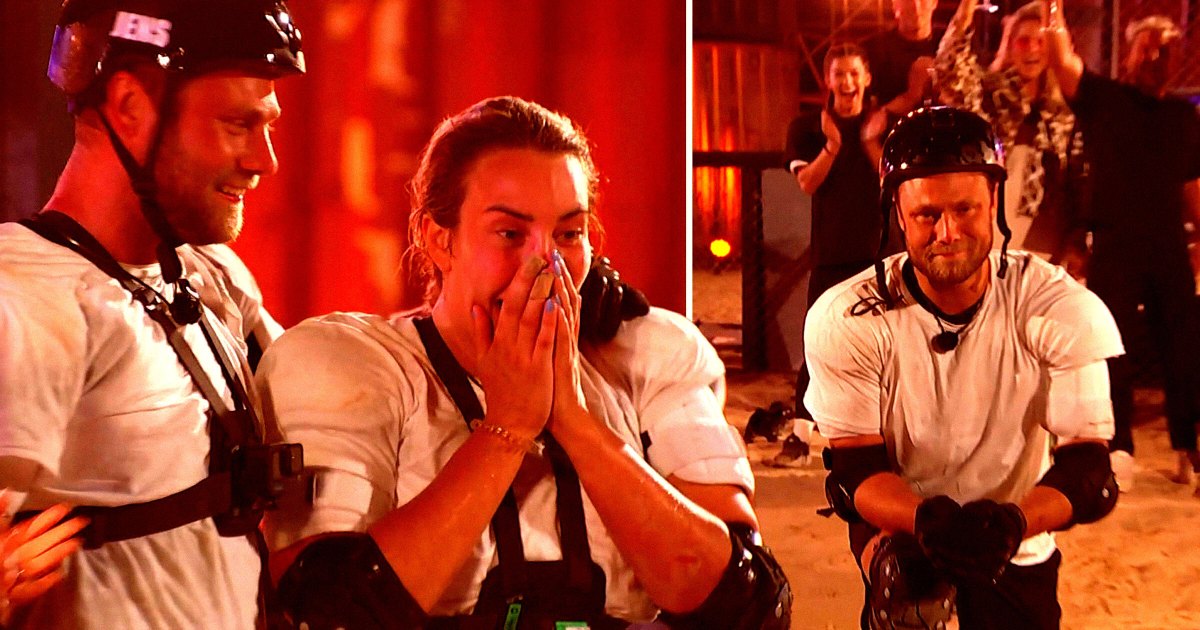
- 22Nov'The Challenge Sverige' originally scheduled (now delayed to 2027)2weeks away
- 29NovDaybreak Blue sessions can be used for training3weeks away
- 30–3Nov–DecContent London 20264weeks away
- 30NovRose d’Or Awards4weeks away
- 1DecHearing on Apple's bid to block testimony4weeks away
- 4DecAI-made film opens in limited release4weeks away
- 4DecGods Don’t Give Gifts premiere4weeks away
- 4DecSingapore AI Safety Fellowship ends4weeks away
- 31DecHy4 half-price offer ends8weeks away
- 31DecJules shuts down8weeks away
- Later in NovGuided Learning pilot in US schools
- Mid-NovXREAL Aura shipments begin







Stories are summarized in plain language; follow the link before quoting a figure. Story images are shown from the publishers' own sites.