Tuesday, 3 November 2026
The last 24 hours' hottest news in AI, sorted by field, each story with a line on why it matters.
Story of the day
The single most consequential story of the day.
- current models past the line
- None
- prospectus updated Monday
- S-1A
- kept in frontier model work
- People
Anthropic says a self-improvement line may be close
Anthropic's revised prospectus says its estimates for future models, not today's, suggest it may soon meet its own test for dramatically accelerated progress from AI. It has not marked any current model as past that line, and says people should stay in frontier development.
Why it's the story of the dayA lab that may not see a capability jump until after it happens is naming a gap in its own safety process.
Startup of the day
A young company people are talking about today.
42AI leaves stealth with a model of how people choose
42AI said its behavioral world model estimates how a person will act, including in a situation it has not seen, and that brokerages are using it. The $62.5 million it called a seed came from the founders and Infinity Group over three years.
Why it's worth a lookA system that profiles customers from ordinary records can steer a desk before the person decides.
TechCrunch ↗Models & labs
New models, the labs behind them, and the rules they answer to.
Anthropic's quarter took in nearly $17 billion
The Verge said Anthropic's updated prospectus shows about $17 billion of revenue in the quarter and a $23.29 billion net loss. Through 30 September, revenue was $33.24 billion and the net loss was $104 billion, mostly from accounting charges.
Why it mattersThe filing puts a revenue boom and a much larger loss on the same page, ahead of the IPO.
The Verge ↗Musk says Grok Bot cost more to serve than it earned
TechCrunch reported that some Grok Bot users found their weekly limits already spent over Halloween weekend. Elon Musk wrote on 1 November that the cost of serving Grok Bot was unsustainably high relative to revenue.
Why it mattersA product pitched as a growth engine is now being rationed because serving it does not pay.
TechCrunch ↗OpenAI scores models on the chores of ordinary life
OpenAI published LifeVal, a test of tasks people said they wanted help with, drawn from time-use studies and a survey of 3,995 people. It says recent models score highly on many of those tasks, including ones that require taking action.
Why it mattersA lab is grading itself on childcare, forms and budgets, not only on exams.
OpenAI ↗ChatGPT on the phone can hold two accounts at once
OpenAI's release notes say account switching is rolling out on the ChatGPT iOS and Android apps. A person can stay signed in to two accounts and switch without signing out, and each keeps its own chats, memory and plan.
Why it mattersWork and personal chats can stay on one phone without a logout in between.
OpenAI ↗OpenAI reads a model's activations to stop a bad reply
OpenAI said it trains probes on a model's internal activations and scores a reply token by token, so it can cut off a completion or block a tool call. It said the probes were more robust to the jailbreaks it tested than its text classifiers.
Why it mattersA safety check that watches the model's state can interrupt a reply while it is still being written.
OpenAI ↗vLLM 0.33 adds new models and drops CUDA 12.9 wheels
Release candidate 0.33.0, published 2 November, adds models including Reflection Beam-1.0 and Muse Spark Open. Its wheels and images are CUDA 13.0 only, and the CUDA 12.9 builds are no longer published.
Why it mattersA serving stack that drops an older CUDA line will force some clusters to move before they upgrade the software.
GitHub ↗SGLang 0.5.23 serves Muse Spark, Beam and Cosmos
SGLang 0.5.23, released 2 November, adds cookbooks for Muse Spark Open, Beam-1.0, MiniMax-M3.1-Flash and Cosmos3 simulation checkpoints, among other models. The notes credit 1,007 pull requests.
Why it mattersOne server update is how several new open models become something a team can actually run.
GitHub ↗LLM Compressor 0.15 adds HIGGS and expert pruning
vLLM's LLM Compressor 0.15.0, released 29 October, adds HIGGS mixed-precision quantization, MoE expert pruning and block-wise quantization-aware distillation. It also rewrites the offloading path for layerwise compression.
Why it mattersShrinking a mixture-of-experts model is now a documented step, not a one-off script.
GitHub ↗Two ReLU neurons are enough to show a phase change
The paper studies gradient descent on a two-neuron network that already shows several phases of learning. It maps the global landscape and the bifurcations as training proceeds.
Why it mattersA tiny net is being used to see why feature learning changes course mid-training.
arXiv ↗Agents & coding
AI that acts on its own, and the tools developers build with.
Minecraft agents spent eleven minutes naming a fertilizer officer
The Decoder said Y Combinator Labs and Olam Labs put 50 GPT-6.1 Sol agents in Minecraft for three hours and told them to build a civilization. After a deadly first night, four spent 11 minutes appointing a fertilizer officer for one wheat block.
Why it mattersA swarm with a vague goal can spend its time writing rules instead of doing the job.
The Decoder ↗Qodo hands Codex the rules of the whole codebase
OpenAI said Qodo's Codex plugin pulls organizational rules and review into the coding session, including across repositories. CEO Itamar Friedman described customer estates that can span 10,000 repositories, where a local change can break another service.
Why it mattersA coding agent that only sees one repo can miss the bug that lives next door.
OpenAI ↗OpenCode can switch worktrees from the keyboard
OpenCode 2.2.5, released 30 October, adds shortcuts to pick a worktree and its base branch, and a toggle for shell mode in the composer. A compaction setting can reserve a percentage of the context window.
Why it mattersOne setting can keep a little context free on both small and large models.
GitHub ↗LangGraph stops a trace policy from rewriting the stream
LangGraph 1.2.19, released 30 October, keeps trace_policy from rewriting streamed output. The same tag also ships a checkpoint-sqlite patch.
Why it mattersA tracing switch that rewrites the live stream can change what the caller thinks the agent said.
GitHub ↗Claude's agent SDK can exempt some paths from a read block
Version 0.3.316 of the Claude agent SDK, published 31 October, adds permissions.blockReadsExemptPaths. Those paths, set only from settings, stay readable when reads outside the working directories are blocked.
Why it mattersA host can lock an agent out of the disk and still let it see the settings file.
GitHub ↗OpenHands Cloud can fence what a sandbox may reach
OpenHands Cloud 0.94.0, released 2 November, adds an opt-in network policy for sandbox egress. The release also bumps the image tag to 1.83.0.
Why it mattersA cloud agent sandbox can be told which outbound traffic is allowed.
GitHub ↗LangChain stops rewriting Anthropic message content
langchain-core 1.7.4, released 2 November, stops the Anthropic translator from mutating message content. The notes also say this minor line is the last that will support Python 3.10.
Why it mattersA library that edits the message in place can change what the next step thinks the user said.
GitHub ↗any-llm can bill Hugging Face calls to an organization
any-llm 1.41.0, released 30 October, can bill Hugging Face Inference Providers usage to an organization. It also declares replayed tools on Bedrock when a request passes none.
Why it mattersA team can put shared inference on a company bill instead of a personal token.
GitHub ↗E2B file writes accept raw bytes
E2B SDK 2.62.1, released 2 November, lets files.write, files.writeFiles and Volume.writeFile take a Uint8Array, including a Node buffer. It also raises the minimum undici version to 8.12.3.
Why it mattersAn agent sandbox can write binary files without a string round-trip.
GitHub ↗Video generation
The models and tools that make video.
InvokeAI 7 upgrades a database that version 6 cannot open
InvokeAI 7.0.0 alpha 4, published 2 November, warns that pointing it at an existing root upgrades the database one way. Version 6 refuses to open a database that contains migrations it does not recognise.
Why it mattersTrying the new alpha in a live install can lock that install out of the current app.
GitHub ↗InvokeAI's canvas can keep shapes editable
InvokeAI 6.14.3, released 1 November, adds a vector layer with editable shapes and splines. The shapes can be rasterized and used for image-to-image, and a model-manager fix keeps partial downloads restartable.
Why it mattersA layout can stay a drawing until the moment it becomes pixels for the model.
GitHub ↗Unsloth speeds image generation when memory is tight
Unsloth 0.1.913-beta, released 30 October, says it speeds Qwen-Image generation on Linux when VRAM is limited and runs FLUX.2-klein-9B on low-RAM machines. The app also adds custom chat backgrounds.
Why it mattersA local image model that fits a smaller card is usable on machines that were sitting out.
GitHub ↗Google's GenAI SDK can ask for a video upscale
The Google GenAI Python SDK 2.34.0, released 29 October, adds a video upscale task parameter and support for a continuation token. It also adds Python 3.15 support and drops Python 3.10.
Why it mattersAn upscale and a resumed job can be requested from the same client a team already uses.
GitHub ↗XREAL Aura preorders are open in Japan
Google's Aura post said orders in Japan start on 2 November, after the US, Canada and Korea opened on 28 October. The wired Android XR glasses include Gemini, with launch pricing from $1,099 through the end of the year.
Why it mattersA glasses product that was announced last week is now actually on sale in Japan.
Google ↗A video bench flips the opening geometry
GeoFlip tests whether a video model changes the physical outcome when the starting geometry is flipped. The benchmark is built around cases where that change should reverse what happens next.
Why it mattersA clip that looks right can still ignore the physics of how the scene was set up.
arXiv ↗Autoregressive video is tested at one step and at many
Any Forcing studies autoregressive video models that are usually locked to a fixed number of sampling steps. It looks for methods that stay stable at a single step and still work at other step counts.
Why it mattersA generator that only works at one step count is awkward to trade off against quality.
arXiv ↗Few-step image distillation depends on the critic
Distribution matching distillation trains a few-step student from the gap between a teacher's score and an online critic. The paper asks what that critic needs, in capacity and in information, to be a reliable trainer.
Why it mattersA faster image model can fail because the judge of its outputs is too weak.
arXiv ↗A bench asks models to reason around a full panorama
PanoVideoBench is a manually built test of panoramic video, where the relevant evidence can sit in different directions and at different times. The paper says understanding it means connecting observations across the sphere and across time.
Why it mattersA model that only watches the forward view will miss what the camera has beside it.
arXiv ↗Creator tools
The apps and platforms people make video with.
Haystack's candidate release pins two safer dependencies
Haystack 2.31.1-rc1, released 2 November, requires anyio 4.14.2 or newer because earlier versions are affected by CVE-2026-63374. It also requires certifi 2026.10.19 or newer, after keys for some certificate authorities were compromised.
Why it mattersA framework update is how a transitive library with a known hole gets forced upward.
GitHub ↗The OpenAI Python SDK can compact an agent's context
openai-python 3.42.0, released 31 October, adds settings for compacting an agent's context. The notes list it as an API feature on that tag.
Why it mattersA long agent session can be told to shrink its context instead of running until it breaks.
GitHub ↗Prefect's dev build rejects bad input with a 422
Prefect 3.9.2.dev2, published 2 November, returns HTTP 422 instead of 503 or 500 for invalid input. The notes list it as a bug fix on the development line.
Why it mattersA client can tell a bad request from a server that is actually down.
GitHub ↗Agent Framework adds a .NET skill for building with it
The .NET 1.27.0 release of Microsoft's Agent Framework, dated 30 October, adds a consumer skill for building with the framework. The same day's Python release was a separate package.
Why it mattersA .NET team gets a packaged guide instead of reading the Python docs and translating.
GitHub ↗Cognee adds an API for settling conflicting facts
Cognee 1.6.6, released 29 October, adds a durable API for resolving conflicting facts and for retiring a choice. The notes also describe faster cache and deletion paths and less repeated embedding work.
Why it mattersA memory store can record which of two facts won, instead of keeping both forever.
GitHub ↗Anthropic's Python SDK adds spend limits and access roles
anthropic 2.4.0, released 2 November, adds generally available methods for analytics, spend limits and role-based access. It also adds error types for hitting a tool-use limit and a compaction limit.
Why it mattersAn app can read spend and roles through the official client instead of an unofficial call.
GitHub ↗Hugging Face file copies can land in a Bucket
huggingface_hub 2.4.0, released 29 October, lets HfFileSystem copy into a Bucket from another Bucket or from a model, dataset or Space repo. Files stored with Xet are copied on the Hub by hash, without a download.
Why it mattersMoving a dataset into Hub storage no longer has to pull every byte to a laptop.
GitHub ↗LangChain 1.4.8 is the last minor on Python 3.10
The langchain 1.4.8 release, published 2 November, warns that Python 3.10 support ends in langchain 1.5.0. It tells users to move to Python 3.11 or later.
Why it mattersA project that stays on Python 3.10 will not be able to take the next minor of the library.
GitHub ↗LangGraph's SDK checks that a dropped connection resumes
LangGraph SDK 0.4.11, released 30 October, adds a test that a reconnect loop resumes after the connection drops. It shipped alongside the 1.2.19 library release.
Why it mattersA client that cannot resume a stream will redo work the server already did.
GitHub ↗Media & entertainment
AI in the films, shows, micro-dramas, music and ads people watch, the studios and platforms making them, and the rules for AI-made content.
The Times sues Brave over pages sold on to AI labs
The New York Times sued Brave on Monday, TechCrunch reported, alleging it scraped the paper and passed pages to labs including Anthropic, Perplexity, Mistral, xAI and Cohere. Three other newspapers filed a similar suit the same day.
Why it mattersA browser is being treated as a supplier of training text, not only as a way to read the web.
TechCrunch ↗WME tells the court that AI training should be licensed
Deadline reported that WME filed a brief on 30 October in the New York Times copyright case against OpenAI. The agency said it does not want AI use of creative work stopped, but licensed, with compensation and permission.
Why it mattersA major talent agency is asking a court to treat training data as something you pay for.
Deadline ↗A shareholder suit says Google trained Lyria on recordings
Music Business Worldwide said Phil Rosen sued Sundar Pichai and other Alphabet directors on 30 October. The complaint alleges Google copied recordings and lyrics to train Lyria and other music models without permission.
Why it mattersMusic training is now a claim against the board, not only a dispute with artists.
Music Business Worldwide ↗Claude Code is steered away from copying a named game
Ars Technica reported that Anthropic added instructions so Claude Code on Opus 5.5 will not recreate a specific existing game, even if it is renamed. Addy Osmani said original games and games from a user's own designs are meant to keep working.
Why it mattersA coding agent that will build a genre will not, on that setting, rebuild one title.
Ars Technica ↗Artists tell the Times case that licensing already scales
Digital Music News said Cate Blanchett's Human Consent Foundation, the Music Artists Coalition and others briefed the court on 30 October against OpenAI and Microsoft. They argue the creative industries already clear rights at scale.
Why it mattersThe fair-use fight now includes a filing that says the licensing machinery already exists.
Digital Music News ↗Google says AI search makes less money, and ads are the fix
Ars Technica said Alphabet took in almost $128 billion in the third quarter, with net income almost $9 billion lower than a year earlier. The story says AI search makes less money and that Google is adding ads.
Why it mattersThe search box that answers in prose is being asked to carry an ad business again.
Ars Technica ↗A foveated vision system is checked on where it looks
FoAViS studies a machine vision system that, like human sight, sees sharply only at the centre and must choose where to look. The paper analyses the fixation strategies the system learns.
Why it mattersA camera model that cannot look everywhere at once has to be judged on where it points.
arXiv ↗Image tokenizers are split across sparse experts
MoETok routes 1D visual tokens through sparse experts so a tokenizer can keep fine detail and higher-level meaning. The paper targets tokenizers used for both generation and understanding.
Why it mattersHow a picture is chopped into tokens decides what a later model can still see.
arXiv ↗Compression is adapted for both machines and people
IGDA-ICMH adapts features and the network so one compressed image can serve machine vision and human viewing. The paper says most prior work tunes for one task or trains several heads.
Why it mattersA file that looks fine to a person can still be a poor input for a detector, and the reverse.
arXiv ↗Chips & compute
Chips, data centres and the power behind them.
Aramco closes a 49 percent stake in HUMAIN
Arab News reported that Aramco closed a deal for 49 percent of HUMAIN, with the Public Investment Fund keeping 51 percent. The cash portion is about $2.6 billion in 2026, toward 3 gigawatts of data centres by 2030.
Why it mattersA national oil company is now a co-owner of the vehicle meant to export Saudi computing.
Arab News ↗OpenAI says future campuses will cut power when the grid is tight
OpenAI launched the Grid Protectors Program on 2 November, saying future campuses will be designed to reduce electricity use when utilities ask. In Georgia it cited an agreement for up to 1,000 megawatts of flexible demand response.
Why it mattersA lab is offering to be a customer the utility can turn down, not only a new load.
OpenAI ↗Runware wants a factory that turns out data-centre pods
TechCrunch reported on 30 October that Runware plans a Romania factory for prefabricated AI data centres. CEO Flaviu Radulescu said production could reach 30 megawatts of capacity a day by 2028, close to a gigawatt a month.
Why it mattersThe pitch is to ship a data centre the way a plant ships a machine, not to build it on site.
TechCrunch ↗Jassy repeats that AWS can be a trillion-dollar business
On Amazon's earnings call, Andy Jassy said he believes AWS can reach a trillion dollars of annual revenue. He put 2026 cash capital expenditure at about $220 billion, mostly for AWS, with more spending in 2027.
Why it mattersThe cloud target and the build-out budget were stated in the same breath.
TechCrunch ↗Big Tech's AI build-out is meeting a colder market
TechCrunch said Alphabet, Amazon, Meta and Microsoft have outlined more than $740 billion of capital expenditure this year, read as AI infrastructure. It said the Nasdaq fell 2.9 percent on Friday, with Nvidia down 4 percent and Qualcomm down 11 percent.
Why it mattersSpending that used to lift the stocks is now being marked down in the same week it is announced.
TechCrunch ↗Omen AI buys Aquatic Labs for cooling-fluid sensors
TechCrunch reported that Omen AI is acquiring Aquatic Labs for $16 million in cash and stock. Omen's sensors look for elements in cooling fluid, Aquatic Labs measures alkalinity, and Allan Adams joins as chief science officer.
Why it mattersKeeping a data centre's coolant healthy is becoming a product, not a lab sample sent away.
TechCrunch ↗Megatron adds an experimental DeepEP v2 dispatcher
NVIDIA Megatron-LM core_v0.20.0, released 29 October, adds an experimental DeepEP v2 backend for its token dispatcher. It also adds experimental MXFP8 communication on the NCCL expert-parallel path.
Why it mattersMixture-of-experts training gets another way to move tokens between chips.
GitHub ↗Truss can reject install fields on a rebuild-free image
Truss 0.18.37, released 29 October, routes base-image builds through Baseten's Build Platform and rejects install fields when docker_server.rebuild_free is set. It also accepts a list form for config secrets.
Why it mattersA serving config can refuse a setting that would force the image to be rebuilt.
GitHub ↗Clean image models are trained from noisy measurements
The paper studies learning a generator of clean images when the training set contains only noisy observations. It looks at diffusion-style models that must predict a posterior at every noise level.
Why it mattersA model that never sees a clean photo still has to learn what a clean photo is.
arXiv ↗Policy & safety
Laws, lawsuits and safety incidents.
A judge lets the NAACP's xAI turbine suit proceed
TechCrunch said Judge Debra M. Brown denied xAI's bid to dismiss an NAACP suit over gas turbines at Colossus, near Memphis. The plaintiffs said at least 35 turbines ran without air permits that xAI argued it did not need.
Why it mattersThe power plant beside a training cluster is now a case that will be argued, not a filing that was thrown out.
TechCrunch ↗Semafor counts hundreds of data-centre moratoriums
Semafor reported on 2 November that more than 300 state and local moratoriums threaten the US data-centre build-out. It said Texas Governor Greg Abbott has revised earlier pro-data-centre policies, while his Democratic opponent has pledged a moratorium.
Why it mattersThe map of where a campus can be built is being drawn in local votes, not only in utility deals.
Semafor ↗A humanist wins a workplace exemption from using AI
TechCrunch profiled David Durman, a University of Kentucky administrator, who won a religious exemption from using AI at work. He calls himself a nontheistic humanist and says handing thought to AI undercuts human flourishing.
Why it mattersThe legal hook for refusing AI at work is not limited to traditional faiths.
TechCrunch ↗Prosecutors say ghost students used AI to steal loan money
Ars Technica said prosecutors charged five people over ghost students who steal identities to pose as college students. The department said the scheme used AI in part, and that it seized more than $750,000 in cryptocurrency.
Why it mattersFinancial-aid fraud is being described as an AI-assisted identity mill, not only as stolen forms.
Ars Technica ↗Privacy accounting gets a boost from visible batch counts
The paper studies privacy amplification for differentially private gradient descent when the server sees how many examples land in a batch. It looks at truncated batches, where the usual sampling proofs do not apply directly.
Why it mattersA training run that already logs its batch sizes may be able to claim a tighter privacy budget.
arXiv ↗Random allocation gets a faster privacy ledger
The paper gives a faster way to account for privacy loss when each person's data is used in k steps chosen from t. It uses a multiscale Fourier transform for the random-allocation scheme.
Why it mattersTeams that sample training steps this way can total the privacy cost without a slow sum.
arXiv ↗One proof covers several kinds of sequential limit
The paper derives instance-dependent limits for bandit regret, sequential tests, best-arm identification and Markov decisions from one chain of arguments. It runs from a divergence decomposition through data processing to a test.
Why it mattersLimits that are usually proved separately are being shown as the same information bound.
arXiv ↗Robust regression is judged on regret, not only worst case
The paper studies distributionally robust linear regression, which guards against a shift in the data, and asks about excess risk rather than only the worst case. It looks at multivariate least squares.
Why it mattersA model tuned for the worst distribution can still be the wrong model on the data you have.
arXiv ↗Robotics
Robots, self-driving and AI in the physical world.
Apple's home robot is described as a $1,000 device for 2027
Ars Technica, citing The Information, said Apple staff described a home robot, code-named J595, that could be called HomeView Ultra. A launch is aimed at 2027 at $1,000 or more, and delays could push it to 2028.
Why it mattersThe stationary HomeView screen is being talked about as the base for a robot that moves.
Ars Technica ↗Toyota will build Waymo's next robotaxi on the line
Toyota and Waymo said on 30 October they will test an autonomous bZ4X fleet in Japan in 2027, with the UK and other markets planned in later years. Toyota will build the vehicles at its Takaoka plant and fit Waymo's hardware on the same line.
Why it mattersThe sensors go on during assembly, instead of in a workshop after the car is finished.
Toyota ↗New Figure 03 robots walk out of the BotQ building
Humanoids Daily reported that Brett Adcock posted a video on 2 November of newly made Figure 03 robots leaving BotQ and walking across campus. The clip does not give a production total or say how many have been delivered.
Why it mattersThe factory shot is a walk across a car park, not a count of robots shipped.
Humanoids Daily ↗A proclamation treats imported factory robots as a security risk
Ars Technica said a 28 October proclamation raises scrutiny of foreign-made industrial robots, after Commerce found the imports threaten the US industrial base. The story names carmakers and defence firms as buyers.
Why it mattersThe robots on a car line are now in the same trade file as other strategic goods.
Ars Technica ↗A harness that wraps a robot policy is itself designed by a model
RoboArchitect starts from the finding that a frozen robot policy works better inside a harness that decides when to query it, call vision tools or move the arm. The paper tries to design that harness automatically, with memory that persists.
Why it mattersThe glue around a robot policy is becoming something a model writes, not only an engineer.
arXiv ↗A fallen humanoid is trained to stand up under a low ceiling
ROOF trains a humanoid to recover from a fall when an obstacle overhead means it cannot simply stand. The method has to make clearance and a stable support at the same time.
Why it mattersGetting up is a different problem when standing immediately would hit whatever is above.
arXiv ↗Humanoid motion models are scaled on ordinary human video
Movens-Zero studies foundation models of humanoid motion when robot demonstrations are scarce. It uses large amounts of human video and aims at closed-loop control in real time.
Why it mattersThe footage already on the internet is being treated as training data for how a body should move.
arXiv ↗A fast body controller is routed by a slower planner
REA proposes a runtime that gives high-level reasoning to a slower model and fine control to a faster policy, on the analogy of brain and cerebellum. The two run asynchronously.
Why it mattersA robot does not have to ask the large model before every small movement.
arXiv ↗Science & health
AI in biology, medicine, climate and maths.
An agent selected and injected a gene therapy in a mouse
WIRED said Exin Therapeutics let an agent pick a gene therapy from 19 options and drive an injection in a mouse with epilepsy, after a vet opened the skull. Opus 5.5 refused. Sonnet 5 went ahead. The effect on seizures was still unknown.
Why it mattersA lab agent that can move a needle is a different safety problem from one that only writes text.
WIRED ↗GPT-6 Rosalind is open to approved life-sciences groups
OpenAI's API changelog for 30 October says GPT-6 Rosalind is released for biological reasoning and scientific tool use. Access is for organizations approved for Rosalind Research through the trusted-access programme.
Why it mattersThe life-sciences model is a gated release, not a switch in the public API.
OpenAI ↗Google opens one free place to learn AI skills in Africa
Google launched Skilling Africa on 2 November, a free hub that gathers more than 15 of its training programmes. It says the aim is to equip 3 million people by 2030, and that more than 90 percent of companies in the region report a shortage of AI-ready staff.
Why it mattersPeople who wanted Google's courses no longer have to find each one separately.
Google ↗Gaze from several radiologists is tested as a training mask
GazeRIB masks the parts of a chest X-ray that readers did not look at while the model trains, then tests on the full image. The paper asks whether the mix of readers on the panel changes how useful that mask is.
Why it mattersWhere a doctor looked may matter for training, and which doctors were recorded may matter too.
arXiv ↗ICU death predictions are split into physiology and timing
The paper separates how much an ICU mortality model uses a patient's physiological path from how much it uses the pattern of when measurements were taken. It tests whether that holds when the measurement schedule changes.
Why it mattersA model can look accurate because labs were ordered often, not because it read the illness.
arXiv ↗Satellite data is used to mark weather fronts
SATFRONT trains a model to detect atmospheric fronts from satellite data rather than from gridded reanalysis. The paper says front identification is still largely manual.
Why it mattersA forecast office that marks fronts by hand is being offered a first pass from orbit.
arXiv ↗A physics network is forced to obey a fluid equation
The paper puts a hard constraint inside a physics-informed network for Burgers' equation, instead of only penalizing violations in the loss. It frames that as a way to keep the solution inside the equation.
Why it mattersA fluid model that is merely encouraged to obey physics can still drift off it.
arXiv ↗Vision models miss a comparison when they cannot name the thing
The paper says open-weight multimodal models fail biological image comparisons when they cannot name what they are seeing. It treats naming and comparing as linked, not as separate skills.
Why it mattersA lab tool that cannot say what a cell is may also be unable to say which of two cells differs.
arXiv ↗Open source
Open-weight models and community releases.
llama.cpp learns the Clover mixture-of-experts layout
Build b12060, released 2 November, adds GGUF conversion, loading and causal hybrid attention for Clover, described as an autoregressive mixture-of-experts model. It reuses the project's existing attention, recurrent-state and LoRA helpers.
Why it mattersA new architecture shows up in local inference when llama.cpp can read its file.
GitHub ↗llama.cpp builds a tighter cache for many sequences
Build b12059, also released 2 November, changes unified key-value handling for multi-sequence attention. It builds per-sequence cell lists from bitmaps and skips cells that sliding-window attention would hide.
Why it mattersServing several conversations at once is where this cache change is meant to spend less work.
GitHub ↗Ultralytics can save a NumPy learning rate back to YAML
Ultralytics 8.4.198, released 2 November, converts np.float64 values to plain numbers when writing YAML, so a sweep's learning rate can be saved and reused. The notes say there is no change to model architecture or pretrained weights.
Why it mattersA training config that would not reload is a failed experiment even if the run itself worked.
GitHub ↗A parenthesis inside an LFM tool call no longer ends it
TRL 1.17.1, released 30 October, stops a parenthesis inside an LFM2.5 tool-call argument from being read as the end of the call. The change is a one-pull-request patch on 1.17.0.
Why it mattersA tool call with a normal phrase in its argument was being cut off early.
GitHub ↗FastMCP's alpha pages through skills behind a proxy
FastMCP 4.2.0a2, published 1 November, pages skill discovery through proxies with a bound, and says large tool catalogues expand their schemas faster. The build was tried against several agent frameworks before the tag.
Why it mattersA proxy in front of many tools can list them without pulling the whole catalogue at once.
GitHub ↗Wrangler defaults new projects to the 2 November compatibility date
Wrangler 4.156.2, released 2 November, sets the default compatibility date to 2026-11-02 when scaffolding a project or when none is configured. It uses the date bundled with that workerd release.
Why it mattersA new Worker picks up the runtime date of the day, instead of an older default.
GitHub ↗LangChain's Anthropic package reports streamed block tokens
langchain-anthropic 1.7.9, released 2 November, reports streamed content-block tokens to callbacks. It is a separate package from the core fix published the same day.
Why it mattersA callback can see tokens inside a content block as they stream, not only after the block ends.
GitHub ↗Prime's tunnel can keep serving after the caller returns
Prime 0.19.1, released 2 November, adds Tunnel.keep_serving() so a tunnel stays up. The previous release had added pause and resume for sandboxes.
Why it mattersA forwarded port can outlive the function that opened it.
GitHub ↗LiteLLM's dev images are signed with cosign
LiteLLM v1.109.0-dev.2, published 30 October, says its Docker images are signed with cosign and documents the verify command. The notes point at the key introduced for that signing.
Why it mattersA container pull can be checked against a published key before it is run.
GitHub ↗Quick hits
Smaller stories worth a glance.
- llama.cpp fixes an imatrix crash on --nextnBuild b12058, released 2 November, fixes a crash in imatrix when --nextn is set.GitHub ↗
- llama.cpp simplifies context settersBuild b12057, also released 2 November, simplifies the setters on a llama.cpp context.GitHub ↗
- Prefect's dev UI renders list-of-listsPrefect 3.9.2.dev1, published 1 November, includes a UI fix to render list-of-lists.GitHub ↗
- Anthropic's Vertex SDK patch type-checks its published typesvertex-sdk 1.1.1, released 2 November, type-checks the published declarations of every subpackage.GitHub ↗
- The JavaScript GenAI SDK can continue a long jobjs-genai 2.32.0, released 29 October, adds support for a continuation token.GitHub ↗
Deals & funding
Who raised money, and who bought whom.
Funding rounds 2
Investors put money into a company in exchange for a share of it.
Touring Capital backs Clark
- Raised
- $11M
Clark valuation not disclosed
AlleyWatch said Touring Capital led an $11 million seed for Clark, which builds autonomous workers for CPA-firm audits. The firm has raised $16 million in all.
MMMarathon Management PartnersRRerailSVSofeon Ventures+0 more
Heartcore backs Marble Cognition
- Raised
- $3.75M
Marble Cognition valuation not disclosed
Tech.eu said Heartcore and Seedcamp co-led a pre-seed for the Munich startup, which is building agents that learn workflows by watching how people work.
SSeedcamp+0 more
On the calendar
What's coming up, in date order, and how sure we are about each.
- 2–13NovProtoStar climate challengeToday
- 3NovUS midterms, with data centres in the raceToday
- 4NovApple Intelligence testing starts in ChinaTomorrow
- 4NovAgility combination expected to closeTomorrow
- 5–7NovThird LA Vertical Drama Market2days away
- 5–6NovBoxWorks 2026 in San Francisco2days away
- 5NovHogwarts Legacy adds DLSS 52days away
- 5NovAgility expected to start trading as AGLT2days away
- 6NovOllie assistant shuts down3days away
- 7NovTerry McMillan Presents: Paradise with You premieres4days away
- 9–20NovCOP31 climate conference in Antalya6days away
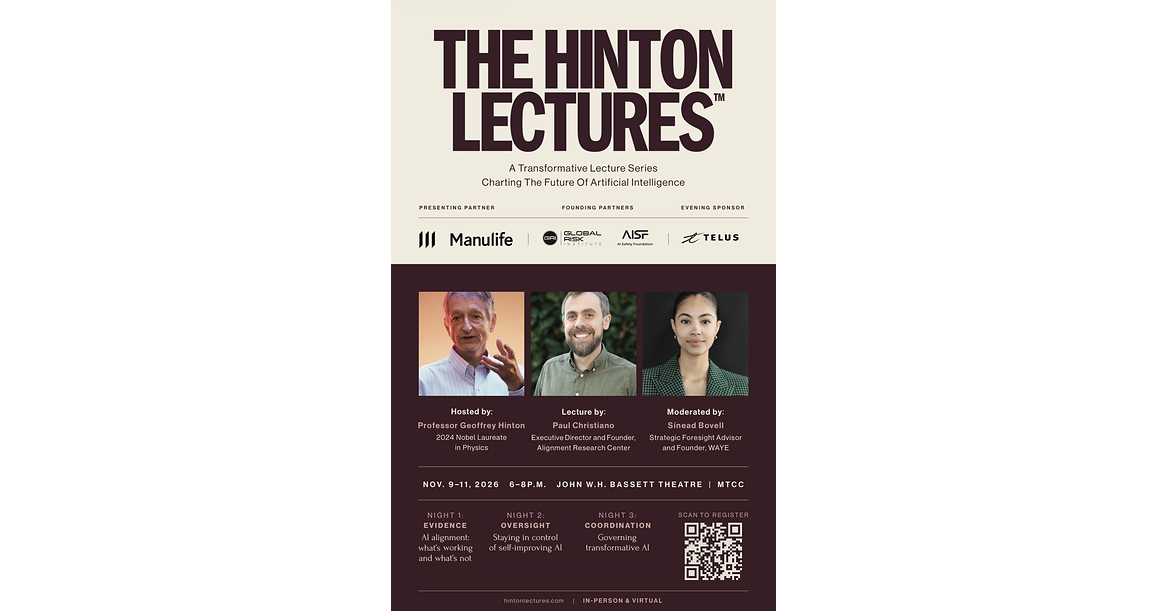
- 9–11NovThe Hinton Lectures on AI safety6days away
- 9NovCharmed By a Southern Monster premieres6days away
- 11NovJules becomes read-only8days away
- 12NovUpdated Claude usage policy takes effect9days away
- 15NovComments close on China's draft tech-export list12days away
- 20NovAI Film Award submissions close2weeks away
- 20NovUpdated OpenAI usage policies take effect2weeks away
- 21NovInaugural edition in Hollywood3weeks away
- 22Nov'The Challenge Sverige' originally scheduled (now delayed to 2027)3weeks away
- 29NovDaybreak Blue sessions can be used for training4weeks away
- 30–3Nov–DecContent London 20264weeks away
- 30NovRose d’Or Awards4weeks away
- 1DecHearing on Apple's bid to block testimony4weeks away
- 4DecAI-made film opens in limited release4weeks away
- 4DecGods Don’t Give Gifts premiere4weeks away
- 4DecSingapore AI Safety Fellowship ends4weeks away
- 31DecJules shuts down8weeks away
- Early NovKimi K3.1 Pro free download
- Mid-NovXREAL Aura shipments begin









Stories are summarized in plain language; follow the link before quoting a figure. Story images are shown from the publishers' own sites.