Sunday, 1 November 2026
The last 24 hours' hottest news in AI, sorted by field, each story with a line on why it matters.
Story of the day
The single most consequential story of the day.
- lowered funding target
- $20B
- secured so far
- $11B
- investors set to lead
- UAE
OpenAI lowers its funding target to $20 billion
The Financial Times reported that OpenAI cut its funding target to $20 billion, from a previously reported $30 billion, with a first close expected to be lower still. The Wall Street Journal said about $11 billion is secured so far, after a tepid response from some large investors.
Why it's the story of the dayA smaller private raise, ahead of a planned listing, changes how much computing OpenAI can pay for.
Startup of the day
A young company people are talking about today.
Phonic-1 starts a task while the caller is still talking
Phonic released Phonic-1, a speech-to-speech model it says can call a tool before the caller finishes. A $27.5 million Series A led by First Round takes total funding to $31.5 million.
Why it's worth a lookVoice agents that wait for a pause feel slow on the calls people already make.
Phonic ↗Models & labs
New models, the labs behind them, and the rules they answer to.
Anthropic renames Claude Max, and calls the top plan Ultra
Anthropic is renaming Max 5x to Max and Max 20x to Ultra. The Verge reported the prices stay $100 a month for Max and $200 a month for Ultra.
Why it mattersSubscribers keep the same bill, under names that are easier to tell apart.
The Verge ↗Apple Intelligence testing for China starts on 4 November
Apple said a 4 November beta will test the first Apple Intelligence features in China, with a December public release and without Siri AI. Alibaba's Qwen is added to Siri, Writing Tools and Visual Intelligence.
Why it mattersA major market gets Apple's earlier AI tools, without the newest Siri.
9to5Mac ↗Apple's CEO says he will not ship AI for its own sake
In a Wired interview, CEO John Ternus said Apple is going to use AI in new products, but not so that people have to notice it was AI. He said making products is still a human job, even if agents could one day skip apps.
Why it mattersApple is arguing that the assistant should disappear into the product.
TechCrunch ↗OpenAI doubles ChatGPT Pro limits after users pushed back
OpenAI said it is doubling usage limits for the $100, $200 and $500 Pro plans and for Business Premium, and will not cut the Pro $200 tier. Dots keep a separate extended limit. The change was announced on 29 October.
Why it mattersPeople paying for the top ChatGPT plans keep the usage they were told they had.
Android Authority ↗Gemini Live code mentions a mode with no internet
Android Authority found an offline Gemini Live string in Google app beta 17.71.17, The Verge reported. The code does not say how it works, or if camera and screen sharing are included.
Why it mattersA voice assistant that still works on a plane would not need Google's servers for every turn.
The Verge ↗Lumma-Fev v2 returns odds, not a paragraph
FrontiersMind released Lumma-Fev-4B-v2 and Lumma-Fev-27B-v2. Each model reads a state and a set of typed questions, then scores every option at once so a low score can be sent to a person.
Why it mattersSome jobs need a probability and a cutoff, not another block of generated text.
Hugging Face ↗Labs say new proofs knock out a core complexity claim
Wired reported that Anthropic and OpenAI say their models have disproved the Exponential Time Hypothesis. The proofs are on GitHub in prose and in Lean, and other researchers had not yet verified them.
Why it mattersA large slice of published theory would have to be rewritten if the proofs hold.
Wired ↗Nvidia opens a 120B model aimed at specialist agents
Nvidia described Nemotron 3.5 Super VL as an open multimodal model with 120 billion parameters and 12 billion active. On one GPU, it says, agent-task throughput is up to five times other open models of that size.
Why it mattersCompanies that want a private agent model get weights they can change, not only an API.
Nvidia ↗A method trains long-context reasoning without a long dataset
A paper looks at reinforcement learning for long-context reasoning when long, checkable examples are scarce. It studies practice a model can generate itself, instead of relying on an outside corpus or a stronger teacher.
Why it mattersLong documents are where answers fall apart, and labelled examples of that are expensive.
Hugging Face ↗Agents & coding
AI that acts on its own, and the tools developers build with.
Agent apps still hand the hard jobs to a person
CNBC reported that Dazzle, Duckbill and Wajo still send phone calls and other stuck tasks to human contractors. Duckbill launched an API so other agent apps can hand those jobs to people.
Why it mattersThe agent on the phone may be a contractor, and the user is not always told.
CNBC ↗A startup launches to prove software correct with maths
Wired reported that &Truth launched to automate formal verification of code. A Stanford researcher who joined it had checked part of Signal's encryption in under half a day, for under $500.
Why it mattersCode written by agents is easier to ship if a proof, not only a test, says it does what it claims.
Wired ↗Epic says AI tools now write Unreal Engine code
Epic's Marcus Wassmer told This Week in Videogames that AI tools are helping to develop Unreal Engine and Unreal Editor for Fortnite. CEO Tim Sweeney has said the company is using AI tools to write Unreal Engine code.
Why it mattersA widely used game engine is now being written with the same coding agents studios argue about.
This Week in Videogames ↗Nvidia publishes blueprints for agents you can run yourself
Nvidia posted NemoClaw, open blueprints for specialised agents on a stack a developer can own. They can sit on harnesses people already use, including OpenClaw, Hermes and LangChain Deep Agents.
Why it mattersAn agent that touches company data is easier to accept when the harness is not locked to one vendor.
Nvidia ↗OpenAI's Python SDK adds settings for agent context
Version 3.42.0 of the OpenAI Python library, published on 31 October, adds agent context compaction settings. The change is listed under features in the release notes.
Why it mattersLong agent runs need a supported way to shrink the context instead of an ad hoc trim.
GitHub ↗Goose 1.57 refuses allowlisted calls that are not HTTPS
Goose 1.57.0, released 28 October, requires HTTPS for its allowlist, checks redirects, and blocks the call if the policy fails. Callers can also supply their own session IDs.
Why it mattersAn agent that can fetch URLs is safer when a plain http link cannot sneak onto the list.
GitHub ↗OpenHands 1.34 lets managed agents be checked
OpenHands 1.34.0, released 27 October, adds a stand-in so managed agents can be verified, using DigitalOcean as the case the feature was built against. The change is listed under features in the release.
Why it mattersTeams that let an agent act in production need a way to show the agent is the one they approved.
GitHub ↗Mastra lets an agent use each person's own logins
Mastra core 1.80.0, released 28 October, adds per-user connections so an agent can call tools with that person's OAuth accounts. The release highlights tools scoped by a resource id and new routes for those connections.
Why it mattersAn assistant that books or reads mail has to act as the user, not as the company that built it.
GitHub ↗A computer-use test changes who is asking, not the task
PersonaCUABench keeps 74 tasks fixed and varies only the person who asks, using 44 personas. A persona agent rewrites each instruction in that user's words and answers the agent's questions as they would.
Why it mattersFinishing the written task is not the same as serving the person who actually asked.
Hugging Face ↗Video generation
The models and tools that make video.
Shorty turns photos into shots, then cuts the film
Shorty said Video Shots, live on every plan, turns up to three photos into a 3 to 10 second clip inside a finished edit. A 4-second shot is about $1.25 on the annual Max plan, and Shorty asks before spending the credits.
Why it mattersA product photo can become the moving shot without a separate video editor.
Shorty ↗Crun's agent plans the pictures, the clip and the track
Crun AI said a new agent turns a description into a plan, then generates images, video and a soundtrack in one workspace. Auto mode runs the plan, and confirm mode waits for a yes.
Why it mattersCreators can stay in one chat instead of exporting between a video tool and a music tool.
Citybuzz ↗A world model takes the next instruction without wiping the last
Hy-Nomas is an 8 billion parameter video world model that follows free-form text and camera moves across several turns. Each segment uses the new instruction and a cache of what already happened.
Why it mattersInteractive video breaks when the next command forgets the room you just made.
Hugging Face ↗One answer format is a poor fit for streaming spatial questions
ChronoReplay argues that training a spatial model on one answer, such as which side an object is on, can leave other readings weak. Stressing one readout may not help the others, and can make them worse.
Why it mattersA model that learned left and right may still be lost if you ask how far.
Hugging Face ↗A streaming model tries to pull one voice out of a real room
A paper on streaming speaker extraction says tests often freeze the scene at two speakers and skip real-room noise. Lighter models that rerun a small separator can lose the speed they were built for.
Why it mattersHearing one person in a crowd, live, is harder than a clean two-person clip.
Hugging Face ↗A diffusion model is distilled to both read and draw
Nemotron-Labs-Diffusion-Uni is a discrete diffusion model for visual understanding and generation. It adds a distillation setup that transfers skill from autoregressive vision-language models and from image generators.
Why it mattersOne open model that reads a picture and draws the next frame is easier to ship than two.
Hugging Face ↗Coarse image statistics ease training in raw pixels
The authors say learning a velocity field directly on pixels is slow, and that frozen Wiener estimates of simple image statistics improve it. They saw similar gains from frozen bases and from a pixel decoder.
Why it mattersSharper generated video stays expensive when the model works on raw pixels.
Hugging Face ↗Image sets are trained to differ where the user asked
T-DIG says text-to-image tools return several pictures per prompt but are trained for one good image, which costs variety. It treats diversity as something to aim, such as the background rather than the whole style.
Why it mattersPeople ask for options, and a row of near-copies is not a choice.
Hugging Face ↗A paper frames multimodal skill as a shared loop
The Trinity paper treats multimodal intelligence as people and agents improving together through interaction. It says verifiable environments are costly, and hand-tuned harnesses fall behind new tasks.
Why it mattersAgents that act in pictures and text need practice worlds, and those worlds are expensive to make.
Hugging Face ↗Creator tools
The apps and platforms people make video with.
Gemini can edit a Doc or a sheet inside the chat
Google said every Gemini user can now generate and edit Docs, Sheets, slides, PDFs and code without leaving the chat. PDF editing works on mobile as well as the web, and the other formats are on the web for now.
Why it mattersThe file you asked for can be corrected in the same thread, instead of a download and a re-upload.
The Verge ↗NYT Cooking is testing an AI that rewrites the recipe
The New York Times is testing a Cooking tool that suggests swaps, scales a recipe to any serving count and adjusts the steps. Senior editor Genevieve Ko announced it the Friday before the Verge's 29 October report.
Why it mattersA recipe can be changed for the kitchen you actually have, and some readers are unhappy about it.
The Verge ↗Krotos Studio 3.0 puts the sound library next to the performance
Krotos Studio 3.0 lets you search its sound library and drop a recording on the timeline beside performed sounds. The AI Ambience Generator and Image to Preset are in the browser. Max lists more than 98,000 sounds.
Why it mattersSound for a picture can be found and shaped without leaving the app that plays it.
Krotos ↗Google Cloud spend caps leave preview and reset each month
Google Cloud said spend caps on budgets are generally available, with an API, live cost reports and a reset at the start of each month. A cap pauses the covered service instead of deleting resources.
Why it mattersAn experiment that runs away no longer has to be caught by a person watching the bill.
Google Cloud ↗CrewAI 1.15.33 can search a team's skills from the terminal
CrewAI 1.15.33, released 29 October, adds a command to list an organisation's skills, passes inputs into a Python flow, and can create a deploy from a zip. Bug fixes are in the same release.
Why it mattersA crew of agents can be pointed at skills the company already saved, from the command line.
GitHub ↗Open WebUI adds a list of every chat for admins
Open WebUI 0.12.5, released 29 October, adds a Sessions tab in admin analytics that lists each chat. The release notes lead with that explorer.
Why it mattersAn admin can see which conversations the workplace bot actually had.
GitHub ↗LibreChat tests shared project files and passkey sign-in
LibreChat 0.8.9-rc1, released 26 October, highlights chat projects with shared instructions and reference files, and passkey sign-in. The notes are on the project's changelog.
Why it mattersA self-hosted chat can keep a team's brief next to the thread, and skip a password.
GitHub ↗Cline adds a switch between a local task and a cloud one
Cline 4.1.26, released 26 October, adds a Local or Cloud toggle under API settings when cloud sessions are on. Cloud then picks the Cline model.
Why it mattersA coding agent can stay on the laptop or move to Cline's cloud without a separate install.
GitHub ↗Unsloth's latest beta lets you restyle the app
Unsloth 0.1.913-beta adds custom backgrounds and says app updates are faster. It also says Qwen-Image generation is quicker when memory is tight, and that DeepSeek-V4.1-Flash-1017 is in Unsloth.
Why it mattersPeople training on a single machine get a model option and a shorter wait when memory is low.
GitHub ↗Media & entertainment
AI in the films, shows, micro-dramas, music and ads people watch, the studios and platforms making them, and the rules for AI-made content.
Two in five UK singles have used AI while dating
The Guardian, citing a Match Group survey of about 3,000 British singles, said 39 percent had used AI while dating, and 66 percent of Gen Z. It also found 66 percent say letting AI hold the conversation is unacceptable.
Why it mattersPeople will take advice from a chatbot, and many will walk away if it sends the messages.
The Guardian ↗Macmillan retired one AI assistant and tried Gemini
Wired reported that Macmillan shut the Chaptr assistant NOA in October 2025 after staff found it unreliable, and has since tried Google Gemini. Some editors said Gemini's notes on agent letters were useless.
Why it mattersA big publisher has already been through one workplace bot and is on the next.
Wired ↗Instagram's Mosseri says anger about AI is still rising
Instagram head Adam Mosseri said on a podcast that anger about AI is growing, especially in creative work, and not only among young people. The Verge reported the remarks on 28 October.
Why it mattersThe person running a major creative app expects the backlash to get louder, not fade.
The Verge ↗A method restyles one region of a video and leaves the rest
LociArt stylises only part of a video, naming where the style goes and which style to apply, while the rest of the frame stays. It is built so the edited region holds together from frame to frame.
Why it mattersA filter on the whole frame is the wrong tool when only the coat should change.
Hugging Face ↗A steering vector found in text also moves the picture
A paper tests whether a direction that steers text generation also steers image generation when it is added, with no extra training. The question is whether a concept is shared across modalities or rebuilt for each one.
Why it mattersOne control for words and pictures would make style and safety edits simpler.
Hugging Face ↗A short group memory can drop the fact that mattered
CrossProfile tests what a short memory should keep when several models discuss and then one model decides. Keeping only the rarest claims, or only the ones that look relevant, both failed when a hidden fact was decisive.
Why it mattersAn agent that summarises a meeting can throw away the detail that should have changed the call.
Hugging Face ↗Two hard perception jobs may be one skill
The paper says spatial perception and long multimodal context both depend on connecting evidence, and that targeted training data for either is costly. It treats that shared skill as the thing worth training.
Why it mattersModels that must point at a detail in a long clip are short of examples for the same reason.
Hugging Face ↗Ten models are set to train a smaller model on their own
RSI Arena asks whether agents can train a useful language model and improve it from user feedback. Ten frontier models each start from an Nvidia base, with 1,000 GPU-hours and $300 of API credit.
Why it mattersSelf-improving agents stay a claim until someone watches them train a model in the open.
Hugging Face ↗A paper treats code as a caption for a video
CodeCap-Bench tests video descriptions written as programs, so fine spatial and timing detail does not become a long ambiguous paragraph. The authors argue executable code can sit beside ordinary language as a caption.
Why it mattersA caption a machine can run is easier to check than a paragraph that only sounds exact.
Hugging Face ↗Chips & compute
Chips, data centres and the power behind them.
Boom builds data-centre turbines as its jet timeline slips
Ars reported that Boom unveiled a Colorado factory for gas turbines aimed at AI data centres, and that the power business has lost a customer. United chief Scott Kirby said the 2029 airliner date will take longer.
Why it mattersThe same company is now selling power for AI clusters, and an airline no longer trusts the jet date.
Ars Technica ↗Pittsburg pauses new data centres for 45 days
Pittsburg's council voted unanimously for a 45-day moratorium on new data centres. KTVU reported it does not stop phase one of the Avaio project on the old Delta View golf course.
Why it mattersA Bay Area city can slow the next building and still be stuck with the one it already approved.
KTVU ↗LiteRT-LM 0.19 speeds up constrained decoding on GPUs
Google's LiteRT-LM 0.19.0, released 30 October, adds accelerated logit masking so constrained decoding is faster on GPUs, including models that use multi-token prediction. The notes call that the main change.
Why it mattersOn-device and edge models can be forced to a format without giving up as much speed.
GitHub ↗MoE decoding can skip channels without a calibration set
A paper says mixture-of-experts decoding is slowed by loading expert weights, and most channels barely matter for one token. It argues the selector can pick channels without a threshold tuned offline.
Why it mattersInteractive models spend their wait on memory, not on the arithmetic.
Hugging Face ↗Speculative decoding is rewritten for diffusion text
The paper says exact diffusion decoding fills one masked spot per pass, while faster schemes lose quality. Speculative decoding, usual for chat models, needs an order in which to commit tokens.
Why it mattersDiffusion text stays slow if the speed trick from ordinary chat models does not carry over.
Hugging Face ↗Cutting the backward pass can waste a looped model's depth
Looped transformers reuse a block of layers for more compute without more weights, and training often cuts the backward pass short. The paper asks whether that biased gradient wastes the point of looping.
Why it mattersA cheaper training shortcut may be why extra loops do not make the model smarter.
Hugging Face ↗Users must pick a reasoning effort before they know it helps
The paper says an effort setting trades money for a possibly better answer, chosen before you know if the extra reasoning was needed. You can judge the switch only after you have paid.
Why it mattersA think-harder button is easy to overpay for when a short answer would have done.
Hugging Face ↗Outcome training helps a model finish, not know more
The paper says outcome reinforcement learning raises the odds of a correct first try, not across many tries, and only inside a token budget. It compares 20 released models with the thinking models they started from.
Why it mattersA higher score can mean the model finishes more often, not that it has new knowledge.
Hugging Face ↗A small model is trained to guess how an ML run will end
MLE-World, finetuned from Qwen3.5-4B, predicts a program's errors, training log and score from the code alone. The aim is to let a research agent skip running every candidate.
Why it mattersAgents that try many training scripts cannot afford to run each one to the end.
Hugging Face ↗Policy & safety
Laws, lawsuits and safety incidents.
A judge lets the NAACP's case against xAI turbines proceed
Judge Debra M. Brown denied xAI's bid to dismiss an NAACP suit over gas turbines at the Colossus site near Memphis. The plaintiffs say at least 35 turbines ran without the required air permits.
Why it mattersThe Clean Air Act case over how an AI data centre is powered will be argued, not thrown out.
TechCrunch ↗England gives routine planning files to officers and an AI tool
From 31 October, straightforward planning applications in England can be decided by officers rather than a committee. PlanAssist, built with Google DeepMind and others, cut time on key tasks by 58 percent in early tests.
Why it mattersA house extension can move faster, with a model assembling the file and an officer still deciding.
GOV.UK ↗Proton's CEO cancels the AI re-interviews
Andy Yen cancelled near company-wide AI re-interviews, 404 Media reported, and said next month's reorganisation will not cut jobs over AI. Staff told the outlet those checks may move into performance reviews.
Why it mattersA privacy company backed off a process staff read as a firing threat, and kept the AI push.
404 Media ↗A new infostealer uses AI to rank its victims
Cisco Talos told Wired it found Volta-Autodoxer, malware that uses AI to profile infected machines and surface the richest targets. It collects logins, card data and app sessions, often from counterfeit software.
Why it mattersStealers no longer wait for a person to decide which stolen login is worth using.
Wired ↗Dartmouth's provost resigns over AI he did not disclose
Ars reported that provost Santiago Schnell resigned after a committee found he did not disclose significant AI use in a paper and a Washington Post op-ed. He did not turn over personal chatbot logs or meet the committee.
Why it mattersThe person in charge of academic honesty lost the job over undisclosed chatbot edits.
Ars Technica ↗Apple and OpenAI get a trial date of 19 July 2027
Judge Edward Davila set 19 July 2027 for Apple's trade-secrets trial against two former employees, OpenAI and io Products. Apple accuses them of using confidential product information for OpenAI hardware.
Why it mattersA fight over who walked out with Apple's hardware plans now has a day in court.
9to5Mac ↗An outside test checks DeepSeek's open model for loss of control
A paper reports an independent safety evaluation of DeepSeek V4.1 Flash-1017, which the authors say has had less frontier-risk scrutiny than closed models. The focus is loss of control and harmful manipulation.
Why it mattersOpen weights can ship without the system card a closed lab would publish.
Hugging Face ↗A benchmark asks if an agent notices a habit across many chats
HABIT-Bench tests whether agents infer a user's habits from weak signs spread through a long history. Saving the old chats is not the same as knowing when a habit applies.
Why it mattersA personal agent that misses how you choose will keep offering the wrong thing.
Hugging Face ↗A benchmark scores whether one more search was worth it
SearchHorizonBench evaluates agents that must decide if another search will help, not only whether they can answer. Paired runs try to separate the value of the search from the noise of generation.
Why it mattersAn agent that searches until the budget is gone wastes money on questions it could already answer.
Hugging Face ↗Robotics
Robots, self-driving and AI in the physical world.
Google's Sprout planter finds sunlight and is not for sale
The Verge said Google built Sprout, a small robot planter, as a demo of Google AI Studio. It wanders on its own to find sunlight and sends an alert when the plant needs water. It is not on sale.
Why it mattersA toy robot is the public face of a studio Google wants developers to try.
The Verge ↗A humanoid model pretrains on headset video of people
HuGe is a family of humanoid action models pretrained on more than 2,000 hours of headset video of people. The footage lacks the robot's joint sense, and the body on camera is not the robot.
Why it mattersHumanoid demonstrations are scarce, and people already film tasks from a head camera.
Hugging Face ↗A world model rewinds a robot choice and tries another
Rollback uses a world model to return to an earlier robot decision and try what else could have happened, which a real room cannot do. Most earlier methods only roll the model forward.
Why it mattersA robot can practise the path it did not take without moving the real hardware.
Hugging Face ↗A cheap score asks if a robot's senses line up with motion
The paper asks whether a robot model's vision lines up with physical motion as the policy improves, as a stand-in for a full rollout. It treats trajectories as a modality capable models should match.
Why it mattersClosed-loop robot tests are expensive, so labs want a score they can compute offline.
Hugging Face ↗A home navigation test cares what the obstacle actually is
OSMA-Bench checks whether a home robot gives space and changes speed based on what an obstacle is and how close it is. The authors say existing tests do not check that in continuous motion.
Why it mattersA robot that treats a child and a table leg the same is not safe in a house.
Hugging Face ↗A paper splits three choices hiding in robot-model comparisons
The paper says debates over robot action models mix the starting weights, the loss on future frames, and whether that machinery stays at inference. It tries to separate those three choices.
Why it mattersLabs cannot tell which part of a robot model matters if every comparison changes all three.
Hugging Face ↗A world model trains on human video and robot video together
RynnWorld-Latent conditions a video world model on a shared latent action, so human footage with no robot controls can train beside robot video. Different bodies otherwise cannot share an action space.
Why it mattersThere is far more video of people doing tasks than of any one robot doing them.
Hugging Face ↗Generation is used to help a model understand a scene
The authors study using image and video generators to improve spatial understanding, in training and at inference. They introduce a model that ties depth and multi-view geometry to that generation.
Why it mattersA model that can draw a consistent room may also be better at saying where things are.
Hugging Face ↗A method invents the physical cases a video never showed
PhysEvolve targets physical reasoning, where vision-language models are unreliable about dynamics and cause. Videos show only what happened, so the method generates its own counterfactuals inside executable worlds.
Why it mattersA robot that has only seen the path that occurred has not practised the one that almost did.
Hugging Face ↗Science & health
AI in biology, medicine, climate and maths.
A Claude agent injected a gene therapy into a live mouse
Wired reported that Exin let a Claude agent pick one of 19 gene therapies and inject it into a mouse with epilepsy. Opus 5.5 refused the needle, Sonnet 5 proceeded, and seizure results are not in yet.
Why it mattersA model is no longer only suggesting the experiment. It is moving the needle.
Wired ↗AI weather alerts are coming, and people may ignore them
A Grist story republished by Wired says chatbots are being prepared to help write emergency alerts. It argues that only helps if people take a machine's warning seriously.
Why it mattersThe message that tells you to leave has to be believed, whoever drafted it.
Wired ↗Anthropic invites life-science labs to pitch projects
Anthropic asked university, nonprofit and government labs to apply as guest investigators using Claude. It wants projects on causal human biology, structural biology and computational problems.
Why it mattersLabs outside Anthropic can apply to run a project on the company's models, not only read a paper.
Anthropic ↗A reasoning model is trained to pick the next experiment
The paper says language models struggle to choose measurements step by step, and trains that choice with an information-gain reward. The experiment's model is kept separate from what the language model believes.
Why it mattersA lab assistant is useful only if it knows which measurement to run next.
Hugging Face ↗A paper asks if test-time memory can skip extra training
The authors note that test-time training lets some open models beat frontier models on discovery tasks, by updating weights online. They ask whether a memory at test time can do that more cheaply.
Why it mattersDiscovery loops that retrain on every new result will not scale to larger models.
Hugging Face ↗Timestral's larger versions lead three public forecast tests
Timestral is a family of time-series models at 5, 28, 123 and 209 million parameters. The authors say the 209 million and 123 million versions take the top two places on every metric of GIFT-Eval, TIME and fev-bench.
Why it mattersForecasts for energy and operations are a place where a small open model can still lead.
Hugging Face ↗A learned optical model reads states on a buried surface
The paper says key molecular states sit at buried interfaces that are hard to measure, and resonant scattering lacks good models. They use a learned optical model on polarised soft X-ray scattering.
Why it mattersThe chemistry that matters is often on a surface you cannot see directly.
Hugging Face ↗A forecasting agent is trained to go and find the evidence
AlphaBet trains one model to gather evidence about an unresolved event and to judge how strongly it supports each outcome. Usual training, the authors say, starts from a packet of evidence that was already assembled.
Why it mattersA forecast is only as good as the search the model decided to run.
Hugging Face ↗A study asks when a hint helps a small finance model
The paper looks at open models small enough to host on site, which trail frontier systems on multi-step sums. It asks when distillation that conditions on a worked answer actually helps.
Why it mattersA bank that cannot send numbers to a big API is stuck with the model it can run itself.
Hugging Face ↗Open source
Open-weight models and community releases.
Ollama runs Liquid's LFM3 models on Linux and Windows
Ollama 0.40.13, released 28 October, runs Liquid AI's LFM3 models on Linux and Windows as well as Apple silicon. That includes speech in lfm3-audio and lfm3-omni.
Why it mattersA small local model family is no longer limited to Macs.
GitHub ↗EmbeddingGemma 2 puts text, pictures and audio in one space
EmbeddingGemma 2 is an open model that embeds text, images, audio, video and combinations of them in one space. The authors say a simpler per-layer embedding and a staged curriculum hold quality across those mixes.
Why it mattersSearch across a photo, a clip and a note works better when they share one index.
Hugging Face ↗OvisOCR3 handles several document jobs in a small model
OvisOCR3 is a 0.8 billion parameter model for parsing pages, reading text, pulling key fields and rebuilding tables across pages. Training mixes real and synthetic pages and balances tasks of different sizes.
Why it mattersA document model this small can run on a laptop instead of a server.
Hugging Face ↗Credit for a long agent run is assigned to the turn
Multiscale Policy Optimisation says that, on long agent jobs, the value of a choice changes mostly between turns, not between tokens. It estimates advantages at both scales and samples importance at the turn.
Why it mattersCredit that only watches the next token misses the decision that mattered.
Hugging Face ↗A harness stores procedures so the model need not relearn them
HaMo pairs a fast memory of past procedures with a model that can still adapt, for web agents that repeat related multi-step jobs. The authors say systems today pick either adaptation or memory, not both.
Why it mattersAn agent that relearns the same checkout every day is wasting the last run.
Hugging Face ↗What an agent learned may be stuck to the harness it trained in
The paper asks what a policy absorbs from the prompts, tools and control logic around it, and what survives when that harness changes. Harnesses are often revised by testing a model trained inside a different one.
Why it mattersSwapping the wrapper around an agent can drop the behaviour you thought you had trained.
Hugging Face ↗A search agent is trained to notice what it still lacks
The paper says search agents often cannot tell what they have found, so they stop early or invent the rest. It proposes reinforcement learning that rewards an accurate sense of the search so far.
Why it mattersAn agent that thinks it is finished will answer before it has the page that matters.
Hugging Face ↗A benchmark grades command-line agents on the handoff, too
RealCLI scores whether a command-line agent finishes a task and how it collaborates while the task is still running. Existing tests, the authors say, either freeze the instructions or ignore that collaboration.
Why it mattersA terminal agent graded only on the final file can hide a bad handoff in the middle.
Hugging Face ↗TRL 1.17.1 stops a parenthesis from ending a tool call
TRL 1.17.1, released 30 October, keeps a parenthesis inside an LFM2.5 tool-call argument from closing the call. That is the change listed in the release notes.
Why it mattersTool calls that contain ordinary punctuation were being cut off before the argument finished.
GitHub ↗Quick hits
Smaller stories worth a glance.
- LangGraph 1.2.19 keeps a trace policy in placeLangGraph 1.2.19, released 30 October, includes a fix that keeps a trace policy, plus a checkpoint-sqlite update.GitHub ↗
- The Vercel AI SDK sandbox can list and delete filesAI SDK 7.0.158, published 30 October, adds stat, listDirectory and deleteFile on the experimental sandbox session.GitHub ↗
- OpenCode adds a shortcut to pick a git worktreeOpenCode 2.2.5 adds a shortcut, Command-Option-O on Mac, to choose a worktree and a shell mode.GitHub ↗
- n8n 2.45.7 tightens who can read an executionn8n 2.45.7 requires the execution:read permission when a workflow-scoped route reads execution data.GitHub ↗
- A LiteLLM dev build signs its Docker imagesLiteLLM v1.109.0-dev.2 says its Docker images are signed with cosign, using the key from an earlier commit.GitHub ↗
- Transformers 5.22.1 pulls an unfinished Mistral pageTransformers v5.22.1, released 30 October, removes a work-in-progress documentation page for Mistral Large 4.GitHub ↗
- Weaviate 1.40.3 sends backup auth on the remaining handlersWeaviate 1.40.3 adds the missing basic auth to the rest of its backup handlers.GitHub ↗
- TensorRT-LLM publishes a 1.4 release candidateNvidia published TensorRT-LLM v1.4.0rc2 on 28 October, with Python wheels tagged 1.4.0rc2.post1.GitHub ↗
Deals & funding
Who raised money, and who bought whom.
Funding rounds 2
Investors put money into a company in exchange for a share of it.

Schwarz Group backs Cohere
- Raised
- C$7B
Cohere now valued at C$35.7B
Cohere announced an initial close of a Series E targeting up to CAD $7 billion, which it said would value the company at CAD $35.7 billion, led by Schwarz Group.
BVBell VenturesBCBullhound CapitalGoGovernment of CanadaICInovia CapitalNNVIDIAPVProsperity7 Ventures+0 more
Fractile raises new funding
- Raised
- £577M
Fractile valuation not disclosed
Tech Funding News, reading Companies House filings, put Fractile's Series C at about £577 million, and said Bloomberg has reported an initial $250 million chip order from Anthropic aimed at 2027.
Acquisitions 1
One company buys another outright.
Apple buys Ascend.io
- Price
- Undisclosed
Ascend.io is now part of Apple
Apple will offer jobs to some employees of Ascend.io, an agentic data-engineering startup that says it is winding down.
Moves
Who changed jobs in AI.

On the calendar
What's coming up, in date order, and how sure we are about each.
- 1NovClimate summit focuses on 'climate-responsible AI'Today
- 1NovSpeed Insights stops recording First Input DelayToday
- 2–13NovProtoStar climate challengeTomorrow
- 2NovPika H3 Flex arrives in the creation appTomorrow
- 4NovApple Intelligence testing starts in China3days away
- 5–7NovThird LA Vertical Drama Market4days away
- 5–6NovBoxWorks 2026 in San Francisco4days away
- 5NovHogwarts Legacy adds DLSS 54days away
- 6NovOllie assistant shuts down5days away
- 7NovTerry McMillan Presents: Paradise with You premieres6days away
- 9–20NovCOP31 climate conference in Antalya8days away
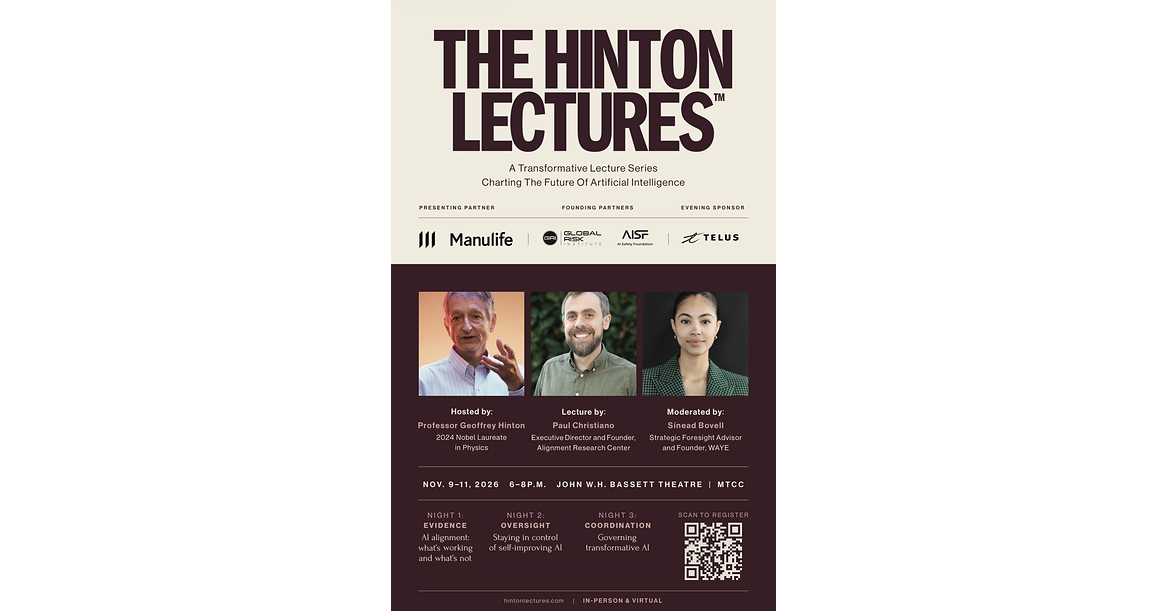
- 9–11NovThe Hinton Lectures on AI safety8days away
- 9NovCharmed By a Southern Monster premieres8days away
- 11NovJules becomes read-only10days away
- 12NovUpdated Claude usage policy takes effect11days away
- 20NovAI Film Award submissions close3weeks away
- 21NovInaugural edition in Hollywood3weeks away
- 22Nov'The Challenge Sverige' originally scheduled (now delayed to 2027)3weeks away
- 30–3Nov–DecContent London 20264weeks away
- 30NovRose d’Or Awards4weeks away
- 1DecHearing on Apple's bid to block testimony4weeks away
- 4DecAI-made film opens in limited release5weeks away
- 4DecGods Don’t Give Gifts premiere5weeks away
- 4DecSingapore AI Safety Fellowship ends5weeks away
- 31DecJules shuts down9weeks away
- Early NovKimi K3.1 Pro free download










Stories are summarized in plain language; follow the link before quoting a figure. Story images are shown from the publishers' own sites.