Saturday, 31 October 2026
The last 24 hours' hottest news in AI, sorted by field, each story with a line on why it matters.
Story of the day
The single most consequential story of the day.
- TPUs on the satellite
- 4
- how long one chip can run
- ~20 min
- twin satellites planned
- 2027
Google's satellite TPU writes a haiku from orbit
Google's Project Suncatcher satellite, launched on 1 October, ran a Gemma 4 model on a data-centre TPU in orbit and sent back a haiku. The craft carries four TPUs but can power only one, for about 20 minutes at a time.
Why it's the story of the dayA working data-centre chip in orbit is the first real test of putting AI compute in space.
Startup of the day
A young company people are talking about today.
Zest's text agent finds a restaurant and books the table
Zest, a restaurant app backed by a $1.8 million pre-seed, now takes a text and books the table. It reads dining history through Plaid, can join a group chat, run a vote, and reserve through OpenTable, Resy or SevenRooms.
Why it's worth a lookThe assistant lives in the thread where the plan is already being argued, not in another app.
TechCrunch ↗Models & labs
New models, the labs behind them, and the rules they answer to.
Labs agree a shared robots.txt switch for AI training
OpenAI, Google, Microsoft and Anthropic say they will honour a shared robots.txt token so a site can opt out of AI training crawlers once. Anthropic already honours it; Google and Microsoft plan to next year, and OpenAI says it will in the coming months.
Why it mattersPublishers can state one training preference instead of maintaining a rule for every crawler.
The Verge ↗OpenAI tightens ChatGPT answers on violence and teen weapons
OpenAI said it made over 200 law-enforcement referrals in the third quarter and will publish a Community Safety Report in early 2027. It is also limiting detail on past mass attacks for every user, and practical weapons information for teens.
Why it mattersThe safeguards change what ChatGPT will say about weapons, even when a question looks harmless.
OpenAI ↗OpenAI publishes briefs arguing fair use covers model training
OpenAI posted excerpts from court briefs by libraries, creators, researchers and the US government in the New York Times copyright case. The filings argue that training on copyrighted works is fair use and does not hand readers a substitute for those works.
Why it mattersThe case could decide whether training on published work stays legal in the United States.
OpenAI ↗IBM ships Granite Switch 4.1.1 as a drop-in model patch
IBM released Granite Switch 4.1.1 as a backwards-compatible patch: the base model is unchanged and new adapters add a speech model for 10 languages plus a better decision adapter. IBM says teams can compose the adapters they want and deploy.
Why it mattersA model update that leaves the base weights alone is easier to roll out than a full retrain.
Hugging Face ↗A proof says separate training runs can share one representation
A paper turns the Platonic Representation Hypothesis into a theorem for joint-embedding models. It says separately trained models learn the same representation, up to a rotation, when each pair of views is two observations of one scene.
Why it mattersIf the proof holds, models trained on different kinds of data may be lining up on one picture of the world.
Hugging Face ↗A training method refreshes practice tasks when old ones go stale
A-RSI separates when a multimodal model should collect new practice from what that practice should be. It watches reward and accuracy in the training log, and it keeps the answers to new tasks independently checkable rather than trusting a vote of the model's own guesses.
Why it mattersSelf-improving models need a way to notice that yesterday's exercises no longer teach them anything.
Hugging Face ↗Diffusion vision models can skip the picture on most steps
A paper finds that, on the benchmarks it studies, visual tokens are 89 to 97 percent of a diffusion vision-language model's input. Removing the image changed the token being unmasked at only 22.8 percent of steps on average, and as few as 7.9 percent.
Why it mattersIf the picture is often unused, these models could spend far less compute rereading it.
Hugging Face ↗DiffuSpace opens Clover, a 35B diffusion language model
DiffuSpace released Clover-35B-A3B-Preview on 30 October under an Apache licence: a mixture-of-experts diffusion language model with 35 billion parameters and 3 billion active. The lab says it scores 73.6 on SWE-bench Verified and can run in SGLang and llama.cpp.
Why it mattersA larger diffusion language model is now weights anyone can download.
Hugging Face ↗SenseTime opens a 9B model that runs part of itself twice
SenseNova-Loop-9B-Preview, released 30 October under Apache 2.0, takes text and images and returns text. A block of 24 of its 32 decoder layers runs twice, so one pass does 56 layer computations while storing 32 sets of weights.
Why it mattersReusing a block of layers buys more compute without storing a bigger model.
Hugging Face ↗Jules turns read-only on 11 November
Google is shutting the background coding agent on 31 December. Finish sessions by 11 November, then export settings and history. Code and pull requests stay on GitHub.
Export Jules history before 11 November if you still have work stored there. Jules ↗
Agents & coding
AI that acts on its own, and the tools developers build with.
Google winds Jules down, with a read-only date in November
Google said Jules, its background coding agent, will shut on 31 December. People can finish sessions until 11 November; after that it is read-only, while code and pull requests stay on GitHub. Google says the lessons are going into Antigravity.
Why it mattersTeams that left work inside Jules have a short window to export settings and session history.
The Verge ↗A backdoored Claude extension sat in Cursor's marketplace for hours
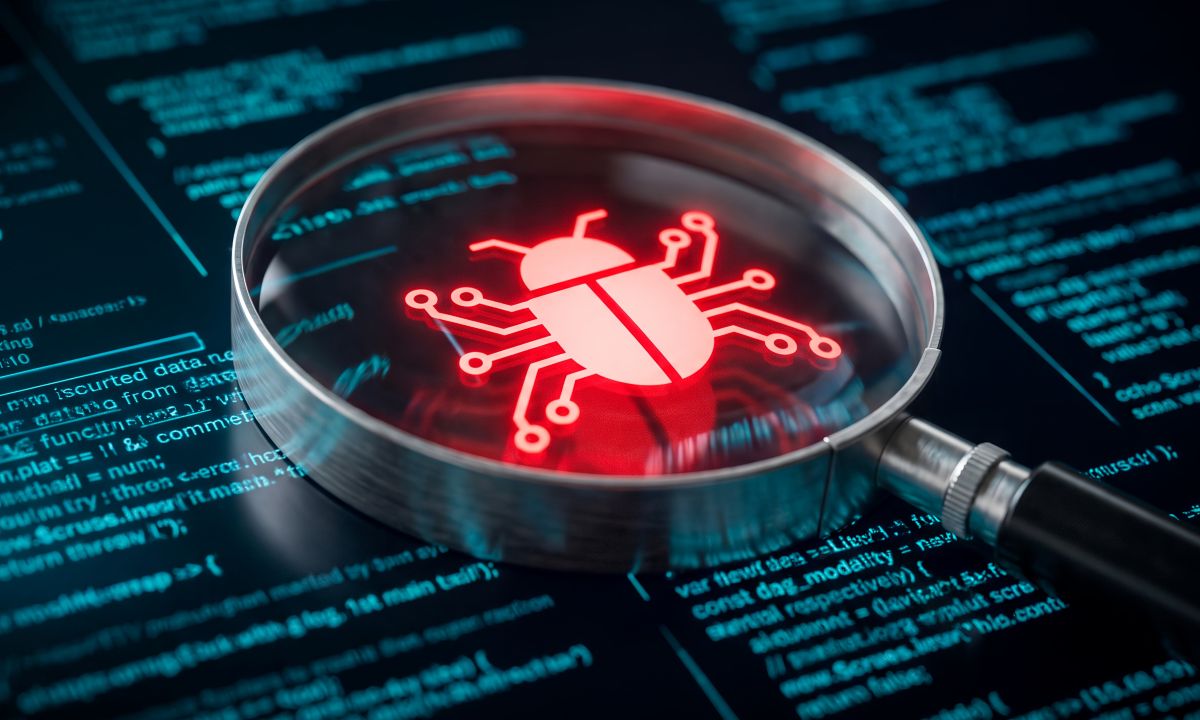
Ars Technica reported that Claude's official VS Code extension on Cursor was replaced by a malicious 2.1.313 build that tried to plant an SSH backdoor. Cursor said at most 5,000 users were affected and later removed the build.
Why it mattersAn official extension that updates itself can hand an attacker a developer's machine.
Ars Technica ↗DoorDash says outside agents have placed only a few hundred orders
On its earnings call, DoorDash CEO Tony Xu said third-party agents such as Muse, Instinct and Fo have produced maybe several hundred orders in total. The company says it completes about 3 million deliveries a day and still wants to learn how agents order.
Why it mattersAgent checkout is being talked about as the next storefront, but the order volume is still tiny.
TechCrunch ↗Anthropic shows companies what their Claude spending bought
Anthropic opened reporting tools that let managers see a team's Claude work, what it produced, what it cost and where workflows broke. It also added pooled group budgets. Anthropic says it will not use this data for training by default.
Why it mattersCompanies are being asked to justify token bills, and Anthropic is handing them the breakdown.
TechCrunch ↗Anthropic offers US governments 40 percent off Claude
Anthropic expanded its General Services Administration deal with a 40 percent discount on Claude Enterprise, Claude for Government and the API. The discount covers direct buys and, in the coming months, purchases through cloud providers, and it extends to state, local and tribal governments.
Why it mattersA lower government price makes Claude easier to buy across agencies, not only in federal pilots.
Anthropic ↗Alexa can now change subscriptions, lists and delivery notes
Amazon added more than 100 shopping tasks to Alexa, including editing lists and subscriptions, changing a delivery address and asking about Prime or a billing problem. Amazon said more than 400 million people used Alexa for shopping in the past year.
Why it mattersShopping is one of the first places a voice assistant is being trusted to change an order, not just answer a question.
TechCrunch ↗A benchmark asks coding agents to revise real user requests
Co-Design Bench is a reference-free test of 273 tasks drawn from 37,463 queries in real coding sessions. Agents have to turn multimodal requests into working edits, including image, audio, video or document inputs.
Why it mattersAgent benchmarks built from real sessions show whether a model can revise an app someone is already using.
Hugging Face ↗A factory builds professional tasks agents can actually finish
WorkFactory starts from a professional intent and maps the information a task needs before a teacher agent tries it. Probe runs then find missing support and repair the task without changing the work that was asked for.
Why it mattersAgent training stalls when the example jobs are missing the files a person would have had.
Hugging Face ↗Microsoft opens a 4B agent that clicks and uses the terminal
Microsoft published Mage-VL-Cowork on 30 October under Apache 2.0. The 4-billion-parameter model chooses between screenshot actions and a persistent terminal, and the card reports 66.0 percent on OSWorld-Verified with a 50-step budget.
Why it mattersA computer-use agent this small can run on a machine instead of a frontier API.
Hugging Face ↗But from a global allocation perspective, actually, it's quite terrible to have everybody have a bunch of the world's limited supply of DRAM sitting in their own computer and being used five percent of the time.
Video generation
The models and tools that make video.
TBC launches Mischief 1, a faster video model at half a cent a second
The Biological Computing Co. released Mischief 1, an image-to-video model built on Wan 2.2. It says the model matches that base, generates video five times faster, and costs half a cent per second on fal and OpenRouter.
Why it mattersA cheaper, faster video model lets creators try more takes before they commit to one.
PR Newswire ↗A world model keeps a scene consistent while it generates in real time
L3G-World stores a scene as compact 3D Gaussians that grow with the space explored, not with the length of the video. The authors report real-time generation at 9 frames per second, with much faster memory rendering than the prior 3D-memory baseline they compare.
Why it mattersLong interactive video falls apart when the model forgets the room it just left.
Hugging Face ↗A video model holds a subject steady as the camera moves
OmniShowcase targets videos of one subject from several reference photos, including sides the first photo never showed. The authors say earlier multi-view methods never state the 3D link between those photos, and training data often fails to keep the same subject as the viewpoint changes.
Why it mattersProduct shots and character clips break when a new angle invents a different object.
Hugging Face ↗A benchmark asks agents to code a video instead of diffusing one
VibeVideoBench has 239 tasks, in English and Chinese, where an agent must deliver a finished MP4 with sound by writing code in a sandbox. The tasks include charts, lessons and music-driven pieces that diffusion video models struggle to get exactly right.
Why it mattersSome clips need an exact chart or formula, which a video model often will not render.
Hugging Face ↗HairDeck builds game-ready hair cards from a single photo
HairDeck generates stylized hair cards and the spring bones that animate them from one image. On an existing test set it cut Chamfer distance by 44 percent and card-orientation error by more than half, and ran 33 times faster than the prior card generator.
Why it mattersGame characters need hair that an engine can animate, not a single fused mesh.
Hugging Face ↗Few-step image models get an extra constraint on prompt detail
Intrinsic Distribution Matching studies one-step and few-step text-to-image models, which have little time to fix a missed detail. It adds an explicit constraint on simple statistics of the generated distribution, on top of the usual score-matching signal.
Why it mattersFast image models are useful only if the first pass still matches the prompt.
Hugging Face ↗A pixel model adds detail without lengthening global attention
SpecSlot is a pixel-space Transformer that gives each patch several slots, each tied to a different band of image frequencies. Low-frequency structure can still be shared globally, while fine detail stays local, so sharper pictures need not mean a longer attention sequence.
Why it mattersSharper generated images usually cost more compute. This design tries to split that cost.
Hugging Face ↗A new image-to-video board places Seedance 2.5 first
Artificial Analysis launched AA-Video-I2V v2.1 on 28 October, judging image-to-video models at up to 1080p with more than 58,000 human votes over 1,000 prompts. It places Dreamina Seedance 2.5 first, in a statistical tie with Seedance 2.0 and the MiniMax H3 family, at $34.12 a minute.
Why it mattersCreators can see which model holds a starting frame, and what a minute of that video costs.
Bad Influence ↗ComfyUI 0.43 adds a video upscaler and larger FLUX clips
ComfyUI 0.43.0, published 27 October, adds a Crystal Video Upscaler node and 2K and 4K options on the FLUX 3 video nodes. The same release adds FLUX 3 Max nodes and a HeyGen voice-clone and text-to-speech node.
Why it mattersThe open editor is picking up video tools people already pay for inside other apps.
GitHub ↗Creator tools
The apps and platforms people make video with.
Opera lets sites run open-weight models inside the browser
Opera introduced WebAI, a browser standard for running models on the device. It is in early preview in Opera One, can use models such as Gemma, and on Macs can use Apple's on-device model. Users have to opt in.
Why it mattersOn-device models keep prompts on the computer and spare a site from paying for every request.
TechCrunch ↗Meta quietly ships Style Sketch, an AI closet from your photos
Style Sketch builds outfits from clothes in Instagram photos or from pictures you add. Meta's description says it can show them on a model matched to body shape and skin tone, and plan packing from a trip's weather. It is live in Indonesia, Singapore and Thailand.
Why it mattersA closet app tied to Instagram starts from photos people have already posted.
TechCrunch ↗Starbucks explores a personalised drive-thru menu
On an earnings call, CEO Brian Niccol said Starbucks will explore recognising participating customers as they arrive, showing a personalised digital menu and making payment easier. Starting in 2027 it also plans to test AI that helps baristas enter orders.
Why it mattersThe drive-thru is where a coffee chain would put an assistant in front of a queue.
The Verge ↗Wabi raises $55 million at a $1.25 billion valuation
Wabi, the personal-agent app from Replika founder Eugenia Kuyda, said it raised $55 million at a $1.25 billion valuation. The app now builds small tools inside a chat, such as meal plans or trip lists, rather than only generating mini apps from a prompt.
Why it mattersInvestors are still paying up for consumer agents that do a task, not only chat.
TechCrunch ↗AI law firm Crosby bids for pieces of Weil Gotshal
TechCrunch confirmed that two-year-old AI law firm Crosby has bid for some assets of Weil, Gotshal & Manges, including the trademark, the brand and some internal data, and is trying to hire from the firm's lawyers. Weil has said it is preparing a vote on dissolution.
Why it mattersAn AI firm is trying to buy the name of a collapsing Wall Street partnership, not only its software.
TechCrunch ↗Canva Brush edits a design from a sentence
Canva Research released Brush, a vision-language model that edits an existing design from a prompt, from one line of copy to every slide. It is on for supported edits in Canva AI for Pro subscribers, and Canva says it is up to 69 percent faster and 46 percent cheaper per edit than the previous design agent.
Why it mattersThe change stays inside the design people already have, instead of generating a new picture.
Canva ↗ElevenLabs ships a sound model that follows several cues
ElevenLabs released SFX v3 on 29 October in ElevenCreative and through ElevenAPI. It is built to follow prompts that describe several sounds at once, and the company says music, vocals and everyday effects come out cleaner than in SFX v2.
Why it mattersA scene's crowd, impact and music can be asked for in one prompt.
ElevenLabs ↗Suno lets a chat make a song and save it to your library
Suno's MCP beta, announced 28 October, connects the music tool to Claude, ChatGPT, Claude Code and other MCP clients. You can describe a song, turn an upload into a track, or cover songs you already have, and the result uses your credits and lands in your Suno library.
Why it mattersThe song gets made in the chat where the video or the ad is already being written.
Suno ↗Suno Studio adds finer pitch and a clearer clip panel
Suno's 29 October Studio update moves clip settings into a larger sidebar, with volume, pitch, loop, reverse and time-stretch in one place. Added audio can be time-stretched to the project tempo, and pitch can be set in semitones and cents.
Why it mattersThe browser studio is picking up the small controls a session actually needs.
Suno ↗Media & entertainment
AI in the films, shows, micro-dramas, music and ads people watch, the studios and platforms making them, and the rules for AI-made content.
Reddit will test a logged-in site as search traffic falls
Reddit said search referrals fell by more than a million a week in October and that it will test a mainly logged-in experience outside the US this quarter. Daily users were flat at 130.3 million, US daily users fell to 50.7 million, and quarterly revenue rose 53 percent to $895 million.
Why it mattersAI answers are sending fewer people to the open web, and Reddit is closing more of the site in response.
TechCrunch ↗A framework turns a prompt into a playable 2D game project
VibeGame builds a complete 2D game from a text prompt and optional reference images. Its engine stores the project as structured text and lets agents inspect the live game, so they can check code, scenes, physics and animation together.
Why it mattersGame tools are moving from generating a screenshot to generating a project you can play.
Hugging Face ↗An Nvidia engineer gives his garage door a voice for Halloween
Monster House, posted by Nvidia's Maryam Motamedi, listens to trick-or-treaters and answers as a grumpy pirate ship. It uses Nemotron speech recognition, the small Bolt E4B model, Magpie text-to-speech and Audio2Face, running on one workstation.
Why it mattersA working local voice character shows what the open Nvidia voice stack can do outside a chat box.
Hugging Face ↗Actors, writers and musicians ask a judge to reject blanket fair use
SAG-AFTRA, the Writers Guild of America East and West, and AFM filed an amicus brief on 29 October in the OpenAI copyright case. They ask the court not to treat model training as categorically fair use, arguing that would wipe out licensing terms the unions already bargained.
Why it mattersA blanket fair-use ruling would undercut the AI clauses those unions just won at the table.
Deadline ↗Disney licenses Star Wars and Marvel sounds to Voicemod
Voicemod said on 30 October that Star Wars and Marvel soundboards are coming to its voice app. Boards from The Mandalorian & Grogu are available now for its 5.7 million monthly users. Further Star Wars and Marvel boards come later.
Why it mattersA studio is licensing sounds to an AI voice app, not only blocking them.
Variety ↗Flawless sells its AI dubbing tools after administration
Deadline reported on 30 October that TBellScout, owned by Elastic founder Steven Schuurman, has bought Flawless's TrueSync dubbing technology and DeepEditor. Flawless Holdings had filed for administration after raising about $100 million from individuals to build the tools.
Why it mattersA consent-based dubbing stack used on studio films has changed hands after the company failed.
Deadline ↗Spotify is said to be pricing an AI remix add-on at $4 to $5
Music Business Worldwide, citing the Financial Times on 30 October, says Spotify plans an AI covers and remixes tool for early 2027 and is weighing $4 to $5 a month on top of a subscription. Spotify declined to comment, the timing and price are not final, and remixes would use songs from artists who opt in.
Why it mattersA streamer wants fans to pay extra to remake songs, with royalties going back to the original.
Music Business Worldwide ↗Universal says AI uploads are outrunning the safeguards
On Universal Music Group's earnings call, reported 30 October, Lucian Grainge cited Deezer figures of more than 90,000 fully AI-generated tracks uploaded a day. He said as many as five of the top 10 albums on some blues charts are attributed to AI acts without clear labels, and that the company will press for clearer labelling.
Why it mattersA major label is treating unlabelled AI tracks as a charts and royalties problem.
Music Ally ↗A cinematographer says Marvel may use AI, but not AI actors
At Evolution Mallorca, cinematographer Matthew Libatique said he and Darren Aronofsky are testing AI before their next film. He said studios such as Marvel may use AI to cut visual-effects costs, and that he does not think they will replace actors with AI characters.
Why it mattersA working cinematographer is drawing a line between cheaper effects and a synthetic cast.
Variety ↗Chips & compute
Chips, data centres and the power behind them.
Intel's outlook knocks about $12 billion off the US stake
Intel shares fell about 28 percent on Friday after it guided to $15 billion to $16 billion of fourth-quarter revenue, below roughly $17 billion expected, and a gross margin of 37 percent. TechCrunch said that cut about $12 billion from the government's stake.
Why it mattersThe chipmaker's warning is that AI demand for memory is now hurting PC sales, not only lifting data centres.
TechCrunch ↗Big Tech's AI building spree is meeting a colder market
TechCrunch reported that Alphabet, Amazon, Meta and Microsoft have outlined more than $740 billion of capital spending this year. Alphabet posted negative free cash flow of $9.1 billion in the third quarter, and the Nasdaq fell 2.9 percent on Friday.
Why it mattersInvestors are still funding the build-out, but they are no longer treating every extra dollar of spending as good news.
TechCrunch ↗Fujifilm will spend about $63 million to make five times more tape
Fujifilm said it will invest about 10 billion yen, roughly $63 million, to raise LTO tape capacity fivefold versus fiscal 2025 at its Odawara site. It pointed to generative AI as a reason archives are growing, and to tape as an offline copy ransomware cannot reach.
Why it mattersThe AI data boom is reviving a storage medium most people thought had retired.
Ars Technica ↗Runware wants factory-built AI pods online in 48 hours
Runware told TechCrunch it is building a Romanian factory to assemble modular data-centre pods and aims for 30 megawatts a day by 2028. It says installation can take 48 hours, claims $1 billion of committed interest, and has raised more than $60 million.
Why it mattersIf the factory works, AI capacity would arrive on a production line instead of a multi-year construction site.
TechCrunch ↗Satlyt tests software that plans compute across satellites
Satlyt said a NASA-funded test with the University of Houston ran its planner on one computer aboard a spacecraft, scoring a simulated network of four computers. The software is already on three satellites. NASA has not selected it for a mission.
Why it mattersOrbital data centres need software that can split a job when the link to Earth drops.
TechCrunch ↗Altman says idle RAM in personal computers is a waste
On the Cheeky Pint podcast, OpenAI CEO Sam Altman said it is terrible, from a global view, to leave limited DRAM in personal computers that are used a small share of the time. The Verge noted Samsung and SK Hynix have long contracts with cloud buyers.
Why it mattersThe memory shortage shows up in laptop prices, and the buyer's argument is that the chips belong in the cloud.
The Verge ↗Jassy says AWS revenue can reach $1 trillion
Amazon CEO Andy Jassy repeated that AWS can reach $1 trillion of annual revenue in five to ten years. He said 2026 cash capital spending is still about $220 billion, mostly for AWS, and that AWS is a $184 billion run-rate business that grew 39 percent.
Why it mattersThe cloud bill for AI is no longer a side project. It is the spending plan.
TechCrunch ↗FuriosaAI raises $620 million to build more inference chips
FuriosaAI closed a $620 million Series D at a $2.9 billion post-money valuation. It expects to make 20,000 RNGD cards this year and more than twice that in 2027, and says Korea's National Growth Fund committed about $280 million.
Why it mattersAnother inference chip is moving from samples to a production target customers can plan around.
FuriosaAI ↗SpaceX lines up about $40 billion of GPU leases from Apollo
SpaceX said it has a binding commitment for roughly $40 billion of financing for AI chips and related equipment. An Apollo-managed entity would buy the hardware and lease it to SpaceX for about five years, with leases expected to start in the first half of 2027.
Why it mattersLeasing the GPUs lets SpaceX add compute without funding every chip up front.
TechCrunch ↗Policy & safety
Laws, lawsuits and safety incidents.
Pope Leo tells the UN to disarm AI and ban robot weapons
In an address reported Friday, Pope Leo XIV said machines are tools, not persons, and that decisions on human life, freedom and force need human oversight. He urged UN states meeting in Geneva next month to take concrete steps toward banning lethal autonomous weapons.
Why it mattersA call to ban weapons that pick their own targets is now coming from the Vatican, aimed at next month's talks.
The Verge ↗Blackstone now expects a junk rating for Anthropic after the IPO
The Financial Times, via TechCrunch, said Blackstone told investors in a chip-financing deal that it expects Anthropic to land in the double-B range, the top of junk, after listing. Blackstone had previously expected an investment-grade rating before 2027. Both firms declined to comment.
Why it mattersA weaker credit rating would make the debt behind Anthropic's compute more expensive.
TechCrunch ↗A humanist wins a workplace exemption from using AI
University of Kentucky administrator David Durman, a nontheistic humanist, received a religious accommodation so he is not required to use AI at work. The university said the accommodation still lets him do the essential parts of the job, and that it can be reviewed if the role changes.
Why it mattersUS workplace law is being used to opt out of AI, including by people who are not part of a church.
TechCrunch ↗US charges five in an AI-assisted student-loan scheme
The Justice Department said five people were charged in a ghost-student scheme that used stolen identities and AI to complete coursework and keep aid flowing. It cited more than $32 million in loss tied to these defendants, and said education officials have flagged over 830,000 suspect aid accounts.
Why it mattersFraudsters are using models to look like enrolled students long enough for the refund to land.
Ars Technica ↗South Korean brokers report a fresh round of customer-data theft
TechCrunch said Daishin Securities, Mirae Asset and the exchange Bithumb were hit in a new wave of attacks. Daishin said personal data of 38,490 customers was exposed. Researchers had tied a September wave to an AI pentest tool called Artex; the new cases are still under investigation.
Why it mattersFinancial firms in the region are treating AI-assisted intrusion tools as part of the threat, even while this wave is still being traced.
TechCrunch ↗Microsoft offers buyouts to about 60,000 employees
Microsoft confirmed buyouts for about 60,000 people at vice-president level and below on select teams in the US, Canada, India and the UK. Bloomberg said Xbox, Windows, Copilot and finance are included, while data-centre staff are not.
Why it mattersThe offer is another sign that AI spending and a smaller corporate staff are being planned together.
TechCrunch ↗GM will pay $220 million over driving data sold to insurers
General Motors agreed to pay $220 million to 36 states over allegations it sold driving and location data from its Smart Driver feature. The settlement requires express consent before collection or sharing, and a third party must check GM's privacy programme.
Why it mattersConnected cars are being held to a consent rule after location traces reached insurers.
TechCrunch ↗Theranos whistleblower warns the AI boom rewards a good story
Tyler Shultz told TechCrunch the AI boom is a moment when companies that have never turned a profit are raising money at trillion-dollar valuations. He framed it as a fresh chance for founders to mislead investors.
Why it mattersThe warning is about capital and claims, not a new model release.
TechCrunch ↗Canada's privacy regulators set rules for AI in health
On 29 October, Canada's federal, provincial and territorial privacy commissioners asked governments to require AI in health care and health research to be privacy-protective, reliable, safe, rights-affirming, transparent and accountable. They also want research-ethics policies updated for studies that use AI.
Why it mattersHealth data is where a weak AI rule does the most harm, and the regulators are asking for a law.
Office of the Privacy Commissioner of Canada ↗Robotics
Robots, self-driving and AI in the physical world.
Trump calls foreign factory robots a national-security risk
A proclamation on 28 October orders talks with trading partners on imports of industrial robots and machinery, and says tariffs or quotas could follow if there is no deal within 180 days. Ars noted the US installed nearly 38,500 industrial robots in 2025 and does not make enough of the heavy arms itself.
Why it mattersA tariff on robot arms would land on car and aerospace plants that buy them from Japan and Europe.
Ars Technica ↗Rivian will license its in-car assistant to Volkswagen
Rivian's third-quarter materials say the joint venture with Volkswagen, valued at up to $5.8 billion, now includes elements of Rivian's AI voice assistant. Rivian did not name the fee or the first VW model. The assistant reached the R2 in October.
Why it mattersA car software deal is expanding from electrical architecture into the assistant drivers talk to.
TechCrunch ↗Tesla says supervised self-driving is now its demand engine
Tesla told investors that more than 75 percent of new North American cars take its supervised Full Self-Driving option, and that it has 1.7 million active subscriptions, up 67 percent in a year. The US price cited is $99 a month. It still has no approval for a fully driverless version.
Why it mattersThe car business is being asked to fund autonomy, and the subscription is the margin story.
Ars Technica ↗Foxconn shows hospital robots for mixing and moving chemotherapy
At its tech day, Foxconn showed a chemotherapy system built with Taipei Veterans General Hospital, Kawasaki, Yuyama and FARobot. It combines a compounding machine, mobile robots and a nursing robot, with digital twins used to rehearse the workflow before it runs.
Why it mattersHospital robotics is moving from a demo arm to a drug-handling line that has to be simulated first.
Foxconn ↗A robot model predicts motion without generating a video first
PDRVLA adds a small module that turns vision-language features into physical tokens for the next action, instead of rendering a future video inside the control loop. It trains on public data by predicting future colour, depth and flow, with extra supervision from a frozen video model.
Why it mattersWaiting for a generated video makes a robot too slow for the next move.
Hugging Face ↗ThinkWorld trains robot actions from imagined physical steps
ThinkWorld represents an action thought as a chain of motion tokens and uses reinforcement learning with an imagined world to strengthen it. The authors say human video offers broader experience than robot demonstrations, but it does not come with explicit actions.
Why it mattersRobots learn more from the world's videos if those videos can be turned into motions, not just captions.
Hugging Face ↗Many agent-memory systems do worse than simply rereading the log
A large comparison finds that plenty of dedicated agent-memory systems underperform naive retrieval over the raw history. The authors split the gap into a benefit and a tax: summarising the past both helps and throws away detail the next decision needed.
Why it mattersA fancier memory is not automatically better than keeping the original transcript searchable.
Hugging Face ↗ANYbotics starts shipping a legged robot for explosive plants
ANYbotics said on 27 October it is delivering ANYmal X, a legged inspection robot built for explosive atmospheres, to customers including Equinor and DSM-Firmenich. The robot carries thermal, visual, acoustic and gas sensors and is built for ATEX and IECEx rules.
Why it mattersThe parts of a plant that were off limits to robots are where inspections are most dangerous.
ANYbotics ↗Nvidia publishes a Unitree G1 policy for walking and recovery
Nvidia posted Metatron v1 on 27 October, a humanoid control policy for the Unitree G1's 29 joints. Walking, scene interaction and recovery share one policy. The card says the browser exports are numerical checks, not proof those files have been validated on a physical robot.
Why it mattersA walking-and-recovery policy for a common humanoid is now a download, with the safety limits stated.
Hugging Face ↗Science & health
AI in biology, medicine, climate and maths.
Hugging Face launches ProtoStar to make public science reusable
Project ProtoStar asks universities to publish datasets, models and code in forms AI can reuse. Founding partners include Carnegie Mellon, Purdue, Georgia Tech, Arizona State and George Washington. CMU's first challenge, on urban climate in 210 US cities, runs 2 to 13 November.
Why it mattersPublic research is often online but not in a form a model, or the next lab, can actually use.
Hugging Face ↗A language prompt can now start a protein design, with a low hit rate
Ars Technica described Pinal, a system that turns a plain-language request into a protein sequence. Asked for fluorescent proteins, it proposed 50,000 designs, filtered them to 29, and one fluoresced. A separate open model, Carbon X, translates between English and DNA and can run locally.
Why it mattersPlain-language biology tools still need a lab to throw away almost every design.
Ars Technica ↗One encoder parses documents, images, audio and video into records
Youtu-Parsing-Omni uses a single encoder, started from a language model, and one output schema for ten tasks. Video frames can attend to audio recorded at the same time, so the parser aligns what was said with what was on screen before an agent cites it.
Why it mattersAgents that quote a source need a parser that can point at a page, a frame or a moment.
Hugging Face ↗WHO Europe adopts a roadmap for AI in health
On 29 October the 53 member states of the WHO European Region adopted the region's first roadmap for AI in health, covering 2026 to 2033. It sets four priorities: governance, ethical and legal rules, data and digital infrastructure, and skills and implementation.
Why it mattersA whole region now has a shared plan for using AI in clinics.
WHO ↗Opentrons raises $40 million to let AI run lab experiments
Opentrons said on 29 October it raised a $40 million Series E led by Avego, with BroadOak participating. The company says it has more than 11,000 lab robots in over 80 countries and will spend the round on AI that designs, runs and learns from experiments.
Why it mattersModels can propose experiments faster than a person can pipette them.
Opentrons ↗A skills agent matches experts on held-out genomic cases
A 29 October paper introduces ClinGeX, a language-model agent that calls 105 curated skills for clinical genomic analysis. On 223 held-out cases it reports 71.7 percent agreement with expert labels, against 45.7 percent for the strongest comparator it tested.
Why it mattersSequencing is getting cheaper, and reading the result is still the bottleneck.
arXiv ↗A health-record model flags disease risk in hospitals it never trained on
TRACER, posted 29 October, is a foundation model pretrained on records from over 4.5 million patients at four health systems. Tested on 16 diseases in more than 2 million patients at two other systems, the patients it flagged at 95 percent specificity were up to eight times more likely to be diagnosed within a year.
Why it mattersA screening model only helps if it still works in a hospital that did not share its training data.
arXiv ↗A method estimates an amyloid PET score when no MRI is available
A 29 October paper combines CT-to-MRI synthesis with conformal prediction so an amyloid PET scan can be quantified without a subject's own MRI. Synthetic MRI is used to parcel the brain and compute the uptake ratio, and the method also estimates a range for the score a real MRI would have given.
Why it mattersPlenty of PET scans have a CT and no usable MRI, which today blocks the usual measurement.
arXiv ↗Psychiatrists score a simulated intake agent above its base model
A 29 October paper trains a language model with multi-turn reinforcement learning in simulation for psychiatric intake. In a double-blind crossover, 32 psychiatrists role-played patients and 15 others scored the transcripts. The trained agent beat its base model in 76.7 percent of 60 matched pairs.
Why it mattersIntake is still a conversation, and this test asks psychiatrists whether the model got better at it.
arXiv ↗Open source
Open-weight models and community releases.
Deepgram buys Daily and promises Pipecat stays open
Deepgram is acquiring Daily, maker of the open-source voice framework Pipecat, without disclosing a price. Daily's co-founder said the buyer committed to keeping Pipecat open source and vendor-neutral, so it is not tied to Deepgram's own models.
Why it mattersThe framework many voice agents are built on is changing hands, with an open-source promise attached.
TechCrunch ↗Swift packages run open speech and decision models on Apple devices
A Hugging Face release adds AnySpeechRecognizer, which keeps Apple's new speech API but can use Parakeet or Qwen3-ASR on Core ML and can mark who is speaking. AnyDecisionModel answers yes-no, multiple-choice and rating questions from token probabilities, on device or through Jev or Ollama.
Why it mattersPhone apps can call a small open model for a decision instead of sending every question to a chatbot.
Hugging Face ↗Ant Group posts an updated Ling-3.1-flash checkpoint
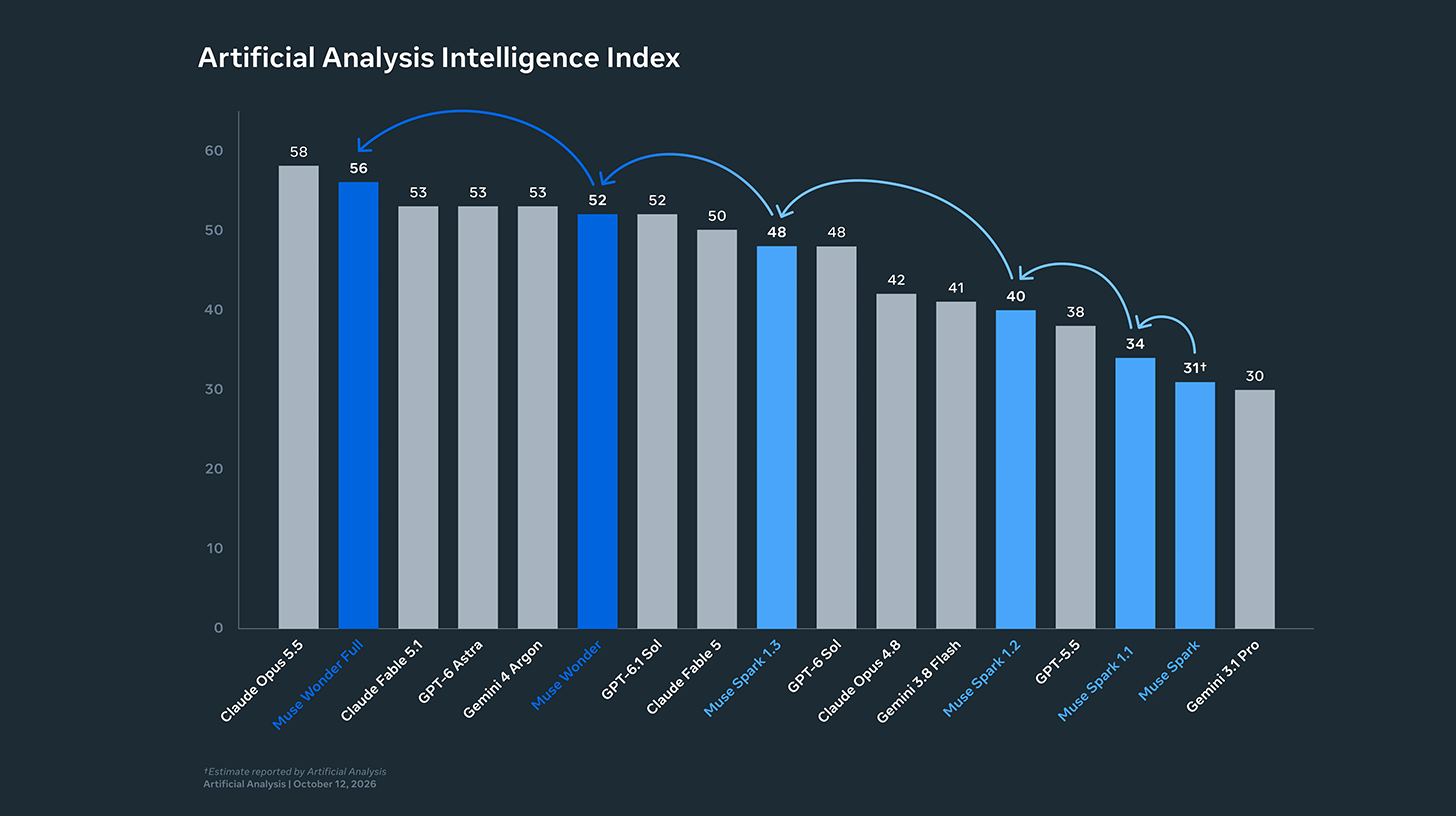
inclusionAI released Ling-3.1-flash-1019 on 27 October, a post-training update with 560 billion parameters, 25 billion active, and a 1 million token context. The card says its Artificial Analysis Intelligence Index score rose from 41 to 44.
Why it mattersThe open Ling checkpoint is a newer post-train, not the weights from earlier in the month.
Hugging Face ↗An open 380M model scores pages for training data
Daniel van Strien released UltraBERT-380M Curation on 28 October under Apache 2.0, with the training rows and the recipe. It answers typed questions about a page, such as topic and educational value, as probabilities, and the card says to treat those scores as sorting signals, not ground truth.
Why it mattersTeams filtering training data get a small model whose data and recipe they can rerun.
Hugging Face ↗Perplexity releases a 9B model for document and image search
Perplexity published pplx-embed-v2-context-9b on 28 October under an MIT licence. It embeds text, images and visual documents, and can embed a chunk with the surrounding document in view. A 1,024-dimension prefix shares a space with its 0.6B sibling.
Why it mattersA long document can be indexed with one size of model and queried with another.
Hugging Face ↗A 278M Telugu model is trained from scratch
Udgam Labs released Vemana-Base on 27 October, a 278-million-parameter Telugu model trained from scratch on 5.1 billion tokens of public Telugu web text, under Apache 2.0. It continues Telugu text, does not follow instructions, and the lab says it runs on a laptop-class CPU.
Why it mattersA language with less commercial model support gets a small base model people can run locally.
Hugging Face ↗An 82M speech model ships with its training recipe
Ming-Kokoro-82M, posted 28 October under Apache 2.0, is an 82-million-parameter English text-to-speech model with 12 voices in the Kokoro checkpoint format. The card says the corpus, scripts, configs and training logs are public, and that reproducing the run is about $35 of GPU.
Why it mattersA tiny speech model you can retrain, not only download.
Hugging Face ↗A 35B coding model is distilled from three specialist teachers
On 30 October Logics released Logics-SWE-Qwen3.6-35B-A3B, an Apache-2.0 model trained from Qwen3.6-35B-A3B with multi-teacher distillation. Against that base, the card reports gains of 3.69 points on SWE-bench Pro V2, 3.00 on SWE-bench Multilingual and 2.37 on SWE-bench Pro.
Why it mattersOne downloadable coding model is being taught by several specialists instead of a single teacher.
Hugging Face ↗A small drafter makes Danish speech recognition faster
syv.ai released Edda v0.2 large hurtig on 30 October. The recogniser weights match the Alexandra Institute's Edda model, and a 170-million-parameter drafter proposes tokens that Edda checks. The card says greedy transcripts come out about 2.4 times faster, with Edda still deciding every token.
Why it mattersA smaller speech market gets a faster local recogniser without a new model.
Hugging Face ↗Quick hits
Smaller stories worth a glance.
- Anthropic's common shareholders get little say after listingTechCrunch reports the post-IPO structure leaves public investors little control over major decisions, including who sits on a board chaired by president Daniela Amodei.TechCrunch ↗
- Intel received a waiver to keep foreign robots in its fabsThe FCC's 22 October order lets Intel keep using certain foreign-made robots in US chip plants after the company asked, unsure whether a robot ban covered them.Ars Technica ↗
- Amazon stands to gain more from Anthropic's IPO than VCsTechCrunch says no venture firm owns 5 percent, while Menlo's reported $14 billion stake is about 1.5 percent, and Amazon is likely the largest financial winner.TechCrunch ↗
- Anthropic's updated usage rules take effect on 12 NovemberThe 8 October policy rewrite spells out bans on weapons software and on tracking people without consent, and it takes effect on 12 November.Anthropic ↗
- GMO says stolen cloud-desktop data may have been postedGMO Internet says data tied to its Onamae cloud desktops may have been posted and that 27,000 servers may be affected. It has not linked this breach to an AI pentest tool it flagged a week earlier.TechCrunch ↗
- A privacy assistant for families, Ollie, closes next weekOllie, backed by a $7.5 million Khosla Ventures seed, shuts its email-and-calendar assistant on 6 November.TechCrunch ↗
- Mayer's camera-roll demo for a child's school presentation backfiresThe Dazzle founder said the app produced three generic lines about her daughter, and critics treated the example as the problem.TechCrunch ↗
- An NES CPU, compiled into a stock Qwen model's weightsThe nesformer repository describes an NES processor compiled into an unmodified Qwen3.5 model.GitHub ↗
Deals & funding
Who raised money, and who bought whom.
Funding rounds 2
Investors put money into a company in exchange for a share of it.
Forerunner backs SuperMe
- Raised
- $20M
SuperMe valuation not disclosed
SuperMe, a network of AI profiles built from real experts, raised $20 million led by Forerunner, with Greylock participating.
GPGreylock Partners+0 more
Cowboy Ventures backs Mintive
- Raised
- $7M
Mintive valuation not disclosed
Mintive raised a $7 million seed led by Cowboy Ventures, part of $11 million total, to govern identities and access for enterprise agents.
 CoatueOCOperator CollectiveHFHustle Fund+0 more
Acquisitions 1
One company buys another outright.
Thrive Holdings buys ADT
- Price
- $7.6B
ADT is now part of Thrive Holdings
Thrive Holdings, an OpenAI partner, is buying ADT for $10 a share, about $7.6 billion of equity and $15.3 billion including debt.
On the calendar
What's coming up, in date order, and how sure we are about each.
- 31OctRegistration closes for AI Film Making courseToday
- 1NovClimate summit focuses on 'climate-responsible AI'Tomorrow
- 1NovSpeed Insights stops recording First Input DelayTomorrow
- 2–13NovProtoStar climate challenge2days away
- 5–7NovThird LA Vertical Drama Market5days away
- 5–6NovBoxWorks 2026 in San Francisco5days away
- 5NovHogwarts Legacy adds DLSS 55days away
- 6NovOllie assistant shuts down6days away
- 7NovTerry McMillan Presents: Paradise with You premieres7days away
- 9–20NovCOP31 climate conference in Antalya9days away
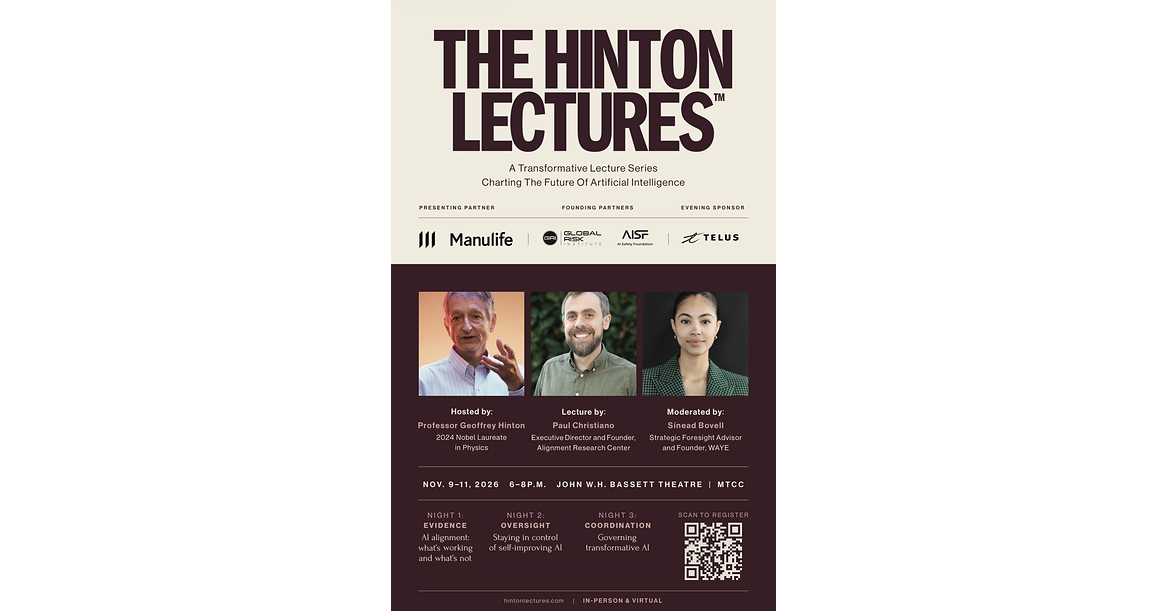
- 9–11NovThe Hinton Lectures on AI safety9days away
- 9NovCharmed By a Southern Monster premieres9days away
- 11NovJules becomes read-only11days away
- 12NovUpdated Claude usage policy takes effect12days away
- 20NovAI Film Award submissions close3weeks away
- 21NovInaugural edition in Hollywood3weeks away
- 22Nov'The Challenge Sverige' originally scheduled (now delayed to 2027)3weeks away
- 30–3Nov–DecContent London 20264weeks away
- 30NovRose d’Or Awards4weeks away
- 1DecHearing on Apple's bid to block testimony4weeks away
- 4DecAI-made film opens in limited release5weeks away
- 4DecGods Don’t Give Gifts premiere5weeks away
- 4DecSingapore AI Safety Fellowship ends5weeks away
- 31DecJules shuts down9weeks away
- Early NovKimi K3.1 Pro free download












Stories are summarized in plain language; follow the link before quoting a figure. Story images are shown from the publishers' own sites.