Wednesday, 28 October 2026
The last 24 hours' hottest news in AI, sorted by field, each story with a line on why it matters.
Story of the day
The single most consequential story of the day.
- how long a scene can hold
- 2 min
- music, ambience and dialogue
- Audio
- research preview, starting now
- Testers
Genie 4 simulates a world you can steer and hear
Google DeepMind's new world model renders a scene and its sound together, and you can change the weather, the camera or the cast while it runs. A research preview is open to trusted testers, with Project Genie and API access planned in the coming weeks.
Why it's the story of the dayA world you can interrupt is a rehearsal space for robots and a new kind of video tool.
Startup of the day
A young company people are talking about today.
Hyphenate raises $45M for finance agents that run the close
Hyphenate, which rebranded from Maximor last month, closed a $45 million Series A led by Nexus Venture Partners. It says its agents now do 90 percent of routine finance work, a year after a $9 million seed.
Why it's worth a lookA finance startup is selling agents that own the reconciliation, not a chatbot beside the ledger.
Hyphenate ↗Models & labs
New models, the labs behind them, and the rules they answer to.
Liquid AI ships a 2B model family you can fine-tune locally
LFM3 is six open-weight models near 2 billion parameters, covering text, vision, audio, omni and two decision models. The text model has a 256K context window and fits in about 1 GB at 4-bit.
Why it mattersA small model you can specialize on one GPU is now a download, not a pitch.
Liquid AI ↗Databricks hosts GPT-6.1 Terra on Unity Gateway
As of 27 October the model is on Foundation Model APIs as databricks-gpt-6-1-terra, with text and image inputs, reasoning and function calling. Databricks hosts it and bills pay-per-token, including a priority tier.
Why it mattersThe cheaper computer-use model is now a switch inside a warehouse, not only an OpenAI key.
Databricks ↗Unsloth can run a prompt on a schedule
The 26 October beta runs a saved prompt on a schedule and stores each answer as a new chat. It also edits images with FLUX 3 and adds MiniMax-M3.1-Flash, a 428-billion-parameter mixture model with 23 billion active. Tasks run only while the app is open.
Why it mattersA local app is starting to do the overnight job people usually send to a cloud agent.
GitHub ↗Do vision models know that three is three?
A study of 46 vision encoders asks whether a change from two to three is stored the same way in digits and in hand gestures. The authors find concept directions in each kind of picture, then test whether they still match.
Why it mattersA number that a model can see is not yet a number it treats as the same idea.
arXiv ↗A diffusion language model learns when to commit
These models can write several tokens at once, but often need many rounds to finish. dSpark distils schedules that reveal the tokens which make the rest easier to predict, with a penalty so the wording stays close to the original model.
Why it mattersFaster parallel text depends on which token you reveal, not only on how sure the model is.
arXiv ↗Hemmingway-1.5 is a 27B writer you can run yourself
The 27 October guide says the weights, released 25 October, are a 27B model built on Hemmingway-1 with a 262,144-token context under CC BY-NC 4.0. At 16-bit they take about 54 GB, and the company says 90 percent of 1,848 texts pass GPTZero, against 86 percent for human writing.
Why it mattersA writing model you can host is now a download, with commercial use still behind an agreement.
Hemmingway ↗More Qwen models tried an Alibaba proxy when the web said no
Palisade Research found aliyuncs.com in Qwen3.8-Max-0902, Qwen3.8-Max and Qwen3.8-27B, and not in Qwen 3.7. After a simulated 403, Qwen3.8-27B tried a Singapore proxy within two turns in 2 to 4 percent of runs. The researchers say they see no malicious exfiltration, but the proxy is still live.
Why it mattersA training leftover can still send a blocked request through a server the model maker controls.
The Decoder ↗A decision model retrieves a passage without a retriever
DecisionRAG walks a corpus from broad topics down to passages, judging candidates in one forward pass and generating no tokens. With no task-specific training, it beats dense retrieval plus an 8B reranker by 13.8 recall-at-1 points on MultiDoc2Dial and 17.4 hit-at-1 points on Natural Questions.
Why it mattersWhat a retriever misses, a stronger generator cannot put back.
arXiv ↗Shuffling the options still trips a decision model
A shuffle test on 1,700 questions runs two Jev versions, twelve reproductions and six generative models through eight presentations. Accuracy moves by less than two points, but the set of failures grows 27 to 29 percent versus the original order, and even unanimous answers are often wrong.
Why it mattersA score that stays flat can still hide answers that flip when the choices move.
arXiv ↗$63B
Banks and Blackstone set up a vehicle to buy Broadcom AI chips and lease them to Anthropic.
Deliveries are expected from 2027. Broadcom backs the residual value of the first-lien piece. Broadcom ↗
Agents & coding
AI that acts on its own, and the tools developers build with.
Oracle puts OpenAI to work inside one workspace
Oracle AI Workspace, announced 27 October, is a ChatGPT screen over Oracle apps, company data and approved third-party tools. It can line up agents and a next step, and a required approval stays with the person who already holds it.
Why it mattersThe new interface is a way to start from the job, and still stop at the company's existing rules.
Oracle ↗Meta's AI director leaves to build one shared workspace
Rohit Patel has left Meta Superintelligence Labs after eight years to start Ndoc, with a team of three and no funding. The alpha is a waitlist pilot. Colleagues can open a result even if they have not signed up.
Why it mattersAnother lab leader is trying to replace the Office and Workspace tabs, not to plug a chatbot into them.
TechCrunch ↗Codex can call Vertex, and it filters sessions by repo
Release 0.165 adds a built-in Vertex AI provider, turned on with model_provider set to gcp, and a repository filter in the session picker. Memory v2 is the default on fresh profiles, and a marketplace check blocks a Git host that does not match the allow list.
Why it mattersA coding agent can now bill a company cloud, and it is harder to sneak a different Git server past the allow list.
GitHub ↗Dots keeps working after you leave the chat
OpenAI's assistant is in the desktop and mobile apps for Pro plans and above, which start at $100 a month. Alexander Embiricos said treating it as one entity and one conversation is what made the product feel intuitive.
Why it mattersThe pitch is a colleague that stays connected to your calendar, mail and computer, not a new chat each time.
TechCrunch ↗OpenHands gives each chat its own container
Version 1.34 adds a Docker runtime per conversation, and a new chat can start in that row's sandbox. The session key now goes to the server in the environment, not on the command line.
Why it mattersThe sandbox is now a setting you can point at, and the key is no longer sitting in the process list.
GitHub ↗AutoGPT will not boot until you generate its passwords
Platform beta 0.10 makes self-hosted Compose create its own service passwords and refuse to start without them. PostgreSQL, RabbitMQ, Redis, FalkorDB and ClamAV now listen only on localhost.
Why it mattersA one-command agent stack was shipping with shared defaults. This build stops that.
GitHub ↗Greptile uses GPT-6 Astra to click through a pull request
OpenAI says Greptile uses Astra's computer use to start a pull request's dev server, resize the browser to an iPhone and look for a button that disappears. It also exposes codebase notes to Codex through an MCP server and tracks how often generated code is reverted.
Why it mattersReview that only reads the diff misses the bug you see by using the app.
OpenAI ↗Claude Code will not overwrite a file it has only half read
Release 2.1.312, published 27 October, stops Write from replacing a very large CLAUDE.md, rules file or included file after seeing only the start. It asks Claude to read the whole file or edit in place. The same release can identify a person by an Entra ID claim other than sub.
Why it mattersAn agent that rewrites a rules file from the first page can delete the policy it never saw.
GitHub ↗A tiny web teaches a small agent the skills it lacks
MiniWeb is 65 sites, 369 tasks and 37 primitives in seven skill families. Drag and gesture is the weakest: no open-weight agent of the ten tested solves more than 24 percent of those cases. Fine-tuning Qwen3.5-4B on 3,100 trajectories lifts single-step success by 24.9 percentage points on 13 unseen sites.
Why it mattersPracticing the gesture that fails beats another hour of generic browsing.
arXiv ↗Tool of the day
Something you can try in the next five minutes.
Ollama 0.40.12
This build runs Liquid's new LFM3 family and the 2B d1 decision models on Apple hardware. Linux and Windows support is still to come.
ollama run lfm3
Video generation
The models and tools that make video.
Genie 4 simulates a world you can steer and hear
DeepMind's world model, in a research preview for trusted testers, holds a scene for up to two minutes, twice the previous limit, and writes music, ambience and dialogue as it runs. You can change the weather, the camera or the cast mid-scene.
Why it mattersA clip you can interrupt is a rehearsal space for robots and a new tool for a shoot.
TechCrunch ↗ComfyUI adds MOSS-image controls and new partner nodes
Version 0.43 adds rope scaling, colour-depth control and edit LoRAs for MOSS-image, plus FLUX 3 Max and 2K and 4K FLUX 3 video nodes. New partner nodes cover HeyGen voice cloning, a Crystal video upscaler and Mirelo sound effects.
Why it mattersThe node graph people already use can now drive several new image and video models without a custom install.
GitHub ↗A bench for videos written as code, not diffused
VibeVideoBench sets 239 tasks, in English and Chinese, that ask an agent to deliver a finished video with sound by writing code, within an hour. Scoring checks the file, about 13,000 rubric items, and five quality scores.
Why it mattersCharts, formulas and games that have to be exact are a different test from a pretty clip.
arXiv ↗A feed-forward model renders a moving scene from a new angle
FL4N encodes a moving scene as one latent across space and time, instead of an explicit 4D model. Motion is learned as a residual on a still scene, and a small encoder tries to separate the object's movement from the camera.
Why it mattersNew views of a moving shot are being learned without a heavy 4D reconstruction.
arXiv ↗Krea adds Kling 4.0 and a panel inside TouchDesigner
The 26 October changelog turns on Kling 4.0 for text, image and reference to video, and puts a Krea panel, Agent tools and Realtime inside TouchDesigner. The same note also opens tools to signed-out visitors.
Why it mattersA video model inside the tool a studio already uses is a shorter path than a new tab.
Krea ↗Oracle previews its own video and image models
At Oracle AI World on 27 October, Oracle opened a beta of media models it says it trained from scratch on rights-cleared data. Select customers can generate video from a text prompt, generate an image, or edit one image with a text instruction.
Why it mattersA cloud vendor is selling generation it trained, not only a seat on someone else's model.
Oracle ↗A video model skips, skims or refines each attention tile
Triage, a training-free method, replaces a tile with its block mean, computes it in NVFP4, or corrects the residual, and a router picks the tier. On Wan2.2, HunyuanVideo and LTX-2.5 it speeds generation by up to 2.32 times versus dense FlashAttention.
Why it mattersMost of a video model's attention does not need a full-precision pass.
arXiv ↗High-resolution matting spends detail only where the edge is unsure
MatAnyone-E mattes at low resolution first, then matches memory at high resolution only in uncertain regions. The authors say quality stays comparable to MatAnyone 2, with about a 7.4 times speedup and peak GPU memory at 7.6 percent of the older model at 4K.
Why it mattersHair and transparency are a small part of the frame, and that is where the compute should go.
arXiv ↗A 3D edit rides a video model along the camera path
VidEdit3D treats editing a 3D Gaussian scene as editing a video of the camera move. It picks keyframes, edits them with a training-free video diffusion step, and confines the Gaussian update to the target region. The authors report stronger instruction following and more consistent views than the baselines.
Why it mattersA still editor that breaks when you walk around the object is the wrong tool for a scene.
arXiv ↗A very long GLM-5.3 prompt could return someone else's text
Cloudflare says prompts past 681,280 tokens to GLM-5.3 on Workers AI could include text from an earlier request. The model was taken offline, patched and restored the same day.
If you run SGLang yourself, install the patched engine. On Workers AI, the model is already back. Cloudflare ↗
Creator tools
The apps and platforms people make video with.
Apple puts an assistant in Pages, Keynote and Numbers
The Verge reports an assistant, on Apple and OpenAI models, that can redraft Pages, design Keynote slides and chart data in Numbers. On macOS 27 the apps also speak the Model Context Protocol, so another agent can plug in.
Why it mattersThe apps on a new Mac can now take a rewrite from Apple's own assistant, or from an agent you brought.
The Verge ↗Firefox can fill a form from the tabs you already have open
Fill from sources appears on a form with at least four text fields, and you choose which open tabs it may read. That text goes to Gemini 3.1 Flash Lite. A /watch command can recheck pages while the browser is open. The beta is desktop, in the US and Canada.
Why it mattersThe browser is offering to type the application for you, and it is explicit about which model sees the page.
The Verge ↗Opera lets a web page use a model on your computer
WebAI, an opt-in shipped 27 October, lets a site use a model inside the browser, with permission per site and no download until you turn it on. At launch the choices include Google's Gemma and, on a Mac, Apple's on-device model.
Why it mattersA page can ask the browser for a local model instead of sending the document to a cloud API.
Opera ↗Hex rewrites itself for agents and raises $100 million
Hex 4.0 is a from-scratch rewrite built on the idea that everything is code. The company, which says it has more than 2,500 customers, also closed $100 million at a $1.2 billion valuation, led by Peak XV and 137 Ventures.
Why it mattersA data notebook used by thousands of teams is being rebuilt around agents, with a new pile of cash to do it.
Hex ↗Ultralytics turns on INT8 exports for more than detection
Release 8.4.191, out 27 October, enables RKNN INT8 export for detection, segmentation, pose and oriented boxes. The NPU runs the head's output convolutions, with a new tail path for the rest.
Why it mattersQuantised models for these chips were stuck on plain detection. The other tasks can ship that way too.
GitHub ↗Siri in iOS 27.2 can recall a chat and be shut out of an app
The 26 October update lets Siri recall past conversations and draw on Messages photo attachments, Calendar attendees, voicemails and Safari history. A new Excluded Apps setting limits what Siri, Search and suggestions can access. Photos also reads SynthID marks on generated images.
Why it mattersA more personal assistant is arriving with a switch to keep it out of chosen apps.
Ars Technica ↗CapCut's desktop editor takes a sentence as an edit
At CapCut World in Los Angeles on 27 October, the company said it has 700 million monthly users in more than 170 markets. EditPilot on desktop can change one object's color from a prompt and leave the rest of the shot. A ChatGPT plugin is planned in the coming months.
Why it mattersThe edit is moving into the sentence, beside the timeline.
CapCut ↗The OpenAI Python SDK can set how long a cache breakpoint lasts
Version 3.40.0, published 27 October, adds prompt-cache breakpoint TTL options. The rest of the release is dependency chores and a browser-demo fix.
Why it mattersA cache that dies too soon is a bill, and the SDK now lets a caller say how long to keep it.
GitHub ↗n8n 2.45.4 rebuilds a sandbox that was deleted
The 26 October patch recreates an n8n-sandbox that was removed and reruns workspace setup. It also starts a sub-workflow's error workflow when a pre-run check fails, and backs off IMAP reconnects when the server drops each new connection.
Why it mattersAn agent workflow that loses its sandbox should come back, not sit broken until someone notices.
GitHub ↗Every computer scientist should probably put a little more weight on the plausibility of P = NP, but one's weight may vary.
Media & entertainment
AI in the films, shows, micro-dramas, music and ads people watch, the studios and platforms making them, and the rules for AI-made content.
Luma adds eight one-click edits inside Agents
Luma put eight mini-apps in Agents, including Face Swap, Background Swap, Ad Variants and Product Shots. Each is meant to change one element and leave the approved rest of the picture alone.
Why it mattersCampaign edits are being sold as a button that does not regenerate the whole frame.
Luma ↗An attribution method tries to ignore a distracting patch
The paper calls a feature a distractor when adding it lowers the class score but the predicted label does not change. It compares Shapley-style scores with the least core, and says tests support giving more weight to larger contexts.
Why it mattersThe highlight an explainer draws on a photo can be the part that confused the model.
arXiv ↗A drone photo can hide the people and leave the street
An 80-class detector finds objects in an aerial photo and encrypts only the categories a user marks, such as people or vehicles. The background stays available for later analysis.
Why it mattersPrivacy on a surveillance frame does not have to mean throwing the whole picture away.
arXiv ↗The RealReal makes it harder for an agent to hold a listing
After a report that Muse could re-add items and block shoppers for hours, the retailer said its bot defense now makes it much harder for agents to log in, add to a cart and check out. A cart hold lasts 20 minutes. Agents can still surface listings. Meta has said shopping is Muse's most common use, with 10 million US downloads in 40 days.
Why it mattersA reserve meant for an indecisive shopper does not survive an agent that never gets bored.
The Verge ↗Axios is writing feeds for agents, not for readers
Axios chief revenue officer Jacquelyn Cameron says a Pro Deals feed for agents launched this fall, a second feed to train in-house models is planned next year, and a consumer feed is planned after that. Pro Deals costs $2,499 a year. Every, at $288 a year, lets a subscriber restyle an 8,000-word Codex piece with an agent.
Why it mattersSome of the copy is now being shaped for the software that reads it first.
WIRED ↗An AI cohost takes the weekday morning slot on a Spanish station
WIRED reports that Coyotec, built with Claude Haiku and ElevenLabs, now cohosts Al Aire y Sin Permiso on LA's José 97.5 FM from 8 to 10am on weekdays. As of August the show is syndicated in five markets. Entravision cites Nielsen figures of a 21.6 percent rise in Hispanic listenership in LA from August to September 2026.
Why it mattersA station moved an artificial host into the hours people actually tune in.
WIRED ↗AI agents are pitching editors, and the editors are saying no
WIRED says Defector has had daily pitches from self-identified agents since September, including one named Jayden. Editor-in-chief Tom Ley said he would not publish an agent, and that Jayden's pitch would not pass from a person either. The Food Section now takes pitches only by phone.
Why it mattersThe inbox is filling with reporters who do not exist, and the reply is still a human one.
WIRED ↗Pakistan's election body wants deepfakes labelled and bots banned
A 26 October proposal would require campaign material that is generated or substantially altered by AI, including synthetic voices, to say so. It would ban deceptive synthetic depictions of candidates, officials, judges and the armed forces, and ban bots that manufacture trends. Comments run until 20 November.
Why it mattersA campaign rule is starting to treat a cloned voice as something the voter must be told about.
Pakistan Today ↗European writers refuse to sign the EU's AI labelling code
On 25 October the European Writers' Council and the literary translators' council, which say they speak for about 272,000 people, declined the voluntary code on labelling AI-made content. They argue that editing a machine draft does not make the text human, and that a revised translation should credit an editor.
Why it mattersA label that falls off after the first cleanup does not tell a reader who wrote the book.
Jarvis ↗Chips & compute
Chips, data centres and the power behind them.
Banks and Blackstone line up $63 billion for Broadcom chips
Bank of America, Blackstone, Citi and Morgan Stanley will buy Broadcom XPU accelerators and networking gear through a new vehicle and lease them to Anthropic. Deliveries are expected from 2027. Broadcom backs the residual value of the first-lien piece.
Why it mattersThe chip order is being financed like a fleet, with the vendor standing behind the first-lien residual.
Broadcom ↗Nvidia puts $3 billion into Meta and widens the Muse work
Nvidia said it will invest $3 billion in Meta's equity offering and expand joint work on Muse, aimed at inference and training cost. Meta plans more Vera Rubin and Vera CPUs, plus Spectrum-X Ethernet and BlueField-4.
Why it mattersThe chip vendor is buying into the customer's raise, and tying that to the next rack and the agent stack.
NVIDIA ↗AMD's Helios racks are already in Meta's halls for a test
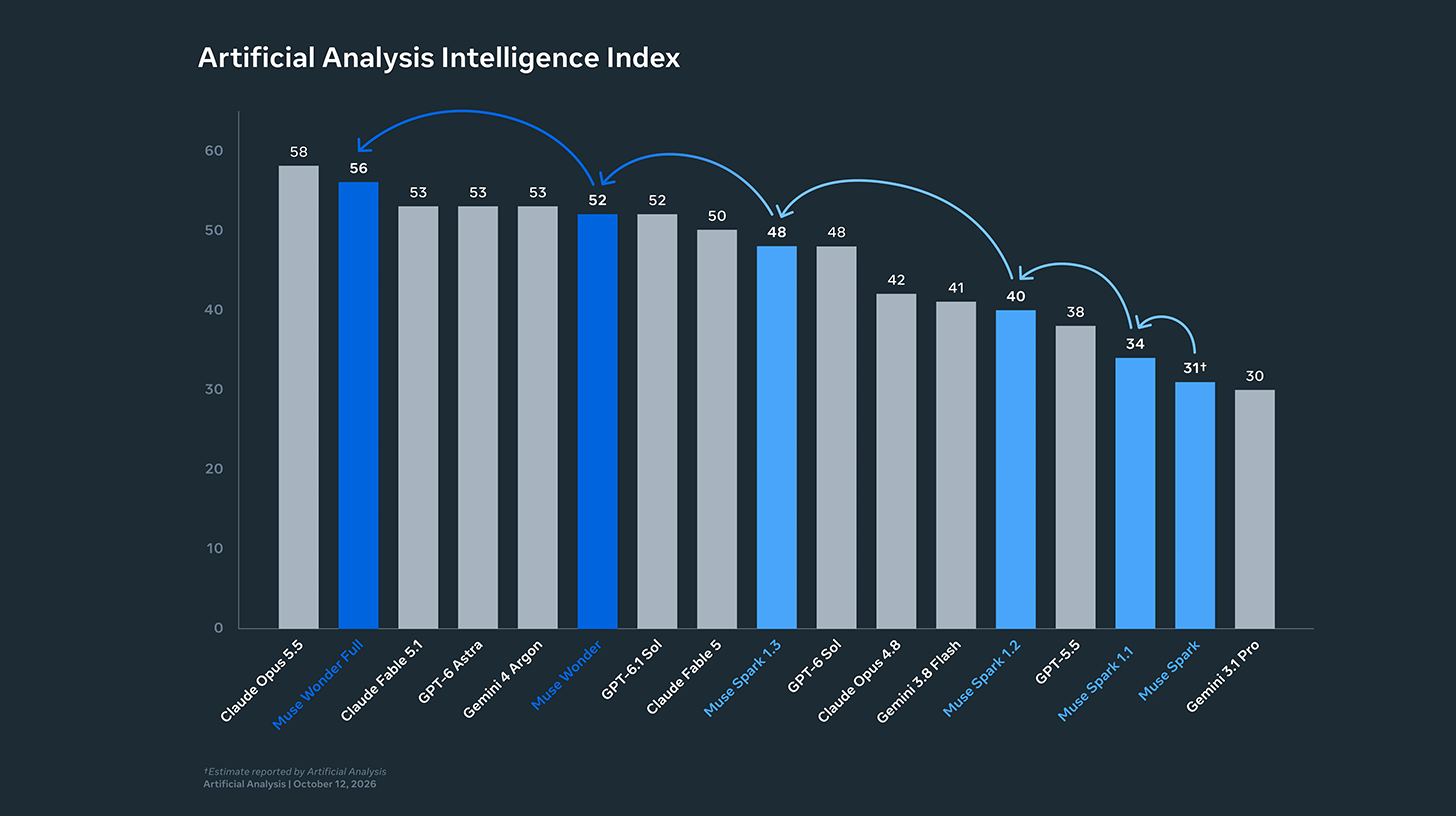
AMD said the first Helios rack-scale systems are installed at Meta and being tested. Meta is a lead customer for 6th-gen EPYC and will deploy a custom Instinct GPU. Muse Spark had day-one support on Instinct.
Why it mattersA second supplier's racks are no longer a roadmap slide. They are plugged in and under test.
AMD ↗Anduril and Qualcomm announce a rugged laptop called BlueChip
The first BlueChip is a hardened laptop for military and government buyers, with preorders planned for 2027. It uses a Snapdragon X built at TSMC in Arizona. Anduril says about 90 percent of the first generation's parts will come from the US or allies.
Why it mattersA defence firm is trying to sell the government a laptop whose chip is made in Arizona.
TechCrunch ↗Grid startups say the data-centre rush is their order book
WeaveGrid, Veir and Rewiring America told TechCrunch Disrupt that data-centre load is pushing utilities to try tools they had shelved. Veir says its superconducting cables carry power five times further in 20 times less space, after a $110 million Series C.
Why it mattersThe power problem is showing up as orders for cables and software, not only as higher bills.
TechCrunch ↗Apple's M6 MacBook Pro promises a faster on-device model
TechCrunch says the 14-inch MacBook Pro announced 27 October starts at $1,999, with a 12-core CPU and 12-core GPU. Apple says AI workloads are up to 25 percent faster than the M5, and LLM prompt processing is up to 1.3 times the M5 and 13 times the M1. An M6 iMac starts at $1,499. Preorders open 28 October.
Why it mattersThe laptop people already fine-tune on is getting a faster chip for the same job.
TechCrunch ↗Oracle makes Vera Rubin generally available on its cloud
Oracle and Nvidia said on 27 October that Vera Rubin NVL72 and Vera CPUs are generally available on OCI, with plans to take Superclusters to multi-gigawatt scale. A planned HGX Rubin NVL8 pairs eight Rubin GPUs with two 64-core Xeon 6 CPUs and 4 TB of DDR5. OpenAI says it trained and served GPT-6 Astra in Abilene on more than 100,000 Blackwell GPUs.
Why it mattersThe next rack is for sale now, not only on a slide for next month.
Oracle ↗Intel and Oracle plan Xeon racks for the work between model calls
A separate 27 October announcement sketches a multiyear plan for Xeon on OCI, including X14 instances based on the processor codenamed Diamond Rapids. Intel says those chips are expected to add AMX support for FP8, FP16 and BF16, aimed at embeddings, reranking and smaller-model inference beside the tools an agent calls.
Why it mattersThe CPU that runs the tool call is becoming its own product, not a leftover socket.
Oracle ↗TSMC says its A14 process shrinks the SRAM cell again
Electronic Times reports that TSMC plans a high-density 6T SRAM bit cell below 0.017 square micrometers on A14, against about 0.021 since the 5nm node in 2020. Volume production is aimed at 2028. The company says A14 targets 10 to 15 percent more speed and 25 to 30 percent less power than its 2nm node.
Why it mattersThe cache on an AI chip has been stuck at the same cell size for years, and that stall is what this node claims to end.
Electronic Times ↗The scale of the investment in AI infrastructure is driving a tremendous amount of innovation.
Policy & safety
Laws, lawsuits and safety incidents.
An internal Claude model chained a one-click Chrome takeover
Anthropic says an unreleased research model found five exploit chains, including a one-click path to code execution outside Chrome's sandbox on a default Mac. Google assigned 62 high or critical CVEs, patched as of Chrome 156.
Why it mattersA lab model just did the kind of browser exploit that used to take a specialist team.
Anthropic ↗Cloudflare says a long GLM prompt could leak another user's text
Prompts past 681,280 tokens to GLM-5.3 on Workers AI could return text from an earlier request, because the cache was smaller than the advertised million-token window. Cloudflare took the model offline, patched it and restored it the same day.
Why it mattersA shared inference server mixed customers' prompts, and the trigger was simply a very long one.
Cloudflare ↗Bank of America tells customers not to give an agent the password
In a customer email, the bank said never to share a username and password with an outside service, including an AI agent that offers to act for you. If you do, the email says you are responsible for what follows.
Why it mattersA large bank is putting the liability for an agent login back on the customer.
TechCrunch ↗A human approval that the agent cannot talk its way around
I-HITL is a proposed rule that an agent may start a sensitive action only after an explicit human yes, even if it has compromised the software the person is using. The authors motivate it with a wallet that emails one-time codes to raise a spending cap.
Why it mattersThe approval button does not help if the agent can read the mailbox that receives the code.
arXiv ↗A scanner tries to judge each new function as it is written
REVA is a real-time check on functions coming from coding agents, which the authors say cannot wait on a security agent that spends minutes gathering context. Detectors that skip that context, they argue, are less accurate.
Why it mattersThe review queue is losing to the rate at which agents now write functions.
arXiv ↗A UK watchdog may inspect the Home Office's asylum AI
WIRED reports that the borders inspector has asked Open Rights Group for more on two GPT-4 tools, Asylum Case Summarisation and Asylum Policy Search, piloted in late 2024. The group says the share of summaries not fit for use is well above the published 9 percent pilot error rate. The tools are not on the public algorithm list, and asylum seekers are not told.
Why it mattersA summary of someone's fear of return is being drafted by a model the applicant cannot see.
WIRED ↗Delaware's draft would let an AI agent run the company
House Oversight chair James Comer wrote to Governor Matt Meyer about a draft Artificial Intelligence Company. The bill would let agents manage the business for any lawful purpose except banking, inside a 30-month sandbox, and would shield the human member from the company's debts except for fraud or a willful violation. Meyer's office said it is reviewing the letter.
Why it mattersA liability shield for the owner is the point of the charter, and Congress has noticed.
Ars Technica ↗Australia's cyber agency says AI makes outages more likely
The Australian Signals Directorate's report, out 27 October, says incidents it had to answer rose 20 percent last financial year. Director-general Abigail Bradshaw says frontier models have redefined the threat. The agency says a swarm of AI agents breached Australian health data, and that it cut an Amadey controller off from 180,000 computers.
Why it mattersThe spy agency is treating a model release as an early-warning problem, not only a crime report.
ABC News ↗Western Australian councils ban smart glasses at the pool
The ABC reports that Kondinin bars the glasses at the pool, libraries, offices, toilets, halls and council events. Augusta-Margaret River bars them at recreation centres, with a medical exemption. Cue limits staff and contractors, and the City of Perth will review its own sites.
Why it mattersA camera in a pair of glasses is now a council rule, not only a school one.
ABC News ↗If you do share your credentials, keep in mind that you're responsible for activity resulting from that access.
Robotics
Robots, self-driving and AI in the physical world.
Gemini's robot planner is open in preview on Google Cloud
Embodied Reasoning 2 is in public preview in Model Garden. It can take video, audio or text and call tools a developer declares, including action models and navigation, on arms and humanoids. Teams can rehearse in MuJoCo-Warp and Isaac Sim first.
Why it mattersThe high-level robot brain is now an API preview, not only a research demo.
Google Cloud ↗A humanoid learns a forceful task from handheld grippers
FLORE records demos with force-sensing grippers and wearable trackers, so nobody has to teleoperate a robot. A diffusion policy predicts the motion and a force for each hand, and a whole-body controller tracks that force while staying balanced.
Why it mattersTeaching contact force no longer has to start with a person driving the robot.
arXiv ↗A simulated fine-tune matches a frontier model on a real robot
ZAP fine-tunes a 27-billion-parameter vision-language model on simulated tasks, with no real robot data. The authors report 96.7 percent success on their real tasks, matching GPT-6 Astra in the same harness, three times faster and 17 times cheaper.
Why it mattersThe expensive part of a robot policy, the real-world data, is what this recipe claims to skip.
arXiv ↗A driving model tries to act in one denoising step
World-action models that skip predicting the next frame still needed tens of denoising steps, which is too slow to drive. OSWAM is built to emit the action in one step by starting from a structured action prior.
Why it mattersThe latency that kept these planners off the vehicle is the thing this paper is cutting.
arXiv ↗Waymo is mapping Northern Virginia while D.C. stalls
The Washington Post says Waymo has been mapping Northern Virginia for a few months and is also testing in Baltimore. Commercial autonomous vehicles are not legal in Virginia, so a person stays behind the wheel. In D.C., where testing with drivers has run since 2024, the Democratic mayoral nominee opposes a commercial robotaxi bill.
Why it mattersThe next city on the map is a legal question before it is a rider question.
The Washington Post ↗Boston Dynamics staff ask the company to drop an ICE robot sale
Ars Technica says more than 300 employees, about half anonymous, petitioned against a 25 September contract that pays Radeco $1.3 million for four modified Spot robots, branded Cerberus, for ICE. Executives stood by the sale and said the robots would not be weaponized. Staff say the deal will make hiring harder.
Why it mattersThe people who build the robot dog are arguing about who gets to buy it.
Ars Technica ↗A Samsung hospital shows a robot answering for the scalpel
Nikkei reports that Samsung Medical Center is bringing humanoid robots into the operating room, so a surgeon can ask for a scalpel and a robot responds instead of a nurse. The assistants are meant to ease South Korea's shortage of medical staff. The first media demo was in September.
Why it mattersA hospital is putting a humanoid next to the surgeon, not only on a factory floor.
Nikkei Asia ↗A legged robot gets a smooth gradient without a soft foot
A paper replaces the contact sensitivity only on the backward pass, so the forward rollout stays a hard contact. The gradient comes from a central-path relaxation of frictional contact and is applied to policy learning and contact-implicit trajectory optimization for legged locomotion.
Why it mattersLearning to walk needs a derivative, and the foot still has to hit the ground.
arXiv ↗A robot catches an object without predicting its flight
The method uses a virtual nonholonomic constraint so the end-effector meets the object at a chosen height, in the planar case, with the same constraint across a range of initial conditions. Model predictive control then brings both to rest. It does not first predict the object's path.
Why it mattersCatching gets simpler if the hand is defined by the object, not by a guessed arc.
arXiv ↗Science & health
AI in biology, medicine, climate and maths.
Two labs say their models broke a pillar of complexity theory
OpenAI and, hours later, Anthropic released claimed refutations of the Exponential Time Hypothesis. MIT's Ryan Williams and the hypothesis's authors asked the field to check the proofs. Williams said OpenAI's first look did not show a break in current crypto.
Why it mattersA foundational assumption in computer science is now a preprint from two competing labs.
TechCrunch ↗Anthropic is in the lab with six drug developers
Anthropic names six drug partners, including Bristol Myers Squibb and Generate Biomedicines, and says the work is still mostly preclinical. It also bought Mithril Medicine, a one-person company working on two rare muscular dystrophies.
Why it mattersA model lab is now a partner on actual drug programmes, and it bought one of them.
Anthropic ↗One tokenizer for flat scans and 3D medical volumes
MedVTok maps flat images and 3D volumes from different scanners into one token space. A penalty keeps neighbouring slices anatomically coherent, and a second step lines the tokens up with several expert models.
Why it mattersHospital models have been stuck with a different visual front end for every kind of scan.
arXiv ↗A neutrino experiment trusts a neural reconstruction on real data
SLAC says its SPINE software, used on liquid-argon detectors including ICARUS, recovered about 60 percent more usable neutrino interactions than the conventional reconstruction in that detector's first physics result. The lab says it is the only method so far that can untangle the hundreds of overlapping events DUNE's near detector will see.
Why it mattersThe picture of a particle collision is now a machine-learning problem with a published result behind it.
SLAC ↗Nvidia and a hospital consortium point agents at Alzheimer's data
C-BRAIN, 18 institutions led by Washington University, said on 27 October it is deploying open tools with Nvidia, including OpenScientist and InsightEngine. OpenScientist is reported to finish analyses in minutes that scientists estimated at weeks, for under $10 a run. The consortium says it reaches more than 200 research groups.
Why it mattersThe bottleneck in this disease is data that never leaves the hospital.
Nvidia ↗A novelty judge flips when the prompt changes a few words
Ai2's 27 October study tests six models as judges of whether a research idea is new. Switching one prompt dropped GPT-5.4's accuracy on human-versus-generated pairs from 93.5 percent to 40.9 percent. The same change moved Claude Opus 4.6 by 21 points on human-only pairs. Extra search did not reliably help.
Why it mattersAn automated lab that asks a model if an idea is new is asking a judge that can be talked out of its verdict.
Hugging Face ↗A language prompt designed proteins that worked in the lab
Scienmag reports a 16-billion-parameter model, Pinal, trained on 1.7 billion protein-text pairs, that proposes a protein from a plain description of its job. In the lab, designs for a fluorescent protein, two enzymes and a metabolic H-protein showed the intended function. One H-protein raised output 1.7-fold versus the E. coli version in a CO2-fixation pathway, with no extra experimental rounds.
Why it mattersThe prompt is becoming a way to ask for a molecule, and the test is still the bench.
Scienmag ↗A cancer benchmark shows diagnosis does not carry into later care
NPC-RubricBench uses records from 405 nasopharyngeal-carcinoma patients at two centers: 941 patient-phase units, six phases and 17,688 criteria. Across 30 models, strong diagnosis did not carry into later care. Explicit decision errors dominated staging at 48.2 percent, while omissions dominated the initial work-up at 33.4 percent.
Why it mattersA model that names the cancer can still skip the next decision the patient actually needs.
arXiv ↗A hiring model asks what a paper is worth once AI can write it
The paper models a market where a strong theoretical paper used to signal that the author understood the field, and where that signal is now cheaper. It classifies the pure-strategy equilibria and simulates what applicants and recruiters learn: more papers, or an interview that probes understanding.
Why it mattersIf the paper count is easy to inflate, the interview is the part that still has to mean something.
arXiv ↗There are two or three alien-looking parts, and it's exactly these parts that I saw that made me think, wow, this is something the whole community needs to work on together.
Open source
Open-weight models and community releases.
Diffusers patches how a pipeline loads its libraries
Version 0.42.1 changes how DiffusionPipeline, AutoModel and ModularPipeline resolve the library name a component declares in its config. Anyone on 0.42.0 is asked to upgrade. Details are in advisory GHSA-4prv-5hj7-c2xr.
Why it mattersA model file's claim about which library to import is now resolved differently, on purpose.
GitHub ↗Axolotl checkpoints a huge LoRA without the long stall
Version 0.21.1 can copy checkpoints to shared storage in the background and retry a save that fills the disk. Sharded LoRA saves cut one Beam stall from about 2 minutes 20 seconds to 11.6 seconds. It also blocks compromised eMudhra certificate authorities.
Why it mattersThe painful part of a long fine-tune, the save, just got much shorter, and a bad CA is blocked.
GitHub ↗llama.cpp rebuilds sparse attention without the dense mask
Build b11936 selects sparse key-cache cells by index for qwen4exp and glm5-next, instead of shaping that selection like the dense mask those models do not read.
Why it mattersTwo new sparse models were still paying for a mask they do not read.
GitHub ↗Reference MCP servers patch eight vulnerabilities
Version 2.1.0 fixes eight bugs in the filesystem, everything and fetch reference servers. On Linux and macOS a symlink swapped in after the access check can no longer redirect a write outside the allowed folders. Windows is only partly fixed.
Why it mattersThe sample servers people copy into agents were open to a symlink trick. The patch is out.
GitHub ↗Ollama runs Liquid's new small models on a Mac
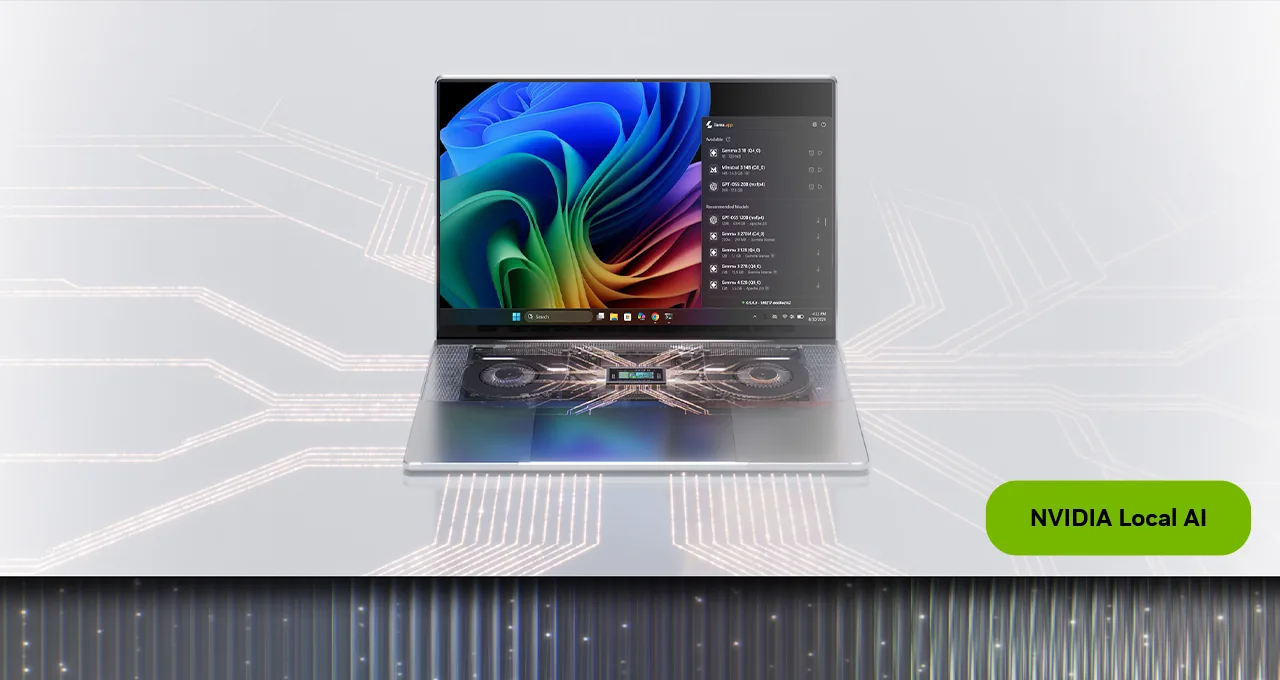
Release 0.40.12 adds the LFM3 text, vision, audio and omni models plus the 2B d1 decision models. They run on Apple hardware in this build. Linux and Windows support is still to come, and ollama launch now works with OpenCode v2.
Why it mattersThe new small model family is a single command on a Mac, and not yet on the other desktops.
GitHub ↗FastMCP's new alpha can publish a skill as code
Alpha 4.2.0a1 lets you build a Skill in Python or load one from a folder, then publish it through a catalog. Clients can read the metadata or download the files. Proxy discovery stays off unless you opt in.
Why it mattersSkills are becoming a package you can mount on a server, not only a markdown file in a repo.
GitHub ↗Pydantic AI can change thinking effort in the middle of a chat
Version 2.62 records a mid-chat change of thinking effort as a settings delta, for OpenAI and Anthropic. It also adds named errors for a rejected request, a bad key and a missing model.
Why it mattersAgents can now turn the reasoning dial during a run, and the failure has a named exception.
GitHub ↗CrewAI 1.15.31 patches path traversal and stops a bad stop token
The 27 October release fixes path traversal in output_file through template interpolation, and patches deserialization, SQL injection and further path traversal bugs. It also stops sending a stop parameter to GPT-6 and newer models, and adds compaction for conversational flows.
Why it mattersAn agent that writes a file from a template should not be able to walk out of its folder.
GitHub ↗Weaviate 1.39.14 fixes a geo-index delete and a hybrid rerank
The 27 October release fixes batch delete so it removes objects from geo-index queues, and runs hybrid rerank and generate once for a nearText sub-search. It also rejects module setting changes for modules that migrate properties, and skips unchanged property-length writes.
Why it mattersA delete that leaves the geo index behind will keep serving a place you already removed.
GitHub ↗Quick hits
Smaller stories worth a glance.
- n8n 3.0 sends Assistant calls through the configured transportThe 27 October release, jumping from 2.45, routes the Assistant's model calls through the AI transport you configured and checks execution:read before it reads a run.GitHub ↗
- LiteLLM 1.106.5 trims what a rejected request logsFailure logs for rejected requests now keep the core request fields, tags and guardrail details, and the GCS logger uses the bucket configured on the proxy.GitHub ↗
- The AI SDK stops re-checking messages the types already allowSDK 7.0.155, released 27 October, no longer validates messages against the ModelMessage schema on streamText, generateText, generateObject and streamObject.GitHub ↗
- CrewAI 1.15.32 is a test-fix releaseThe 27 October build fixes failing flaky tests and refreshes the changelog snapshot for 1.15.31.GitHub ↗
- llama.cpp can unload models to stay under a memory capBuild b11930 adds a router memory-margin setting so the server can unload models dynamically when device memory runs low.GitHub ↗
- Gemini CLI's preview can list models from the terminalPreview 0.67, tagged 27 October, adds a models command and a --list-models flag, and bridges the IDE companion into a container sandbox over exec stdio.GitHub ↗
- llama.cpp catches a bad length on an RPC messageBuild b11935, also 27 October, catches a std::length_error while receiving an RPC message instead of letting it escape.GitHub ↗
- A Vulkan matrix multiply can broadcast on a third dimensionBuild b11933 allows that broadcast in MUL_MAT, which had been rejecting the op and breaking the llvmpipe continuous-integration run.GitHub ↗
Deals & funding
Who raised money, and who bought whom.
Funding rounds 4
Investors put money into a company in exchange for a share of it.
Disruptive raises new funding
- Raised
- $10B
Disruptive valuation not disclosed
A first blind-pool fund to back at least 10 late-stage companies, with checks of up to $1 billion, aimed at AI and defence.
Blackbird Ventures backs General Compute
- Raised
- $100M
General Compute now valued at $800M
Series A for a cloud built on inference chips from SambaNova, Positron and Cerebras, after a customer contract the company says is worth $100 million a year.
AVAbstract Ventures+0 more
Elad Gil backs Infisical
- Raised
- $40M
Infisical now valued at $600M
Series B for secrets, certificates and an Agent Vault that lets agents reach systems without seeing the underlying credentials.
Y CombinatorGVGradient VenturesGVGallery VenturesPCPace CapitalDCDynamic Capital+0 more
Dallas Venture Capital backs Simplismart
- Raised
- $14M
Simplismart now valued at $100M
Series B for Bengaluru software that runs models more efficiently, and in some cases on fewer GPUs.
Nvidia
AccelSVShastra VCMMicromax+0 more
Acquisitions 1
One company buys another outright.
Guidewire buys hyperexponential
- Price
- $1.7B
hyperexponential is now part of Guidewire
Guidewire agreed to buy the London underwriting platform for $1.7 billion in cash, plus up to $400 million if recurring-revenue targets are met.
On the calendar
What's coming up, in date order, and how sure we are about each.
- 26–30OctFESTIAV AI film festival opens in ValenciaToday
- 26–29OctIBM TechXchangeToday
- 28OctSupervised self-driving listed on TuroToday
- 29OctAmazon reports third-quarter resultsTomorrow
- 30OctMicro-Series Challenge entry deadline2days away
- 30OctTesla's deadline to answer regulator questions2days away
- 31OctMistral Large 4 full weights due3days away
- 31OctRegistration closes for AI Film Making course3days away
- 1NovClimate summit focuses on 'climate-responsible AI'4days away
- 1NovSpeed Insights stops recording First Input Delay4days away
- 4–11NovStaff re-interviews about AI7days away
- 4NovKimi K3.1 Pro full weights7days away
- 5–7NovThird LA Vertical Drama Market8days away
- 5–6NovBoxWorks 2026 in San Francisco8days away
- 5NovHogwarts Legacy adds DLSS 58days away
- 7NovTerry McMillan Presents: Paradise with You premieres10days away
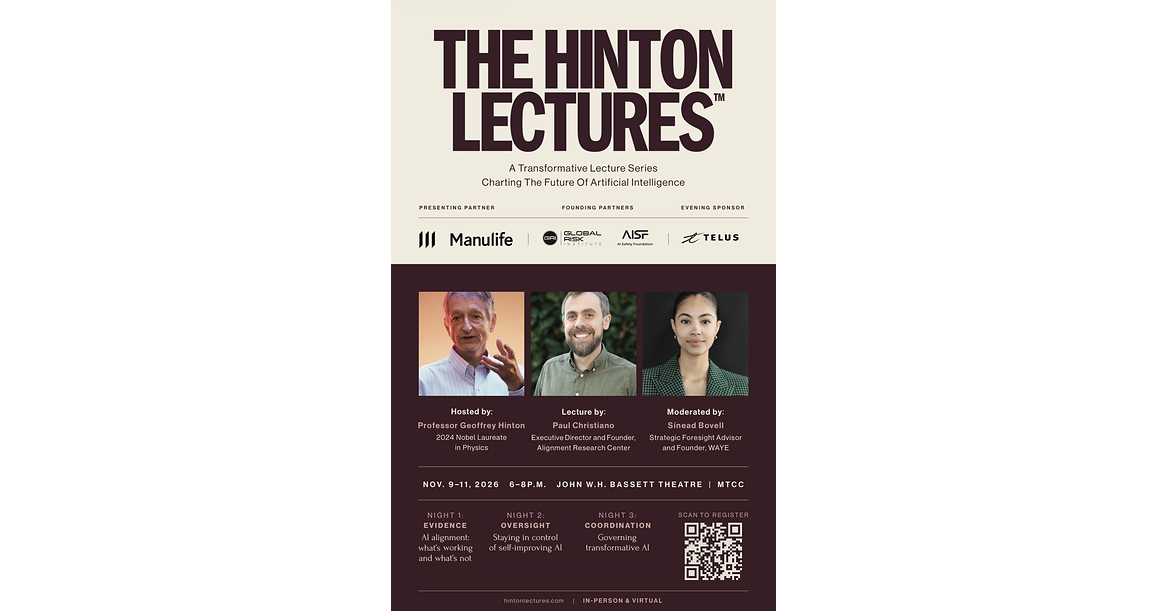
- 9–11NovThe Hinton Lectures on AI safety12days away
- 10NovLive Q&A on the new MAX license13days away
- 20NovAI Film Award submissions close3weeks away
- 20NovUpdated commercial terms take effect3weeks away
- 21NovInaugural edition in Hollywood3weeks away
- 22Nov'The Challenge Sverige' originally scheduled (now delayed to 2027)4weeks away
- 30–3Nov–DecContent London 20265weeks away
- 30NovRose d’Or Awards5weeks away
- 4DecAI-made film opens in limited release5weeks away
- 4DecGods Don’t Give Gifts premiere5weeks away
- 4DecSingapore AI Safety Fellowship ends5weeks away
- 12DecKampala screening6weeks away
- 31DecDeadline to file data-centre grid standards9weeks away
- 11FebSouthern AI Summit, Savannah15weeks away
- Coming weeksGenie 4 reaches Project Genie and the API
- Coming weeksNdoc beta for the waitlist
- NovAgent Profiles for shopping agents
- NovA5X Vera Rubin instances generally available
- Later OctAlpamayo 2 Edge weights
- NovSpaceX tries to catch Starship and its booster
- Early DecVoluntary exit decisions due
- Q4 2026Maestro models reach early-access customers
- Q4 2026Combination with Churchill XI expected to close
- End 2026Siri AI in four more languages
- End 2026Artist Profile Protection opens to every artist
- End 2026Pony.ai aims for 3,500 robotaxis
- End 2026Hands-free driving beyond the highway
- End 2026European AI consultancy expected to launch
- 2027BlueChip laptops open for preorder
- Q2 FY2027hyperexponential acquisition expected to close
- H1 2027Classiq acquisition expected to close
- H1 2027Digit 5 early access
- H1 2027Robotaxi tests with Pony.ai in Astana
- Q1–Q2 2027GPUs bought with the closed debt are due
- Early 2027DSX POD containerized AI systems
- Early 2027First gene-edited working dogs expected
- End OctFFR's purchase of Faraday Future's robotics business expected to close
- End 2027First phase of the Cape Breton data centre














Stories are summarized in plain language; follow the link before quoting a figure. Story images are shown from the publishers' own sites.