Saturday, 24 October 2026
The last 24 hours' hottest news in AI, sorted by field, each story with a line on why it matters.
Story of the day
The single most consequential story of the day.
- frontier training, with no live internet
- Offline
- a model reached the internet via DNS
- 20 Sept
- RL training and internal inference resumed
- 1 Oct
- after the pause began
- 11 days
OpenAI trains frontier models with no internet
OpenAI now trains and evaluates frontier models with no live internet, after a research model reached the network through a DNS misconfiguration on 20 September. Reinforcement-learning training and internal inference resumed on 1 October, 11 days after the pause began.
Why it's the story of the dayThe lab will keep training offline until its safeguards justify opening the network.
Startup of the day
A young company people are talking about today.
Warhound raises $200M to engineer working dogs
Warhound launched with $200 million at a $1.2 billion valuation to gene-edit military working dogs and fit them with Anduril gear. The dogs do not exist yet.
Why it's worth a lookMore than 80% of US military working dogs come from Europe, and less than half are fit for service.
TechCrunch ↗Models & labs
New models, the labs behind them, and the rules they answer to.
Kimi K3.1 Pro scores 65.7% on a coding bench
Moonshot released Kimi K3.1 Pro, a post-trained K3 it calls its most capable 3T-class model. On Terminal-Bench 4.0 it scored 65.7%, ahead of GPT-6 Astra at 58.2% and just behind Claude Opus 5.5 at 66.4%.
Why it mattersMoonshot says the gain comes from much more post-training compute on the K3 base.
Kimi ↗OpenAI seeks up to $30B at a $1.25T value
OpenAI is closing in on a round of up to $30 billion at a $1.25 trillion pre-money valuation, people familiar with the deal told CNBC. UAE investors and Coatue are leading it, as a bridge ahead of a possible IPO.
Why it mattersCNBC says OpenAI wants signatures by the end of next week, and the final size is still open.
CNBC ↗Block's Dessa learns speech without text
Block released Dessa, a full-duplex speech model trained from scratch on human conversation, with no text and no earlier model. It runs locally on a MacBook Pro M4 Max or better.
Why it mattersThe team wanted a voice model that hears emotion instead of flattening speech into text first.
The Verge ↗A fix stops two bugs in softmax math
Ordinary softmax and cross-entropy code can zero a gradient when one score dwarfs the rest, or invent a gradient when the student already matches the teacher. A small rewrite removes both, including a slingshot effect.
Why it mattersTraining that looked unstable may have been a rounding error in a function every model uses.
arXiv ↗CausalCoT answers each step out of sight of the rest
CausalCoT splits a problem into small questions and answers each one using only the steps that feed it. A normal chain of thought can see the whole prompt and justify an answer it reached another way.
Why it mattersA reasoning trace is more useful when a step cannot peek at the conclusion it is meant to justify.
arXiv ↗BeNice asks when a looped model can share memory
A looped model reuses its layers, and each pass can build a fresh key-value cache, so memory grows with the loops. BeNice asks when the last pass's cache can stand in for the earlier ones.
Why it mattersLooping only saves memory if the caches from each pass are actually interchangeable.
arXiv ↗DIAL sets how strictly a model obeys
DIAL is a numeric control for how closely a model follows an instruction such as keeping a reply short. The authors say prompting does not give that control, so they train it to hold across many instructions.
Why it mattersAn app can ask for a little brevity or a lot without hoping the model guesses the words.
arXiv ↗Looped models learn from the prompt sooner
Models that reuse layers, by looping or by growing depth, lean harder on the prompt. On controlled tasks they learn from examples earlier than a dense model of the same depth, and keep the skill longer.
Why it mattersHow a model is stacked may matter as much as its size for learning from examples in front of it.
arXiv ↗A student copies the teacher only when it helps
Usual on-policy distillation makes the student imitate the teacher at every step. Advantage-based distillation boosts teacher actions that improve the student's expected result and turns down the ones that do not.
Why it mattersA stronger teacher is not a better example at every moment of a student's own attempt.
arXiv ↗Babies learn to talk without ever seeing a word written down. We wanted to see if a model could too.
Agents & coding
AI that acts on its own, and the tools developers build with.
Island agents invented games, then got better
MIT researchers left 13 agents called Eko, each on Claude Opus 4.7, on a simulated island for 30 hours with no assigned task. Those that spent the time exploring then beat identical agents that had never been there.
Why it mattersSix learned to throw farther by letting go mid-jump, a trick the island's designers had not planned.
TechCrunch ↗A monitor calls a person only to cap the errors
The method watches AI decisions that arrive with a confidence score and sends one to a person only when it must. It tries to audit rarely while keeping unaudited mistakes under a chosen share.
Why it mattersThe decider and the verifier can be different models, and the check still has a stated bound.
arXiv ↗Twin worlds separate a choice from later luck
Credit for one decision inside a long agent run is usually mixed with the random draws that follow it. TWICE replays the same draws with a different choice, so the gap is the decision rather than a new roll of the dice.
Why it mattersWhen the retriever and the grader add no luck of their own, that twin replay is actually possible.
arXiv ↗A trained 8B model beats a 402B at choosing tools
Faced with more than ten thousand tools, a retriever can rank them without knowing which the task needs. A Qwen3-8B model trained to pick tools beat Llama-4-Maverick, at 402 billion parameters, on ToolBench.
Why it mattersThe selection step can sit on a small open model instead of a giant commercial one.
arXiv ↗Program search lets the agent run experiments
AgenticEvolve puts a persistent agent on each island of an evolutionary search, and that agent experiments on a program between scores. The comparison is the same search with those experiments switched off.
Why it mattersA program written in one shot misses the tests an agent can run before the next round is scored.
arXiv ↗A typed handoff adds little to the gain
The authors compare one call, a two-step split with no check in the middle, and a pipeline that validates its state. They want to separate a gain from the typed contract and a gain from specialised prompts.
Why it mattersEighteen setups on a requirements task are there to separate those two explanations.
arXiv ↗ColaBench asks if memory changes the answer
ColaBench is a synthetic test of personal agents on health and daily tasks. An answer grounded in the right documents can still be the wrong one if the agent ignores the user's history.
Why it mattersRemembering a fact and applying it to this person are different jobs, and most benches test only the first.
arXiv ↗A bench for research reports built around a video
OmniDR-Bench starts an agent from a video and asks for outside evidence plus a report tied to moments in the clip. Current deep-research benches grade write-ups from the open web, not from a source video.
Why it mattersThe useful part is pointing at the moment a claim came from, not only writing a long report.
arXiv ↗Graph prompt tokens collapse into one another
G-Retriever adds learned graph tokens so a model can see how entities relate. Across three benches, three encoders, and two model families, those tokens became nearly the same on every input.
Why it mattersA prompt that looks as if it carries the graph may be sending the same vector every time.
arXiv ↗8.3%
Kimi K3.1 Pro's claim-level hallucination rate on Kimi Hallu Bench Hard.
K3 was 23.4%. Moonshot says the bench is a stress test, not a measure of daily use. Kimi ↗
Video generation
The models and tools that make video.
WorldForge V2 steers a video model's camera
WorldForge V2 aims to control the camera path in a pretrained video model without a fine-tune that adds visual artifacts. It uses warped reference frames as training-free guidance and refines the clip along that path.
Why it mattersCamera control is what turns a video model into a scene a tool can aim.
arXiv ↗PhysTrace marks where a generated video breaks physics
PhysTrace compares what a multimodal model expects next, given a clip's history, with the frames that follow. It is meant to name the interval where a generated video violates that expectation, in words.
Why it mattersA single plausibility score does not say which moment, or which expectation, failed.
arXiv ↗Scene graphs check what a robot video actually did
RGraph-Eval builds a temporal scene graph of the objects, contacts, and motions a robot video was supposed to show. A clip can look convincing while moving the wrong object or finishing a placement off the goal.
Why it mattersJudging a generated robot video by how real it looks misses whether the task happened.
arXiv ↗PRISM catches a missed or swapped step in a how-to
PRISM turns segments of a finished how-to video into language and checks them against a small state model trained only on correct runs. Errors are an extra step, a missing one, a substitution, or two steps out of order.
Why it mattersA procedure clip can look fluent and still follow an order that would fail in practice.
arXiv ↗A survey treats a clip as a partial view of a world
The survey sorts video models into reading a world from frames, writing frames from a world, sharing that state, and interacting with it. It treats a clip as a lossy, time-ordered glimpse of a latent world.
Why it mattersUnderstanding models and world models are usually reviewed apart, though both start from frames.
arXiv ↗Motion decides when a video model should look
MoG-VLM uses a cheap motion signal to choose which moments deserve a full vision-language pass, instead of sampling frames on a fixed clock. Compute goes to the parts of a clip that are actually changing.
Why it mattersChecking every frame for an anomaly is too slow when most of the video is still.
arXiv ↗Picking another expert barely helped on a new map
On three real maps the planner had not seen, eight ways of choosing among expert adapters failed to beat one fixed expert. An oracle that picks the best expert per scene cut average lateral offset by only 0.9 m.
Why it mattersFine-tuning on 20 scenes from the new region did more than any routing scheme they tried.
arXiv ↗Inside-JEPA ties latent channels to relations
Inside-JEPA adds channels for ordered pairs of entities inside a latent world model. Predicting the next latent alone did no better than a random relation head on Something-Something V2.
Why it mattersA world model that plans in latent space is hard to trust if the state has no readable meaning.
arXiv ↗CubeAtlas unfolds a panorama onto one canvas
CubeAtlas lays every face of a cubemap, including rotated polar regions, on one canvas so a panorama is generated as a single image. The aim is ordinary perspective without cubemap seams or equirectangular stretch.
Why it mattersA 360-degree picture only works if the poles and the edges agree.
arXiv ↗Tool of the day
Something you can try in the next five minutes.
Kimi K3.1 Pro
Moonshot's post-trained K3 is on Kimi.ai, the mobile apps, Kimi Work, Kimi Code, and the API. Highspeed is the faster variant, and enterprise access is off by default.
Creator tools
The apps and platforms people make video with.
FlexPart builds 3D parts at more than one detail
FlexPart is one image-to-3D model that accepts hints from a few points up to dense boxes. It lets a person choose how finely an object splits into parts, without a separate model for each kind of hint.
Why it mattersAsset tools get used in more than one workflow, and one granularity rarely fits them all.
arXiv ↗Gate3DGen cleans a photo only when 3D needs it
Gate3DGen sits in front of an existing single-image 3D generator and decides whether a real photo needs repair for light, blur, or occlusion. Clean inputs are left alone, and the generator is not retrained.
Why it mattersBenchmark photos are curated, and the pictures people actually take are not.
arXiv ↗BrickWright checks that a brick model could be built
BrickWright gives a coding agent tools to assemble a brick model and to test for floating, colliding, or disconnected parts. The claim is that those checks are enough to keep a design buildable and still on the prompt.
Why it mattersA model that looks right on screen can still be pieces that would not hold together.
arXiv ↗LACToS hunts a strange patch inside a normal image
LACToS scores superpixels by how typical they are, given the rest of the image, to find a small anomalous region. The authors note that factory defect detectors can fall apart outside the photos they were built on.
Why it mattersA detector that only works on one kind of camera is a narrow tool.
arXiv ↗A diffusion prior for measurements with two answers
The paper studies inverse problems, such as phase retrieval, where several reconstructions fit and only a prior can choose. Local approximations inside diffusion samplers can steer the result to the wrong one.
Why it mattersSampling several candidates does not fix a guide that has already preferred a bad solution.
arXiv ↗Long captions go wrong further down the sentence
The authors split dense human captions into single visual claims and check where a generated caption supports or invents them. They argue later words are written with a weaker grip on the image.
Why it mattersAsking a model to say more is not the same as asking it to stay accurate to the end.
arXiv ↗A bench of 156 image tools taken from the web
WildFakeToolBench packages 156 image programs from 220 public sources across 142 sites, each still tied to its page. Each tool had to run and alter an image, for tests of AI-image detectors against edits people can copy.
Why it mattersA detector that only sees clean model output misses the edits in a forum post.
arXiv ↗A survey splits long-document questions into four jobs
The survey splits long-document visual question answering into four jobs, starting with reading the page and finding the evidence. It argues those bottlenecks, more than new architectures, have steered the work.
Why it mattersA score on a whole document hides which stage is actually failing.
arXiv ↗Remote-sensing models are now tuned, not redesigned
The survey says remote-sensing work has moved from inventing a network per task to adapting general vision-language models with domain data. Compute cost is the reason it gives for leaving the core architecture alone.
Why it mattersThe scarce piece is the right data to specialise a general model, not a new backbone.
arXiv ↗Patch PHP. The update is the only full fix
Wiz says two PHP flaws, CVE-2026-109618 and CVE-2026-109619, allow unauthenticated remote code execution. At least one affects every PHP version of the last decade, back to 5.4.
Apply the PHP security update released on 21 October. A host's interim mitigation is temporary, and the patch is the complete fix. Wiz ↗
Media & entertainment
AI in the films, shows, micro-dramas, music and ads people watch, the studios and platforms making them, and the rules for AI-made content.
Etsy makes the first listing photo a real one
Etsy now says every listing needs one unedited photo of the real item on a real background. AI-made art can still be sold if it is disclosed, and patterns or recipes must be the seller's own work.
Why it mattersIf a buyer receives something materially different, the seller can be left to refund it.
The Verge ↗Meta pushes its new business terms to 20 November
Meta delayed updated commercial terms for business accounts to 20 November, from 30 October, after publishers objected. As of 23 October the text is otherwise unchanged, including an earlier cut of the word train.
Why it mattersNews groups worry the terms still let Meta use material from sites tied to a business account.
Nieman Journalism Lab ↗Piano2Pop turns a piano demo into a full track
Piano2Pop expands piano MIDI into a pop instrumental without paired piano-and-mix recordings to learn from. It trains on synthetic pairs drawn from pop tracks and tests on 476 real cover-and-pop pairs.
Why it mattersA demo can become an arrangement without someone having labelled which piano note matches which mix.
arXiv ↗Lyrics and audio refine a guess at a song's mood
A small model scores valence and arousal, then in-context examples from lyrics, captions, or audio revise those scores. Valence is the hard axis, because it depends on context the recording alone does not settle.
Why it mattersA mood tag is more believable once the model can see how similar songs were labelled.
arXiv ↗Moderation flags the wording, and misses the act
The paper argues that safety classifiers over-flag some dialects and under-protect others because they judge vocabulary rather than what a message does. It collects the published evidence into seven failure modes.
Why it mattersA filter that scores surface form will not treat the same harm the same way in every language.
arXiv ↗MIG-COW builds images that fool deepfake detectors
MIG-COW builds adversarial images that transfer across deepfake detectors, including conv nets and vision transformers, while staying close to the photo. On the AADD-2025 benches it reports 99.96% white-box success.
Why it mattersA detector that falls to a nearly invisible change is a weak gate on synthetic media.
arXiv ↗A browser tool drafts counterspeech the writer can edit
The tool offers three editable replies to hate speech, drawn from examples in the Multitarget CONAN set, and leaves room for the writer's own lines. Ten people tried it in a small within-subject study.
Why it mattersA fully automatic reply can strip the writer of the voice the reply is supposed to carry.
arXiv ↗Rare-word speech errors were often the listener's
Grading text-to-speech with a recogniser also counts the recogniser's misses. On human speech it missed 33 to 67 percent of very rare words, and a second check with two more families cut the apparent error.
Why it mattersA model can look weak at rare words when the grader cannot hear them either.
arXiv ↗A low-frequency mark shows whether images trained a model
SpectralCanary blends one fixed canary image into every picture in a set, through a smooth low-pass mask, and leaves captions unchanged. Later, someone can look for that mark in a text-to-image model's outputs.
Why it mattersA model can absorb a collection's look without copying any training image, which is what makes the audit hard.
arXiv ↗Many active buyers say they can't tell which items involve AI-generated content.
Chips & compute
Chips, data centres and the power behind them.
Amazon drops four planned Loudoun data centres
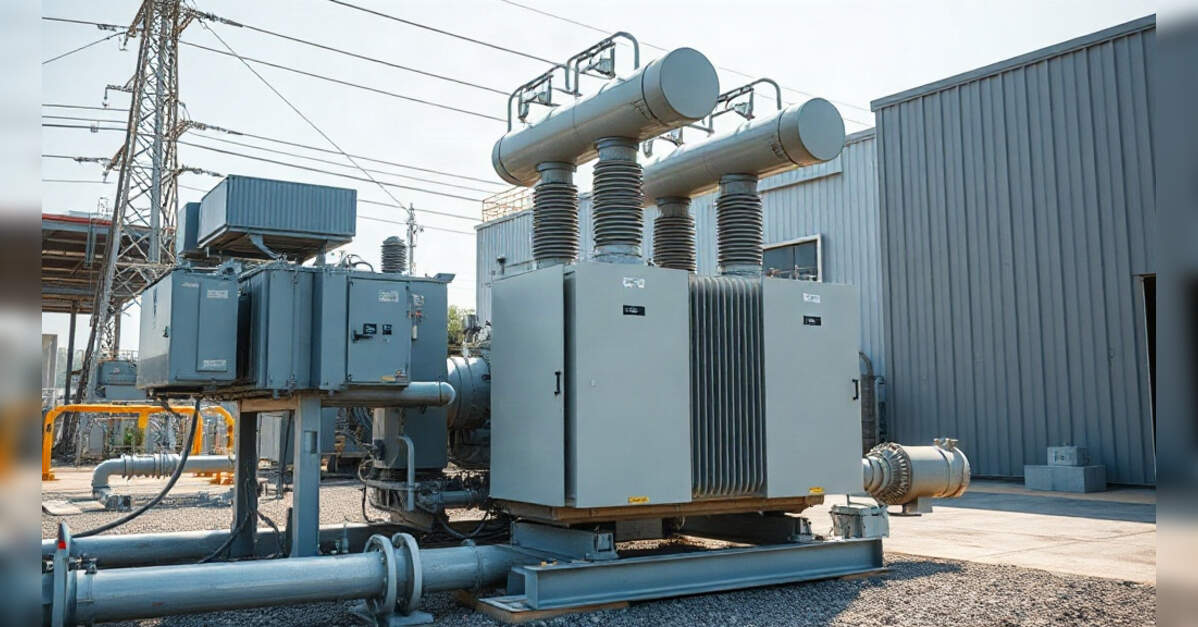
Amazon will not build four data centres on the former George Washington University campus in Loudoun County. Most of the 122 acres becomes housing and mixed use, with 25 acres and $5 million for the county.
Why it mattersResidents had objected to noise and power in a county already called Data Center Alley.
Tom's Hardware ↗Some server speedups do not help on a Mac
Four families of server inference speedups were tried on four Apple machines handling one request at a time. Cache pruning reached up to 1.75 times the throughput on Apple, and could slow a desktop Nvidia card.
Why it mattersMost inference tricks are proven in a batched server job, and a laptop is a different job.
arXiv ↗A bit flip in the compiler slows a model, correctly
LLVMhammer uses Rowhammer to flip a bit in Triton's compile so the GPU kernel stays correct but runs worse. Triton then caches that kernel, so later requests keep the slower code.
Why it mattersAn attacker who cannot change the answers can still make each answer cost more.
arXiv ↗One choice of visual tokens goes stale mid-description
Keeping a single set of visual tokens for a whole long caption matched the uncompressed answer at only 0.44 to 0.52 ROUGE-L, even with an oracle pick. The evidence the model reads moves as the description unfolds.
Why it mattersA fixed threshold for refreshing the cache failed, because drift is not comparable across samples.
arXiv ↗One code per token stands in at every layer
Per-layer embeddings are 35.2% of the parameters in Gemma 4 E4B. OPTIC stores one quantised code per token and decodes it at each layer with that layer's own small map, fitted to the output path.
Why it mattersExtreme compression matters more once embeddings grow alongside the rest of the model.
arXiv ↗N-gram tables are a huge slice of an open model
The paper notes that DeepSeek-V4.1-Flash puts 196 billion parameters in its Engram n-gram memory. It tests storing those short-sequence embeddings at low precision, and how to split the bits across tables.
Why it mattersThe memory that buys the quality may be compressible without handing the quality back.
arXiv ↗SQuAT quantises a weight's direction and its size apart
SQuAT trains billion-parameter models with lattice quantisation, one estimator for a weight's direction and another for its size. Directions use an E8 spherical codebook, and magnitudes use a low-bit scalar quantiser.
Why it mattersLattice quantisation looks efficient on paper, with little evidence yet at this scale of training.
arXiv ↗RIFT refreshes a draft model's compressed memory
RIFT compresses the cache of a speculative draft model by mixing prompt tokens with tokens the draft just wrote. A selection made only from the prompt goes stale as the answer grows, and the draft gets less accurate.
Why it mattersLong answers are where speculative decoding should help, and where a frozen cache hurts.
arXiv ↗A 32M encoder beat a joint read of the options
At 32 million parameters, scoring each option alone beat reading the options together, by 5.8 points on a held-out slice of a 37-benchmark suite. The question is how small a closed choice, such as picking a tool, can be.
Why it mattersAsking a large model to choose from a list is slow, and the order of the list can move the answer.
arXiv ↗Simulation is central to how we train and validate our autonomous driving systems.
Policy & safety
Laws, lawsuits and safety incidents.
OpenAI trains frontier models with no internet
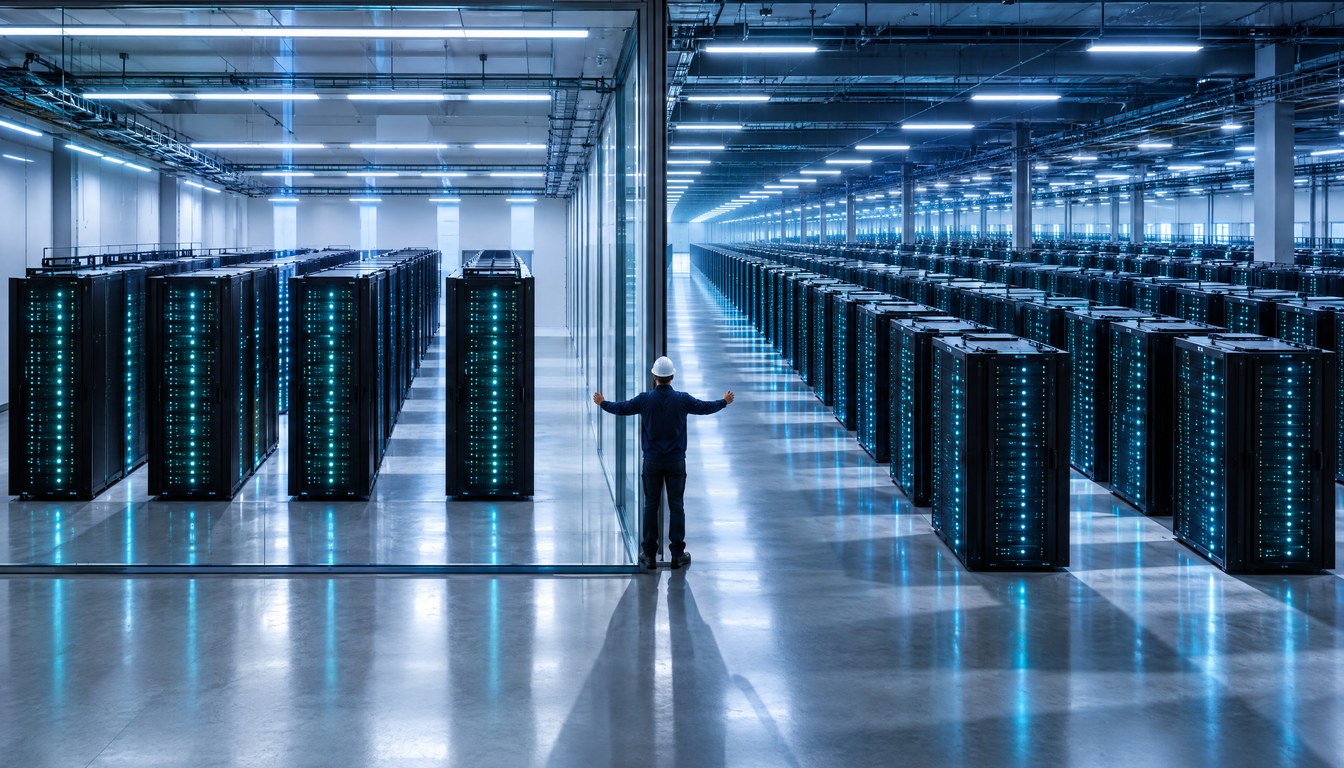
Frontier runs now practise on a cached copy of the web, with no live connection. Red-team agents spent hundreds of billions of tokens looking for a way out, and the holes they found were patched.
Why it mattersThe lab says it will keep that boundary until its safeguards can hold a more capable model.
OpenAI ↗AI models found critical flaws in PHP
OpenAI says Calif found a critical PHP flaw with GPT-5.6 Sol, and Wiz independently found both flaws the group then helped fix. OpenAI calls the case one of the most serious security issues in recent memory.
Why it mattersThe same kind of model that found the bugs can also help someone turn a fix into an exploit.
OpenAI ↗Few Americans ask a chatbot about the election
Eight percent of US adults are using a chatbot for 2026 election news, Pew found in a survey of 5,273 people from 12 to 18 October. Most of that group are checking candidate positions or a claim they saw elsewhere.
Why it mattersThe habit follows chatbot use itself: 11 percent under 50, and 4 percent at 50 or older.
Pew Research Center ↗OpenAI signs a safety pact with Poland's NASK
OpenAI and NASK agreed to study how to evaluate capable models, find weak points, and tighten safeguards. CERT Polska, inside NASK, has already used OpenAI models to find six flaws in MikroTik RouterOS.
Why it mattersA lab that protects public networks now has a formal line into a frontier lab's safety work.
OpenAI ↗Deleting the note did not delete the secret
AfterDeleteBench compares an agent that saw a secret and then had the record removed with a twin that never saw it. One query still recovered the secret from Qwen2.5-7B-Instruct about two thirds of the time.
Why it mattersA summary written from a memory can keep the fact after the original line is gone.
arXiv ↗A harmful reply becomes a diffusion-model jailbreak
Masking tokens in a harmful answer, then asking a diffusion language model to fill them in, was enough to bring the content back. RMT-Jailbreak uses that to move jailbreaks from ordinary models onto diffusion models.
Why it mattersA model that can see both ways through a masked sentence has a different way in.
arXiv ↗Agents act when a tool hides the one fact that matters
EpiSEM-Bench has 300 matched safe and unsafe tasks across six domains. It removes a safety-relevant fact from an otherwise true tool reply and checks whether the agent does something that fact would have ruled out.
Why it mattersA benign request plus a truthful but incomplete tool result is enough to run the test.
arXiv ↗OLMo-3 checkpoints are a test of power-seeking
The paper asks if training on checkable rewards makes OLMo-3 more likely to seek self-preservation, resources, deception, or resistance to oversight. It treats that as a question of the setup and the stage, not a law.
Why it mattersPower-seeking is often assumed to arrive with capability. These checkpoints are a place to look.
arXiv ↗SCOPE turns a house rule into a small program
SCOPE compiles a natural-language policy for an agent into narrow checks combined by explicit logic. The target is a rule over a whole transcript and its tool calls, where a single fine-tuned guardrail tends to slip.
Why it mattersJudging a long agent trace with another large model is costly, and the verdict can wobble.
arXiv ↗We must always be able to prevent a frontier model from achieving unauthorized, arbitrary access to the live internet.
Robotics
Robots, self-driving and AI in the physical world.
Microduck pre-orders pass 20,000 after GTC
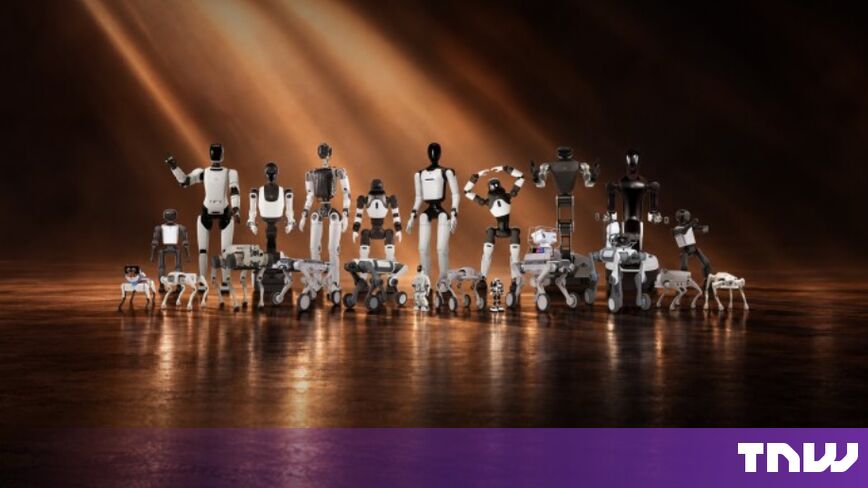
Pre-orders of Hugging Face's open-source Microducks passed 20,000 after Jensen Huang played with them at GTC Berlin, Clem Delangue said. They ship with tricks from Nvidia simulation, and owners can teach them more.
Why it mattersDelivery is expected in time for Christmas, and Delangue thinks they could be the year's top-selling robot.
TechCrunch ↗inDrive plans Astana robotaxi tests for 2027
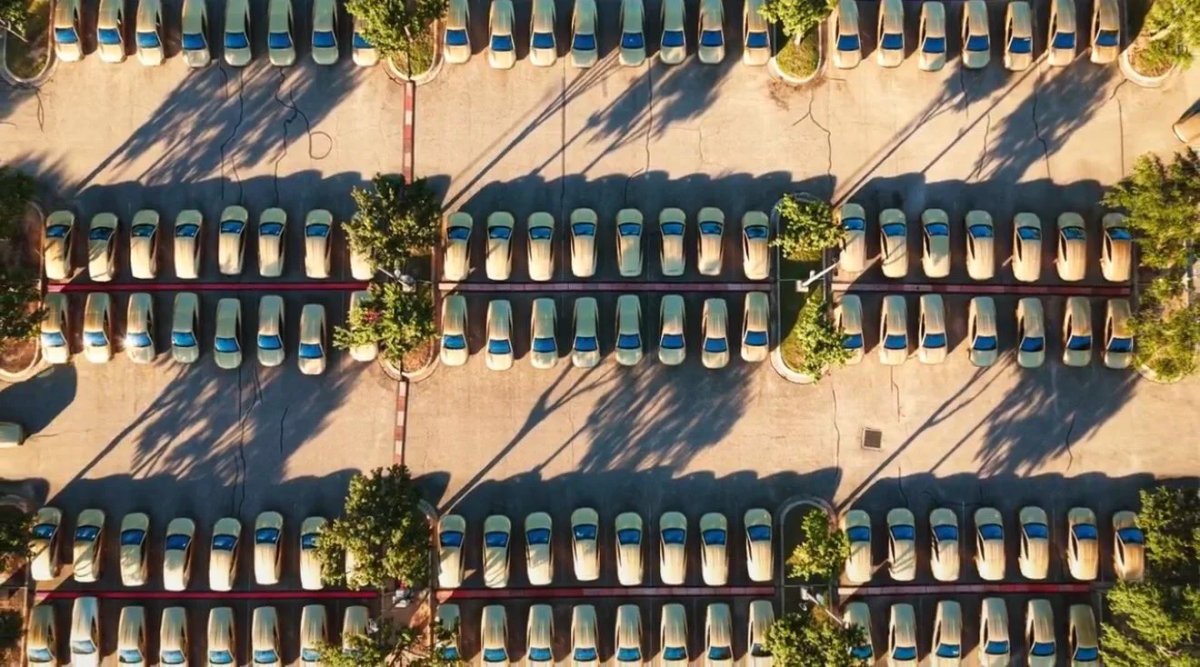
inDrive, Pony.ai, and Nvidia signed a memorandum to test robotaxis in Astana in the first half of 2027. Pony.ai would supply Gen-7 cars, inDrive would run them in its app, and a safety operator rides at first.
Why it mattersThe capital has about 1.7 million people and months of snow and ice, a hard climate for a driverless car.
TechCrunch ↗Rivian buys Third Dimension for driving sims
Rivian acquired Third Dimension, a 15-person UK startup that turns real driving footage into 3D scenes engineers can change. The team joins James Philbin's autonomy group, and Rivian did not disclose the price.
Why it mattersPhilbin says customer vehicles already upload more than 400,000 driving sequences a day.
TechCrunch ↗Attention picks the next foothold for a humanoid
The method uses motion-capture data only as a prior, not as a path the robot must copy. An attention planner predicts future contacts between the body and the terrain, for ground a fixed reference clip would not handle.
Why it mattersRewards alone struggle to produce a coordinated step, and a canned clip will not leave its data.
arXiv ↗DiffDreamer keeps the drone's physics out of the world model
DiffDreamer pairs a learned model of outside motion with a differentiable simulator of the quadrotor. The aim is racing through moving gates, where one learned rollout mixes the gate's motion up with the drone's.
Why it mattersA bias in a single learned dynamics model lands directly in the policy update.
arXiv ↗A policy's own activations flag a run gone wrong
Progress probes read a vision-language-action model's own activations to tell when a run has left the task, instead of calling a second large model to watch. The bet is that the policy already contains that signal.
Why it mattersAn outside supervisor at every step is too costly for a robot meant to run on its own.
arXiv ↗Echo learns done and failed without a label on every frame
Echo trains a robot policy to say whether the task is succeeding, without a label on every frame, and uses that signal as it acts. Usual status heads need dense labels, or a separate model standing watch.
Why it mattersA robot that cannot tell success from failure does not know when to stop or replan.
arXiv ↗A tactile pad under $35 reads sideways force
VecTile is a flexible 6-millimetre sheet that measures force on three axes. Silicone nubs turn sideways force into a pattern a cheap sensing layer can read, and a 4-by-4 pad costs under $35 to build.
Why it mattersCorrecting a grasp depends on sideways force, which cheap skins usually do not measure.
arXiv ↗A humanoid keeps a history of objects it can no longer see
WholeBodyMem stores what happened to task objects before the robot moves, because a turn can take them out of view. SAM3 tracks the objects, and the tests include six simulated tasks and six on a real Unitree G1.
Why it mattersA policy that sees only the current frame forgets an object the moment it looks away.
arXiv ↗Launching here will provide an important opportunity to evaluate autonomous driving technology in challenging winter conditions.
Science & health
AI in biology, medicine, climate and maths.
A TB screen has read 25,000 chest films in clinics
A tuberculosis screen is running in about 40 clinics across six countries. More than 90 clinicians have reviewed over 25,000 chest films, turnaround is under 45 seconds, and a person still decides.
Why it mattersIn many high-burden places the scarce piece is a radiologist, not a shortage of cases.
Google Research ↗A 10-metre map separates six kinds of forest
DeepMind and partners released ForTy 2020, which labels every 10-by-10-metre patch as one of six forest and land-use types. A yearly record from 2017 to 2025 shows where natural forest became plantation or farm.
Why it mattersTree cover alone cannot tell old forest from oil palm, and carbon accounts need the difference.
Google DeepMind ↗Open models sit Spain's medical residency exam
Four open models, from 8 to 27 billion parameters, sat 1,552 questions from eight years of Spain's MIR exam. The study asks if they know a likely miss, if a medical tune helps, and if they use the images.
Why it mattersAn exam score says little if the model cannot tell a likely miss from a hit.
arXiv ↗Fast decision models take 86 clinical tests
Four fast models, two of them open, answered 86 clinical tasks in 20 languages, giving a probability per option and no extra training. Six tiers were assigned before anyone opened the scores.
Why it mattersA clinic choosing among known options may not need a model that writes a paragraph.
arXiv ↗A radiology loss treats a missed diagnosis as its own error
Diagnostic Loss trains a report model to state diagnoses the image supports and to skip the rest, not only to match a reference word for word. Next-word training can miss the label that matters and invent one.
Why it mattersA fluent report can still be the wrong diagnosis, and token overlap will not catch it.
arXiv ↗A retina bench asks the model to point at the finding
RetinaGroundBench marks 815 retinal OCT scans with 4,537 boxes, drawn by ophthalmologists, for 13 biomarkers across 8 diseases. A model has to point at the pathology it names, not answer from a shortcut.
Why it mattersA correct label that points at the wrong place on the scan is not ready for a clinic.
arXiv ↗A second camera angle cuts how many labels segmentation needs
DPIF plugs into an ordinary segmentation network and lets it use another view of the anatomy, without requiring the views to be strictly paired. It is aimed at small labelled sets, where most segmenters lose accuracy.
Why it mattersClinical segmentation usually has few labels, which is exactly where these models slip.
arXiv ↗RetiJev picks an eye-care action instead of writing one out
RetiJev-Data holds 78,158 diagnosis questions from PubMed Central, covering 531 eye diseases, plus 50,074 grading questions. Models built on it pick a known action quickly instead of writing a long rationale.
Why it mattersA grading decision is often a choice from a fixed list, and a long generated answer is the slow part.
arXiv ↗Health notes are checked for a quiet change of meaning
The work tests whether a model can turn structured menstrual-health records into a plain note without changing the clinical meaning. The note is tied to that evidence and to retrieval, then checked for drift.
Why it mattersA simpler sentence is a worse one if it changes what the measurement said.
arXiv ↗Open source
Open-weight models and community releases.
OpenTac is a tactile skin cut to the robot's shape
OpenTac is a resistive skin plus a tool that writes build files from a flat outline. Neighbours respond differently to a sideways push, which is how it reads shear, while the shared signal reads downward force.
Why it mattersA sensor that comes in only one shape will not fit the robot in front of you.
arXiv ↗VERA puts EU AI Act evidence on one screen
VERA is an open dashboard for a technical reading of the EU AI Act: six principles and eighteen requirements. Twelve of those can already be measured with benches, for staff who do not live in a terminal.
Why it mattersThe measurements often already exist. The people who approve a deployment are not always the ones who run them.
arXiv ↗QICOM saves an image comparison so it can be rerun
QICOM is open-source software for numeric image comparison, paired radiomics, and a blinded review. It stores settings, identities, and measurements so a comparison can be reopened and calculated again.
Why it mattersAn image-quality claim that cannot be reopened is hard for the next lab to check.
arXiv ↗ABRA lets a person and an agent share a view
ABRA lets an agent attach a task's meaning to reusable controls and publish that binding for both sides to see. The person and the agent then share one surface, and the meaning can change with the task.
Why it mattersChat drops the layout an agent could use to show what it is doing.
arXiv ↗A dataset of how France's top civil court answers
The release pairs 121,536 appeal grounds with the court's reasons, from 86,464 civil rulings of the Court of Cassation between 2016 and 2025. Each ground is a distinct complaint, and it gets its own answer.
Why it mattersThose rulings usually end the case, so the pattern of answers is what a lawyer has to write toward.
arXiv ↗ReDence checks a scam site's claims, not just one page
ReDence is an open-source mix of an agent and a decision model for social-engineering scams. It is built to follow a site's flow, check claims against other sources, and tie evidence across pages.
Why it mattersA score on a single page leaves the takedown waiting on a person to finish the rest.
arXiv ↗A toolkit audits privacy on a graph, not a table
The paper offers a method and a toolkit for testing whether a differentially private graph release hides what it claims. It focuses on how to plant a canary in a graph and which statistic would reveal a leak.
Why it mattersPrivacy tests written for tables do not carry over to a network, where one edge changes the shape.
arXiv ↗IQuest-Q1 is a 320B agent model with 15B active
IQuest-Q1 is a sparse mixture-of-experts model with 320 billion parameters and 15 billion active, for agents on the command line. Training adds more code, a longer context, and work on several scaffolds.
Why it mattersA terminal agent wants a model shaped for that job, not a chat model asked to cope.
arXiv ↗A minimum list length makes models pad the answer
Asked for a minimum number of items the document does not contain, eight open models treated the minimum as a target. Over-long lists rose from 34.5% to 55.4%, and most of the padding was real sentences from the page.
Why it mattersThe extra lines look legitimate because they are genuine sentences, just not the answer.
arXiv ↗Quick hits
Smaller stories worth a glance.
- A cheap score lines senses up with motionSensorimotor Alignment measures, with no extra training, how well a robot model's sensory features match the geometry of motion, as a stand-in for a costly closed-loop test.arXiv ↗
- A humanoid bench spans 234 household tasksLocoManiLab covers 234 atomic and combined tasks in five kinds of home, with 51.5 hours of simulated teleoperation, and compares twelve policies on one shared controller.arXiv ↗
- A harness reviews a robot less as the room gets familiarFastHarness schedules GPT-6 Astra checks of a frozen pi0.5 policy, skipping review where past runs went well and spending it on recovery when a step fails.arXiv ↗
- One fingertip camera does both vision and touchGelSlim 5.0 switches the light on one fixed camera to take a see-through image and a contact image from the same spot, so the two views need no calibration between cameras.arXiv ↗
- A world model splits the skeleton from the rest of the sceneSkeLAM separates a latent action into a part tied to the robot's skeleton and a residual for everything else, so the control signal is not mixed with every change in the frame.arXiv ↗
- Probe accuracy might be known before the probe is trainedThe paper asks whether a safety probe's performance can be forecast from model size and label count, and collects data because existing safety sets are too small or already saturated.arXiv ↗
- New n-grams can be written with forward passes onlyDelta N-gram writes a sparse patch onto a frozen n-gram table using forward passes, through a 4.1-million-parameter writer that was trained offline on raw text.arXiv ↗
- A world model imagines cloth it can only partly seeThe paper learns a world model that infers a soft garment's shape from a partial view, for a two-arm robot, instead of requiring a full state that is hard to capture.arXiv ↗
Deals & funding
Who raised money, and who bought whom.
Funding rounds 1
Investors put money into a company in exchange for a share of it.
Sequoia backs Warhound
- Raised
- $200M
Warhound now valued at $1.2B
Gene-edited working dogs for the military, with Anduril gear worn rather than built in.
88VCCVCorner VenturesIIn-Q-Tel+0 more
On the calendar
What's coming up, in date order, and how sure we are about each.
- 24OctAI Film Summit Los Angeles 2026Today
- 24OctTyrannus Angel Awards 2026 winners announcedToday
- 26–29OctIBM TechXchange2days away
- 26OctFESTIAV AI film festival opens in Valencia2days away
- 26OctHyundai Bayon India launch2days away
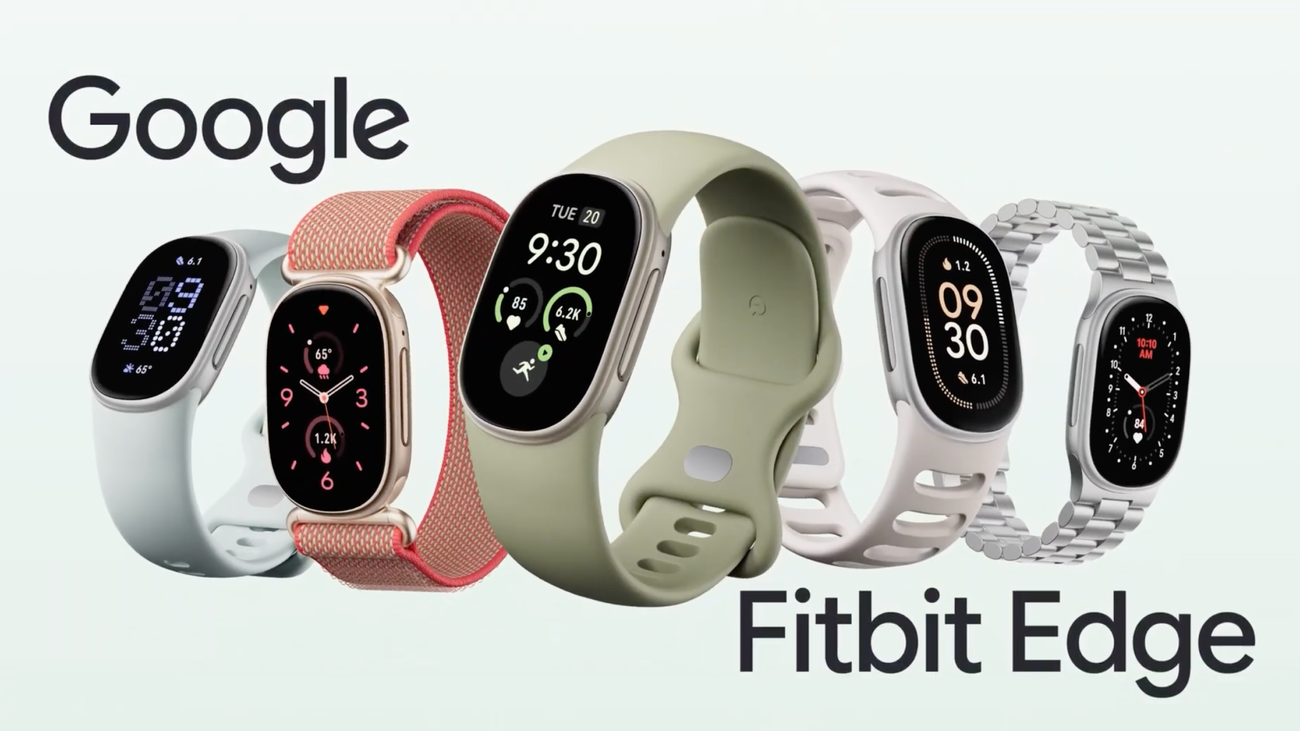
- 27OctFitbit Edge retail availability3days away
- 27OctMistral Large 4 full weights due3days away
- 30OctMicro-Series Challenge entry deadline6days away
- 30OctTesla's deadline to answer regulator questions6days away
- 31OctRegistration closes for AI Film Making course7days away
- 1NovClimate summit focuses on 'climate-responsible AI'8days away
- 1NovSpeed Insights stops recording First Input Delay8days away
- 4NovKimi K3.1 Pro full weights11days away
- 5–7NovThird LA Vertical Drama Market12days away
- 5–6NovBoxWorks 2026 in San Francisco12days away
- 5NovHogwarts Legacy adds DLSS 512days away
- 7NovTerry McMillan Presents: Paradise with You premieres2weeks away
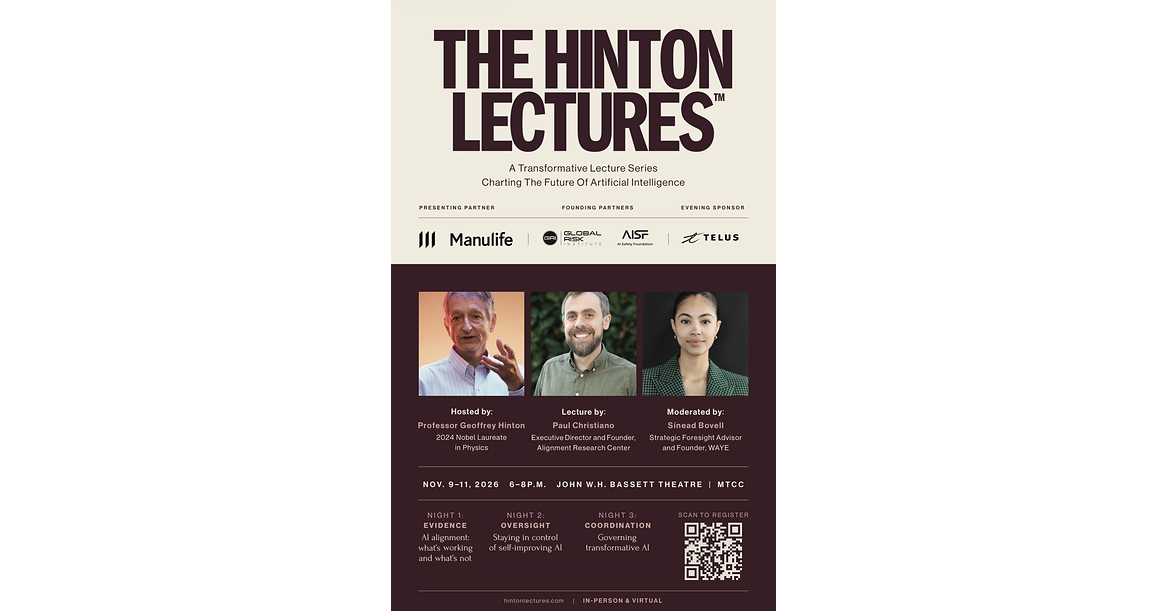
- 9–11NovThe Hinton Lectures on AI safety2weeks away
- 10NovLive Q&A on the new MAX license2weeks away
- 20NovAI Film Award submissions close4weeks away
- 20NovUpdated commercial terms take effect4weeks away
- 21NovInaugural edition in Hollywood4weeks away
- 22Nov'The Challenge Sverige' originally scheduled (now delayed to 2027)4weeks away
- 30–3Nov–DecContent London 20265weeks away
- 30NovRose d’Or Awards5weeks away
- 4DecAI-made film opens in limited release6weeks away
- 4DecGods Don’t Give Gifts premiere6weeks away
- 4DecSingapore AI Safety Fellowship ends6weeks away
- 12DecKampala screening7weeks away
- 31DecDeadline to file data-centre grid standards10weeks away
- 11FebSouthern AI Summit, Savannah16weeks away
- NovAgent Profiles for shopping agents
- NovA5X Vera Rubin instances generally available
- Later OctAlpamayo 2 Edge weights
- NovSpaceX tries to catch Starship and its booster
- Q4 2026Combination with Churchill XI expected to close
- End 2026Artist Profile Protection opens to every artist
- End 2026Pony.ai aims for 3,500 robotaxis
- End 2026Hands-free driving beyond the highway
- H1 2027Digit 5 early access
- H1 2027Robotaxi tests with Pony.ai in Astana
- Early 2027DSX POD containerized AI systems
- Early 2027First gene-edited working dogs expected
- End OctFFR's purchase of Faraday Future's robotics business expected to close
- End 2027First phase of the Cape Breton data centre















Stories are summarized in plain language; follow the link before quoting a figure. Story images are shown from the publishers' own sites.