Friday, 23 October 2026
The last 24 hours' hottest news in AI, sorted by field, each story with a line on why it matters.
Story of the day
The single most consequential story of the day.
- reported raise, about 100 billion yuan
- $15B
- after the US removal order
- 2 days
- June round, TechCrunch says
- $7B+
- valuation at that June round
- $50B
DeepSeek raises about $15 billion
TechCrunch, citing Bloomberg, says DeepSeek has raised about $15 billion, roughly 100 billion yuan, two days after the US ordered civilian agencies to remove its technology. CATL and Tencent are among the investors named. DeepSeek did not respond to a request for comment.
Why it's the story of the dayA sum of that size is landing while US civilian agencies are barred from using the lab.
Startup of the day
A young company people are talking about today.
Warp Sciences raises $215M to robotize wet labs
Former OpenAI science lead Kevin Weil has launched Warp Sciences to train robots that make and test drug compounds. He said on X that the company raised $215 million at an $865 million valuation, TechCrunch reported.
Why it's worth a lookThe wet-lab work many drugmakers send abroad would instead run on robots around the clock.
TechCrunch ↗Models & labs
New models, the labs behind them, and the rules they answer to.
DeepSeek raises about $15 billion
TechCrunch, citing Bloomberg, says the Chinese lab raised about $15 billion, roughly 100 billion yuan. That was two days after the US ordered civilian agencies to remove its technology.
Why it mattersCATL and Tencent are among the investors named. DeepSeek did not respond to a comment request.
TechCrunch ↗OpenAI's Decisions API is generally available
The API, built on GPT-6 Luna, answers bounded questions from text, images, or JSON. OpenAI says it is up to 10 times faster than Luna via the Responses API, and one request can hold 400 questions.
Why it mattersA routing or scoring step can sit on the live path instead of a full generated reply.
OpenAI ↗The full Claude platform is on Google Cloud
Anthropic's managed Claude offering on Google Cloud is generally available, with IAM login, one invoice, and usage that draws down a cloud commitment. New features ship the same day as on Claude's own platform.
Why it mattersTeams that already buy through Google Cloud can take new Claude features without a second contract.
Anthropic ↗LongZero trains long context without outside text
LongZero writes its own multi-hop questions and multi-round retrieval tasks, then trains with GRPO. On two models and five long-context benchmarks, it beat reinforcement learning that used outside documents.
Why it mattersLong-context practice no longer has to borrow someone else's corpus.
arXiv ↗Every model scored worse on the NP-complete twin
P2NPCBench pairs 12 problem families so each NP-complete task has a polynomial twin on the same surface, 2,114 statements in all. All 12 models scored lower on the NP-complete side.
Why it mattersA drop on the harder twin is evidence the model noticed the structure, not just the wording.
arXiv ↗Pixel language models scale one script at a time
Scaling a pixel language model on five tasks and 83 languages helps the languages and scripts that were added. Extra capacity softens the hit from training on more languages at once.
Why it mattersA bigger model does not automatically lift every language in the mix.
arXiv ↗Frontier models score at most 22% on some riddles
CulturalRiddles is a set of human-written riddles across 62 cultures, 45 countries, and 51 languages. On 28 model setups, even frontier models reached at most 22% accuracy in some communities.
Why it mattersA benchmark written by those communities shows where fluency is not understanding.
arXiv ↗Strong retrieval tricks do not add up
Across 450 setups, three retrieval methods that looked strong alone predicted a combined 47% gain and delivered 17% together. The tests used eight benchmarks and collections from 5,000 to 200,000 documents.
Why it mattersA gain measured on one stage of a search pipeline can vanish in the full system.
arXiv ↗Dreaming keeps a generator from collapsing onto itself
Sampling below temperature 1 pushed a learned Markov operator toward a deterministic system, and accumulating data did not stop it. A loss on its own hotter samples still helped a 124M GPT-2 across 5,000 generations.
Why it mattersTraining on synthetic data can erase diversity unless the model is regularised against its own samples.
arXiv ↗$0.10
OpenAI's price per million input tokens on the Decisions API.
Cached input is $0.01 per million tokens, and output tokens are not charged. OpenAI ↗
Agents & coding
AI that acts on its own, and the tools developers build with.
Claude Duet works in the background for Pro and Max
Anthropic opened a research preview of Claude Duet, an Opus 5.5 agent for professionals, on iOS, Android, and the web. It runs in its own virtual machine, and payments through Stripe Link or Shop Pay need approval.
Why it mattersIt will not trade securities or move money, and a waitlist gates the preview.
TechCrunch ↗1Password signs an agent in without showing the password
1Password for Agents sends a digital key when an assistant tries to log in, then asks the person to approve. Only after that does 1Password fill the credentials, so the agent never sees them.
Why it mattersSupported agents include Claude Duet, OpenAI's Dots or ChatGPT Work, Grok Bot, and Meta's Muse.
TechCrunch ↗With Opus 5.5, searching the raw chat beat a memory store
On one 419-turn conversation, Mem0 beat full context only with GPT-4o-mini, and building that memory cost more than a full-context run. With Claude Opus 5.5, Pi scored 99% for under half the cost of full context.
Why it mattersA memory product can be a patch for a weaker model, not a win for a stronger one.
arXiv ↗Continuous tokens carry a theory of other agents
ToM2Vec spends a fixed budget of continuous tokens on a latent theory of mind, and coordination improved in Overcooked, Hanabi, Decrypto, negotiation, and Collab Escape. It also generalized to GPT-5.4.
Why it mattersThe same latent answered questions about a partner's beliefs, wants, and next move.
arXiv ↗HGM-Dual cuts the tries a harness search needs
HGM-Dual beat the strongest baseline by up to 14.45% relative case accuracy. It matched other HGM variants' final score with two to four times less evaluation budget.
Why it mattersA long-horizon planner can improve its harness without paying for every candidate.
arXiv ↗PAUSE steers a coding agent before the first edit
Agents hit their first source edit at a median of 60% of the way through a run. With Qwen3-coder executing and GPT-5.6 Sol planning, online steering raised resolution 16.8% on SWE-bench Verified in OpenHands.
Why it mattersIn SWE-agent it also beat a rule-triggered advisor, at a similar planner cost.
arXiv ↗Agents miss the highlight an author put on a policy
On 76 real policy files, dropping formatting cut micro F1 from 0.690 to 0.150 with Docling and to 0.075 as plain text. Leave-one-out put the loss on highlight and colour, not on bold or italic.
Why it mattersThe gap held for five Claude models and GPT-5.6. Colour is a cue converters drop.
arXiv ↗A tenth of the trace holds most of a soft skill
On SpreadsheetBench, with a frozen Qwen3.6 agent, the top 10% of positions in a trace held 96.12% of the positive skill gain. Training on those spots beat the whole trace, 36.79% versus 30.36%.
Why it mattersA soft skill can be taught from a few moments, not from every step the agent took.
arXiv ↗No trading agent beat an equal-weight book
Quant-Arena has a model write features and a stock scorer, with feedback only from 2022 and 2023, then freezes one strategy for 2024. Of nine frontier models, GPT-6 Astra led, and none beat equal weight.
Why it mattersA loop that looks informed on the training years can still lag the market later.
arXiv ↗Handing over a password, secret, or credential is a common shortcut to an agent, but can leave people with sensitive information in places they can no longer control as a copy gets saved for the next time.
Video generation
The models and tools that make video.
CADRE tests how hard a world model should compress
CADRE is an open family of causal video autoencoders that differ only in a small bottleneck, trained in manipulation and navigation. It formed most of the latency-quality frontier, especially when the camera moves.
Why it mattersReusing a text-to-video compressor is a choice, not a requirement, for an interactive simulator.
arXiv ↗Attn-Forcing keeps a stream's full attention history
Attn-Forcing stores learnable visual latents that stand in for what the full past would have contributed to the current frame. A matching loss trains those proxies against real full-context attention.
Why it mattersThe paper says quality beat existing streaming baselines while memory stayed bounded.
arXiv ↗A future-chunk loss makes video model the change
Future Chunk Prediction asks an autoregressive video model to denoise a later chunk without the frames in between, alongside ordinary teacher forcing. It improved physical plausibility and used less training compute.
Why it mattersLooking smooth from one chunk to the next is no longer enough to pass.
arXiv ↗CausalAlign steadies the camera in generated video
CausalAlign lines ego-motion features in Wan2.2 up with a 3D model, using the change between frames rather than the scene. Geometric consistency rose by more than 20% relative to the base model.
Why it mattersOn RoboCasa365 mobile manipulation, world-action success rose by 10 points.
arXiv ↗RealMe turns a sparse capture into volumetric video
RealMe uses a video diffusion model to lift limited camera views into 2K, 4D-consistent video for volumetric reconstruction. Layout-aware positions and a latent frequency loss narrow the gap with real captures.
Why it mattersDense multi-camera rigs are what usually make this kind of video impractical.
arXiv ↗ClunoGS compresses language splats without dropping the label
ClunoGS prunes and quantizes language 3D Gaussian splats in one objective, so semantics guide which Gaussians stay. On LERF and ScanNet-10, that beat compressing for colour first and quantizing after.
Why it mattersA Gaussian that barely affects the picture can still be the one that carries the word.
arXiv ↗DewHand reads both hands and the camera in one pass
DewHand predicts world-space hand and camera motion together from first-person video, and flow matching covers hands that leave the frame. On HOT3D, rigid-aligned error versus StableHand fell from 32.9 mm to 28.4 mm.
Why it mattersTwo sampling steps beat direct regression on accuracy and smoothness.
arXiv ↗ProactEgoMem scores memory an agent gathers unasked
Daily and science tracks hold 300 and 100 clips, with 1,000 and 500 questions about memory the model was supposed to store on its own. The test is streaming first-person video, not a search after the fact.
Why it mattersRemembering only when asked is a different task from keeping what will matter.
arXiv ↗ALPS tokens reach 85.5% mean success on LIBERO
ALPS pretrains a ViT-B/16 on still images and text, then distills across views. Frozen tokens with its own text tower had the highest mean policy success on LIBERO, at 85.5%.
Why it mattersAmong ViT-B encoders it also had the lowest error when probed for robot state.
arXiv ↗Tool of the day
Something you can try in the next five minutes.
Canva Craft
Canva's first image model writes a layout plan, then renders it at up to 2K in more than 30 aspect ratios. It is in Dream Lab for every user, and on the public API.
Creator tools
The apps and platforms people make video with.
Canva Craft plans the layout, then paints it
Canva's first image model writes a composition plan, then renders up to 2K across more than 30 aspect ratios. It is available to every Canva user in Dream Lab, and on the public API.
Why it mattersPrompts can be in any language, and text inside the image can be in 55 languages.
Canva ↗VoxProg writes a program to place an object in 3D
A language model turns a placement instruction into programs over local voxel views of the surface. One program picks the relevant region, and another computes the object's pose from that geometry.
Why it mattersThe instruction can name a place without naming the surface that has to touch.
arXiv ↗A spatial gate diversifies the people in one image
On skewed job prompts, spatially gated steering raised racial and gender diversity inside a single image, with overall balance and quality near the baseline. The test used FLUX.1-Dev and SD3.5-Large.
Why it mattersDebiasing the generator does not have to mean a different picture for every prompt.
arXiv ↗UniRAP predicts the contact a robot can actually use
One decoder detects the object, segments the part that affords an action, and estimates a 4-DoF interaction pose from those features. The target is a contact the robot can execute, not a label on the object.
Why it mattersA part name is not yet a place a gripper can meet the surface.
arXiv ↗Composition shows up as primitives across vision models
Across CLIP, DINOv2, MERU, and HyCoCLIP, compositional structure appeared as primitive representations. Those primitives supported compositional benchmarks and group robustness on Waterbirds and CelebA.
Why it mattersThe pattern shows up whether the joint space is flat or hyperbolic.
arXiv ↗JointLight relights a person from a noisy light cue
The model denoises colour frames and true irradiance on separate schedules, because noise strips artifacts in a path-traced light map and leaves the broad transport. At inference, an asynchronous pipeline sets the light.
Why it mattersThe authors built a multi-illumination video set so the light cue has a ground truth.
arXiv ↗A cellular rule nudges land-cover boundaries into place
A neural cellular automaton starts from a frozen segmenter's class probabilities and corrects them cell by cell. The best setup raised mean boundary IoU by 2.36 points, from 46.63 to 48.99.
Why it mattersThe gain sat on irregular woodland, up 8.5 boundary-IoU points.
arXiv ↗A wavelet net trains forward, and skips backprop
A CMA-ES search trains shared-kernel wavelet networks with forward passes only. On BSDS500, test error fell from 4.1783 to 4.0130 and PSNR rose from 42.621 to 42.787 dB versus Adam.
Why it mattersThat took 6 passes over the training set, against 1,500 epochs of backpropagation.
arXiv ↗Open-vocabulary detectors draft the soft labels
An open-vocabulary detector proposes regions, a similarity graph links them, and probabilistic labels spread onto objects nobody marked. The method is tested on four detection benchmarks that already carry soft labels.
Why it mattersSoft labels usually mean several people annotating the same box.
arXiv ↗Approve the login before an agent signs in
1Password for Agents fills a password only after you confirm an alert. The agent gets a digital key, and it never sees the credential.
If an agent offers to log in for you, wait for the 1Password prompt and approve it yourself. TechCrunch ↗
Media & entertainment
AI in the films, shows, micro-dramas, music and ads people watch, the studios and platforms making them, and the rules for AI-made content.
Spotify says the remix tool has support beyond four partners
Alex Norström told Billboard the remix tool has backing beyond Universal, Merlin, Kobalt, and Believe, and still needs artist consent. Spotify also pulled more than 50 million songs from recommendations as AI spam.
Why it mattersFans would pay as an add-on. The co-CEOs gave no price.
Billboard ↗Gemma 4 reaches 68.1% on code-mixed satire
A Romanian satire set was expanded by more than 600,000 code-mixed samples. Older open models fell to 37–55% macro-F1, while Gemma 4 31B scored 68.1% with no training, near GPT-5 mini at 69.5%.
Why it mattersFine-tuning then lifted Gemma 4 31B to 77.5% on the expanded set.
arXiv ↗Fewer biased answers often means the model abstained
On the BBQ question-answering benchmark, 20 of 26 setups that gave fewer biased answers also abstained more. The comparison is across model scale and quantization.
Why it mattersA smaller or quantized model can look fairer because it declines the question.
arXiv ↗Repairing a passage-backed answer beats sampling
Accept or Repair raised the score over sampling by 12.5 points on counterfactual passages and by 2.3 on ordinary ones. It beat eight contrastive and prompting baselines, even when those got the same rejection rule.
Why it mattersThe point is to keep an answer the passage supports, not a fluent substitute.
arXiv ↗Instruction data is where models learn to name an AI tool
Pretrained models already name an AI tool in 27% of recommendations, and the released instruction-tuned versions do so in 59%. Removing the 7% of instruction examples about AI cut that rate by 14 points.
Why it mattersAsking for the best option, or for what to do right now, raised it further.
arXiv ↗Learner grammar errors made bias worse
Injecting common errors by non-native writers into three bias benchmarks increased stereotype alignment and demographic preference. The effect grew as the error rate rose, across gender, race, and religion.
Why it mattersFluency-only bias tests miss the English many readers actually type.
arXiv ↗Training one value disturbed the values left alone
Four instruction-tuned models were adapted on single Hofstede value dimensions, then scored on values they were not trained for. That training produced side effects on the untrained values.
Why it mattersAligning a model to one value is not a local edit.
arXiv ↗A tuned Qwen3-8B gained 7.8% on multilingual answers
A WMT 2026 entry adapted Qwen3-8B with LoRA on multilingual instructions, mixing the languages of the instruction, context, and answer. The mean judge score rose 7.8% versus the base model.
Why it mattersThe test covers ten languages that appear in the extra data.
arXiv ↗The best solver was not the best author of a task
Environment Duels has each of nine frontier models write tasks with a hidden hint, meant to fail without it and pass with it. Solving and authoring came apart: the strongest solvers were not the strongest authors.
Why it mattersSmaller models learned more from how others played, and wrote the hardest tasks.
arXiv ↗This is a way for artists to participate in AI rather than just focusing on net new music being created.
Chips & compute
Chips, data centres and the power behind them.
Meta lifts its AI spending floor and adds a share class
Meta set 2026 capital spending at $135 billion to $145 billion, up from a floor of $130 billion, and said it will issue non-voting Class C shares. The stock fell nearly 7% on Thursday.
Why it mattersFree cash flow in the quarter was negative $2.12 billion, CNBC reported.
CNBC ↗Supermicro quotes a 256-CPU Vera rack for agents
The liquid-cooled rack holds 22,528 cores and 45,056 threads, and Supermicro says it can run up to 22,500 agent sandboxes at once. It is available to quote now, beside Vera Rubin NVL72 systems that are already shipping.
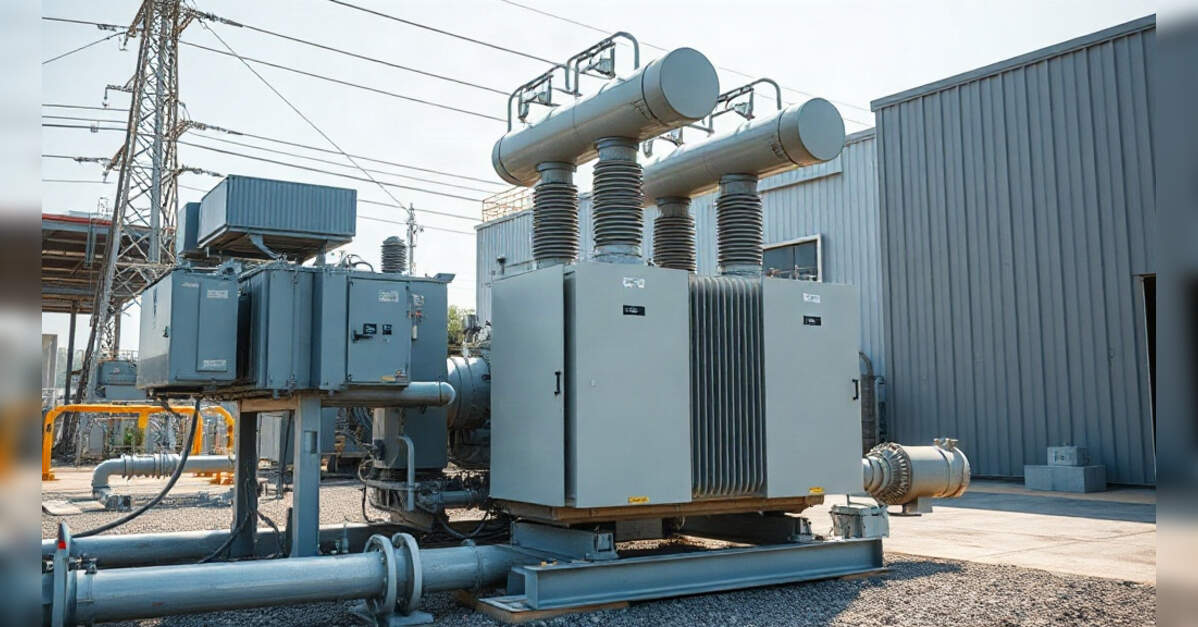
Why it mattersBlueField-4 and OpenShell handle networking and the limits on what an agent can touch.
Yahoo Finance ↗Google's Agent Compute Engine gives each agent a microVM
Announced at AGNTCon, the service already runs Gemini's work agents and will preview for customers in the coming months, on hardware-isolated microVMs. Idle ones checkpoint, and credentials stay outside the guest.
Why it mattersOn Kubernetes, the open-source Agent Substrate hit 10 times the density of ordinary compute in Google's tests.
Google Cloud ↗Modular opens the rest of the MAX stack
The graph compiler, runtime, and CPU and GPU backends are now public under a MAX License, beside pieces that stay Apache 2.0. Products can use MAX with no fee, but modified source cannot be republished.
Why it mattersA hosted inference service that sells MAX must show a Modular Accelerated mark.
Modular ↗SPARE prunes the experts a layer is not really using
The method drops more experts from layers whose routing is diffuse, with no extra training. At 50% pruning, Qwen3-30B-A3B's eight-task average rose from 57.2% to 63.8%.
Why it mattersOn DeepSeek-R1, the math, code, and science average rose from 80.1 to 82.8.
arXiv ↗A guided compressor beats OneDC and still runs in milliseconds
GR-GIC refines quantized latents so nearby details do not collapse to one code. On Kodak it saved 23.19% BD-rate on LPIPS versus OneDC, and encoded and decoded in 4.60 ms and 5.98 ms on an A100.
Why it mattersA reorganised quantizer was 3.14 times faster than the original at the same precision.
arXiv ↗Truncated weights speed compressed-image restoration
Activation-calibrated singular values, at rank 64 on PromptCIR, beat plain truncation on PSNR-B across four benchmarks at the same size and multiply count. Parameters fell 59%, from 34.75 million to 14.34 million.
Why it mattersCompute for a 256-pixel image fell 16.1%, and the model was not retrained.
arXiv ↗An AI-found consensus protocol cut geo-replication latency
A-greement, found with AI help, cut mean latency of a geo-distributed store by 12.2% on write-heavy work and 33.3% on read-heavy work versus the fastest baseline, over six deployments.
Why it mattersOn read-only work it matched that fastest baseline.
arXiv ↗Looping cuts the FLOPs to train a diffusion language model
Looped uniform diffusion models matched a non-looped validation loss with up to 2.8 times fewer training FLOPs on OpenWebText and 3.3 times fewer on FineWeb-Edu. Generation perplexity fell by up to 9.8%.
Why it mattersSampling smaller loop counts more often in training used 12% fewer loops later, with no accuracy drop.
arXiv ↗Scaling the Gemini agent to planet scale requires compute that spins up rapidly and operates with extreme efficiency.
Policy & safety
Laws, lawsuits and safety incidents.
Nvidia, Anthropic, and OpenAI set lobbying records
Federal disclosures for July to September show Nvidia spent $2.2 million, Anthropic $2.1 million, and OpenAI $1.5 million, together nearly $6 million. Each figure is that company's highest quarter.
Why it mattersIt is also the first quarter Nvidia has spent more than $2 million.
The Verge ↗Compacting a coding agent's context can launder an approval
Across five flattening harnesses, a forged approval survived into memory 87% to 100% of the time. Across four role-typed harnesses, including Codex and Gemini CLI, the same attack succeeded 0% of the time.
Why it mattersA provenance check in code caught 77% of the laundering and demoted 2% of real summary text.
arXiv ↗A poisoned tuning set hijacks the examples a selector keeps
Across three payloads and six selectors, utility hijacking drove refusal from 0% to 94% and insecure code as high as 56 of 90 cases. False-fact enrichment rose from 2.84 times to 7.04 times.
Why it mattersOn a Qwen3-32B victim, CONCERT cut the code poison from 6.67 times concentration to zero.
arXiv ↗Evidence itself can carry the prompt injection
A taxonomy and proof of concept treats the file under examination as the attacker, because a forensic examiner is supposed to read it closely. The model's reasoning becomes a place to hide an instruction.
Why it mattersThe usual injection rides a web page. Here the exhibit is the page.
arXiv ↗A small decision head beat XGBoost on one intrusion set
VX-One, from 100,000 to 10 million parameters, won detection on UNSW-NB15 and under time drift on CIC-IDS2017, 0.711 against 0.637. XGBoost still won multi-class attribution on all three benchmarks.
Why it mattersMedian latency on CPU was about 0.7 to 1.7 milliseconds.
arXiv ↗A decision model matches CaseHOLD at a fraction of the cost
When the right holding was removed from 1,670 of 5,314 items, generative models still picked an option 38% to 86% of the time. The most cautious decision model did so 30% of the time.
Why it mattersOn standard CaseHOLD it scored 88.1%, against 88.2% for the best generative model, at 1/55 the cost.
arXiv ↗Admission has to bind the call, not only the policy
The authors argue a policy engine is not enough if the allowed action is not bound to the call that runs. Their archive has 72 scenarios and 144 strict case-engine records, 120 of them invoked natively.
Why it mattersEight further controls sit outside that strict count and are permissive.
arXiv ↗Face matching can run without revealing the face
GhostFaceMPC runs a face network's extractor and the match under multi-party computation, so images and embeddings stay hidden. A quantized GhostFaceNet and lighter circuits make the protocol practical.
Why it mattersThe paper calls it the first end-to-end system to evaluate that full path under MPC.
arXiv ↗I really believe that in 2027, we will be on the verge of a coding style breakthrough for medical records.
Robotics
Robots, self-driving and AI in the physical world.
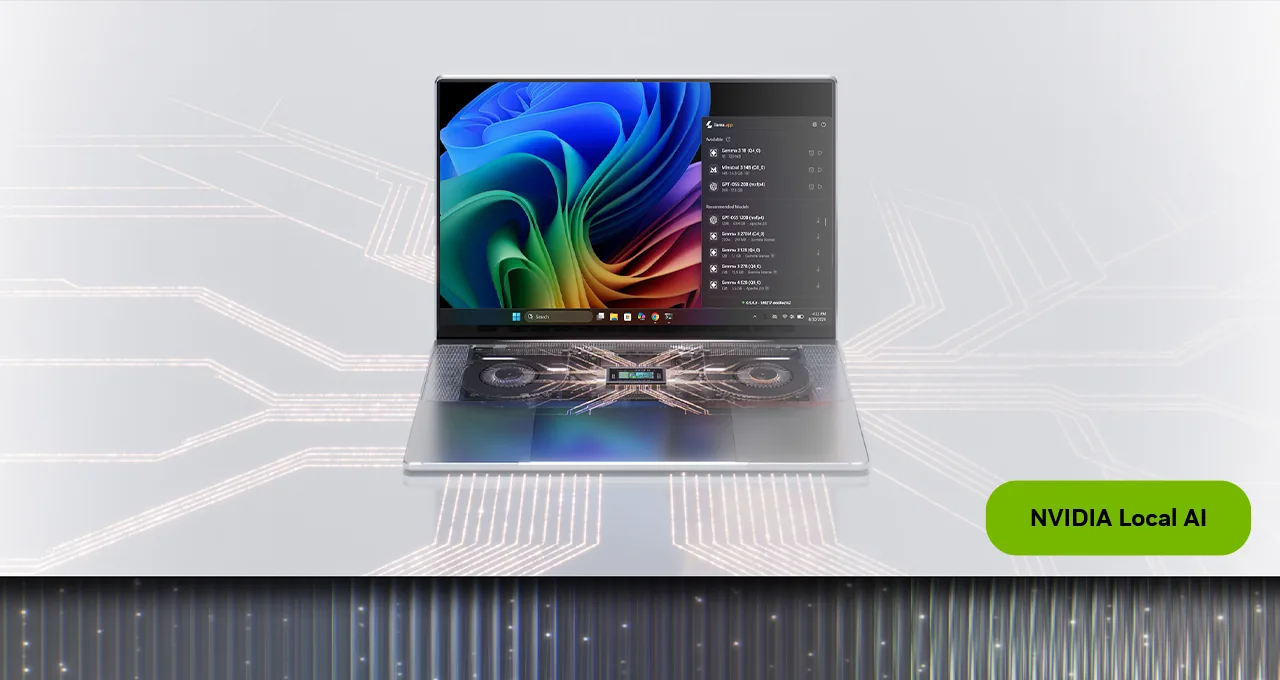
Digit 5 will standardise on Nvidia IGX Thor
Agility said general-availability Digit 5 will use Nvidia IGX Thor as its only onboard computer, and will fold more Halos models into human detection. Early access is expected in the first half of 2027.
Why it mattersNvidia becomes the exclusive compute supplier for that production version.
Agility Robotics ↗Earth-trained humanoids keep walking in lunar gravity
On a simulated Unitree G1, Earth-trained policies kept survival of 0.64 to 0.75 on flat rigid ground at lunar gravity. Moon-trained policies could not stand on Earth, and SONIC survived at most 0.10 on the Moon.
Why it mattersRough-terrain training lifted combined-tile survival from 0.53 to 0.98 on Earth.
arXiv ↗GPT-6 Astra led a closed-loop robot test at 44%
Six frontier models, at three effort levels, ran 1,800 episodes on LIBERO-10. GPT-6 Astra had the highest success rate, 44%, and Gemini-4 Argon was next at 43%.
Why it mattersThe same harness closed the loop, so the comparison is the model rather than the scaffold.
arXiv ↗HuMiT teleoperates a humanoid at about 20 milliseconds
The tracker needs only root height, root velocity, and four keypoint poses, yet stays competitive with denser references. Latency from headset to policy output was about 20 ms, and median optical-flow delay was 65 ms.
Why it mattersOn a Unitree G1 it caught a tossed ball and did coordinated loco-manipulation.
arXiv ↗FlowVLA pours to a requested mass
In coffee-pot and water tests, goal-balanced mean absolute error was 13.1 grams, below the other vision-language-action baselines. Of the attempts, 53.7% finished and landed within 10% of the asked mass.
Why it mattersThe same model hit held-out 150 gram and 250 gram targets without retraining.
arXiv ↗More scenes lifted a drone policy's success
AirPlayground builds 94 Gaussian-splat sites and 94,000 expert flights, 46.5 million samples at 50 Hz. Scaling ACT from 5 to 70 scenes raised median success from 30.6% to 41.2% seen and from 16.8% to 29.4% unseen.
Why it mattersIndoor, urban, and vegetation sites are all in the set, with collision geometry aligned.
arXiv ↗One bimanual tracker handles unseen objects
DONIC trains one two-hand tracker across tasks and motion sources, on 1,575 sequences and 229 objects. With no finetuning it hit 86.79% of unseen trajectories of training objects and 57.32% of held-out objects.
Why it mattersThat is 77.36 and 45.73 points above the previous bimanual tracking baselines.
arXiv ↗Atomic skills beat plain PPO on long robot tasks
On LIBERO-LONG, AtomicRL gained 3.6 and 4.0 points over PPO on two vision-language-action architectures. On CALVIN ABC-D, full-task performance rose by up to 9.5 points.
Why it mattersWith a real-to-sim-to-real pipeline, real-robot tasks improved by 21.3% on average.
arXiv ↗A simpler driving planner scored 86.51 and ran much faster
DriveMLP scored 86.51 on nuPlan Val14 Reactive, 3.2 points above the previous best imitation planner, Flow Planner. Inference was more than 15 times faster.
Why it mattersThe gain is credited to the training strategy rather than a larger model.
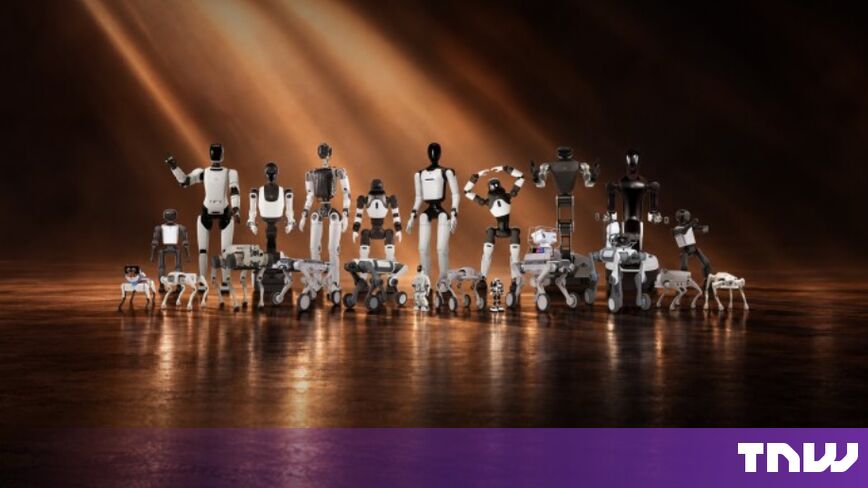
arXiv ↗Bringing humanoid robots to commercial scale requires AI computing and safety to be engineered together.
Science & health
AI in biology, medicine, climate and maths.
Microsoft's diagnostic panel beat generalist doctors in simulation
A Science study says MAI-DxO, a panel of agents that question, test, and debate, was correct on 83% of complex NEJM cases. General internists and primary-care doctors, working alone with references, scored 36%.
Why it mattersThose cases are usually handled by specialists, who were not in the comparison.
TechCrunch ↗Shape-completion models missed real skull defects
Three public shape-completion models, two of them foundation models, were applied zero-shot to 239 cranial defects. On 210 carved defects none beat doing nothing, and on 29 real cases only one beat chance.
Why it mattersA plausible implant is not the same as one a surgeon could use.
arXiv ↗ViBMR pairs Vietnamese brain scans with routine reports
The set has 3,649 patients and 11,875 series across T1, T2, FLAIR, and contrast T1, with reports written in routine practice. The authors call it the first large multi-sequence brain MRI set of that kind for Vietnamese.
Why it mattersModels trained on English reports have had little to read against here.
arXiv ↗Wrong cervical calls carried up to four times the uncertainty
Separate encoders, on a frozen DINOv2 backbone, read the nucleus, the cytoplasm, and the neighbouring cells. On RIVA and CRIC Cervix, incorrect predictions carried 1.94 to 4.13 times the uncertainty of correct ones.
Why it mattersKeeping the scales apart preserves disagreements that early fusion would blur.
arXiv ↗A small chest X-ray model localises without the report
A student of 11.1 million parameters, distilled from a frozen multimodal teacher, predicts disease and boxes from the image alone. Refreshing its proposals lifted box F1 on held-out PadChest-GR from 0.302 to 0.338.
Why it mattersOn NIH ChestX-ray14, box recall rose from 0.423 to 0.447.
arXiv ↗Modality experts led or tied 24 of 25 medical vision tests
Masked pretraining used 19.4 million unpaired images across seven modalities, then contrastive alignment used 3.23 million image-text pairs. With ViT-Large, the method was best or tied-best in 24 of 25 settings.
Why it mattersMean balanced accuracy was 0.674 zero-shot and 0.856 with a linear probe.
arXiv ↗EEG picked the right speaker more clearly for listeners
Twenty listeners scored NeuroCodec at 82.24 on average, against 49.63 for M3ANet. The model also reconstructed audio at 44.1 kHz, with content out to 20 kHz.
Why it mattersThe guide is the listener's EEG, and the generation happens in the latent domain.
arXiv ↗Orbitol kept the requested crystal symmetry more often
On MP-20, 13.8% of attempts gave a stable or metastable, unique, novel structure that kept the asked space group, versus 10.8% for the next model. Of those screened internally, 89% passed density-functional checks.
Why it mattersTheir median figure of merit was nine times that of the piezoelectric set in Materials Project.
arXiv ↗A thermal-camera check called no ordinary moment a fall
Gemini 3.8 Flash flagged 69% of held-out subjects' staged falls in a public 32-by-24 thermal set and none of 499 non-fall windows. Over 76 hours of home life it called none of 395 clips a fall.
Why it mattersIt caught 4 of the 9 staged falls that camera could see.
arXiv ↗Open source
Open-weight models and community releases.
Anthropic gives Agent Skills to the Linux Foundation
Agent Skills, the folder-and-SKILL.md standard, is being donated to the Agentic AI Foundation, which Anthropic co-founded with Block and OpenAI. More than 70 platforms use it, and about 1 million skills are published.
Why it mattersNearly 280 million installs have been counted since the standard was published.
Anthropic ↗Google open-sources its Elephant-Goldfish coding plugin
The Apache 2.0 plugin, used daily by thousands of Googlers, splits design from checking: a long-lived session holds the plan, and stateless sessions try to poke holes in it. It targets Antigravity first.
Why it mattersNo code is written in the design session. The spec has to survive a cold read.
Google Open Source ↗GoiBERT keeps 99% of a larger Vietnamese encoder
The family has two encoders, 26 million and 49 million parameters, that read raw Vietnamese text. GoiBERT-base kept 99% of the baseline's performance at a quarter of the size, and the code and models are on GitHub.
Why it mattersA compact encoder matters where the full model does not fit the machine.
arXiv ↗FrontierCS 2 asks agents to do open-ended computer science
The benchmark has 48 open tasks across 13 domains, from machine-learning systems and high-performance computing to databases, security, and robotics. The agent works in a research environment, not a fixed unit test.
Why it mattersA private set of more than 100 further tasks is held back for later.
arXiv ↗An open generator builds telecom alarm storms with a known cause
Every field has to match NORIA-O or a named standard, and an unknown term fails the run. Ranking the device with the earliest critical alarm scored 0.650 top-1, against 0.575 for a temporal method.
Why it mattersThe same rule scored 0.773 on real operator alarms, not only on synthetic ones.
arXiv ↗Code Comprehensor's notes scored above 90% faithfulness
Hierarchical documentation plus cross-modal retrieval was tested on OpenCV and a proprietary repository of 5 million lines. LLM-as-judge RAGAS scores on the written notes were above 90% faithfulness.
Why it mattersSupervision drawn from those notes also improved text-to-code retrieval.
arXiv ↗Renaming the spec drops memorised TLA+
Across 111 tasks, renaming cut Claude Opus 4.8 from 28% correct to 18%, and GPT-5 from 9% to 7%. Grading by behaviour shrank Opus 4.8's drop to about 3 points and wiped out GPT-5's.
Why it mattersTwo fine-tuned families lost about half their training gain in likelihood once names changed.
arXiv ↗EPIC clips an LLM update with the exact prefix KL
The method builds a prefix-level trust region from the exact reverse-KL term, whose average under the behaviour policy equals that prefix's KL. Code is published on GitHub.
Why it mattersThe clip is meant to match the divergence on-policy training is actually trying to bound.
arXiv ↗GuidedSAM-Plume segments a volcanic cloud from a few clicks
The open-source tool uses SAM2 prompts so an expert can outline a plume without training a new model. From minimal input it beat automatic dedicated segmenters, and the volcanology measures stayed reliable.
Why it mattersThe authors say it needs no retraining, which lowers the barrier for volcanologists.
arXiv ↗Quick hits
Smaller stories worth a glance.
- A force-aware model raised peg insertion from 25% to 70%CW-WAM lifted square-peg insertion with 1 mm clearance from 25% to 70%, and power-adapter insertion from 40% to 95%, against a world-action model with no wrench input.arXiv ↗
- SpatialDex lifts dexterous tasks by 16.5 and 38.3 pointsSpatialDex, pretrained on 1 million human clips, beat prior methods by 16.5 points on nine simulated dexterous tasks and by 38.3 points on six real two-hand tasks.arXiv ↗
- A 183,000-parameter lidar encoder lifted navigation successAdding semantic and bird's-eye supervision to RangeNav raised success by 32.03 points in procedural training scenes and 23.73 points in realistic test scenes, versus reconstruction only.arXiv ↗
- Subtracting the clean gradient helped adversarial trainingOn CIFAR-10, CIFAR-100, and ImageNet-100, explicitly subtracting a clean gradient improved robust accuracy over AWP, and the gain depended on the attack radius.arXiv ↗
- A hurricane damage model scored 0.834 on unseen mosaicsAt the CURSE 2026 drill, building and road damage assessment together averaged 3.5 minutes, and building damage reached a micro F1 of 0.834 on orthomosaics the model had not seen.arXiv ↗
- Most embodied benchmarks score the act and skip the checkAcross 64 benchmarks in a survey of embodied agents, explicit tests centre on acting, while only 5 assess anticipating and 3 assess verifying.arXiv ↗
- A fall-recovery policy steered a Unitree G1 without retrainingTest-time motion steering produced varied recoveries and terrain adaptation in simulation, and the authors also showed it on a physical Unitree G1.arXiv ↗
- Wrong biomedical citations were real IDs for the wrong paperA single retrieval call found the right paper for only 6% of claims, while letting the model write its own queries tripled that recall and reached 62% verdict accuracy.arXiv ↗
Deals & funding
Who raised money, and who bought whom.
Funding rounds 1
Investors put money into a company in exchange for a share of it.
Ludlow Ventures backs Ultra Security
- Raised
- $10M
Ultra Security valuation not disclosed
Guardrails that check each step an autonomous agent takes.
HCHidden CapitalECEntrée CapitalDVDetroit Venture PartnersFFiredropFFDVC+0 more
On the calendar
What's coming up, in date order, and how sure we are about each.
- 19–23OctChery International User Summit, WuhuToday
- 23OctAnthropic public S-1 filingToday
- 23OctNemotron 3.5 Bolt E4B followsToday
- 23OctSanxingdui: Past and Future opens in cinemasToday
- 23OctTraeWork standalone service shuts downToday
- 23OctM3.1 Flash open weightsToday
- 24OctAI Film Summit Los Angeles 2026Tomorrow
- 24OctTyrannus Angel Awards 2026 winners announcedTomorrow
- 26–29OctIBM TechXchange3days away
- 26OctFESTIAV AI film festival opens in Valencia3days away
- 26OctHyundai Bayon India launch3days away
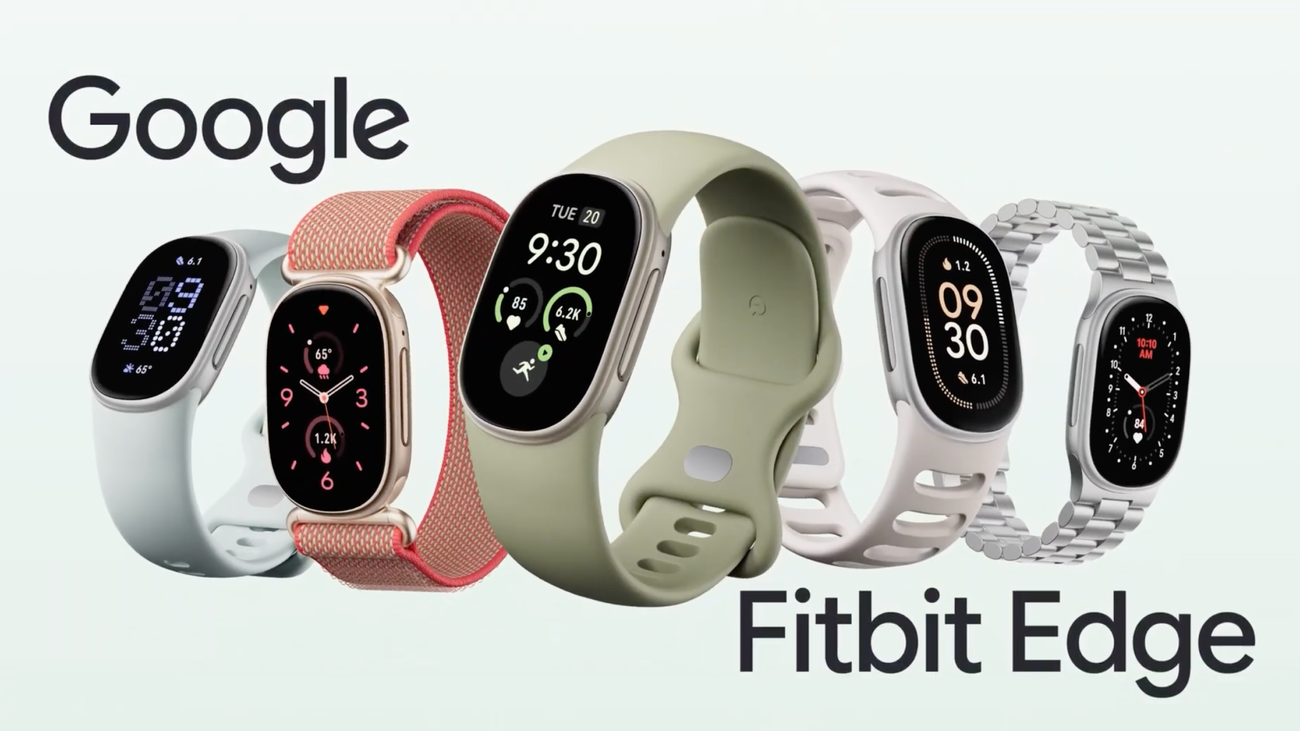
- 27OctFitbit Edge retail availability4days away
- 27OctMistral Large 4 full weights due4days away
- 30OctMicro-Series Challenge entry deadline7days away
- 30OctTesla's deadline to answer regulator questions7days away
- 31OctRegistration closes for AI Film Making course8days away
- 1NovClimate summit focuses on 'climate-responsible AI'9days away
- 1NovSpeed Insights stops recording First Input Delay9days away
- 5–7NovThird LA Vertical Drama Market13days away
- 5–6NovBoxWorks 2026 in San Francisco13days away
- 5NovHogwarts Legacy adds DLSS 513days away
- 7NovTerry McMillan Presents: Paradise with You premieres2weeks away
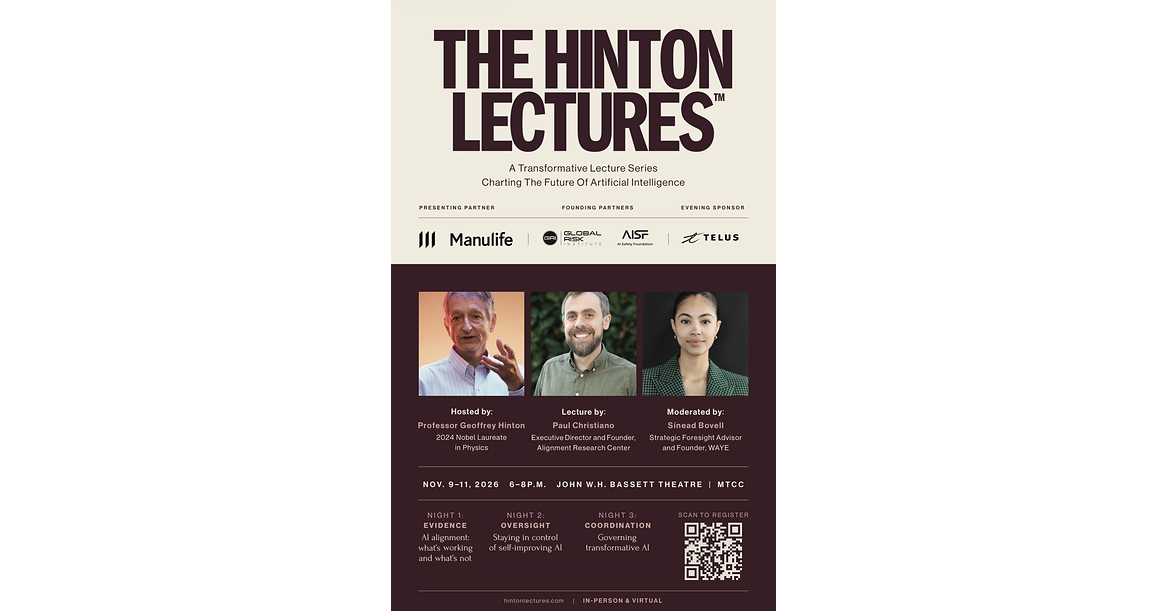
- 9–11NovThe Hinton Lectures on AI safety2weeks away
- 10NovLive Q&A on the new MAX license3weeks away
- 20NovAI Film Award submissions close4weeks away
- 21NovInaugural edition in Hollywood4weeks away
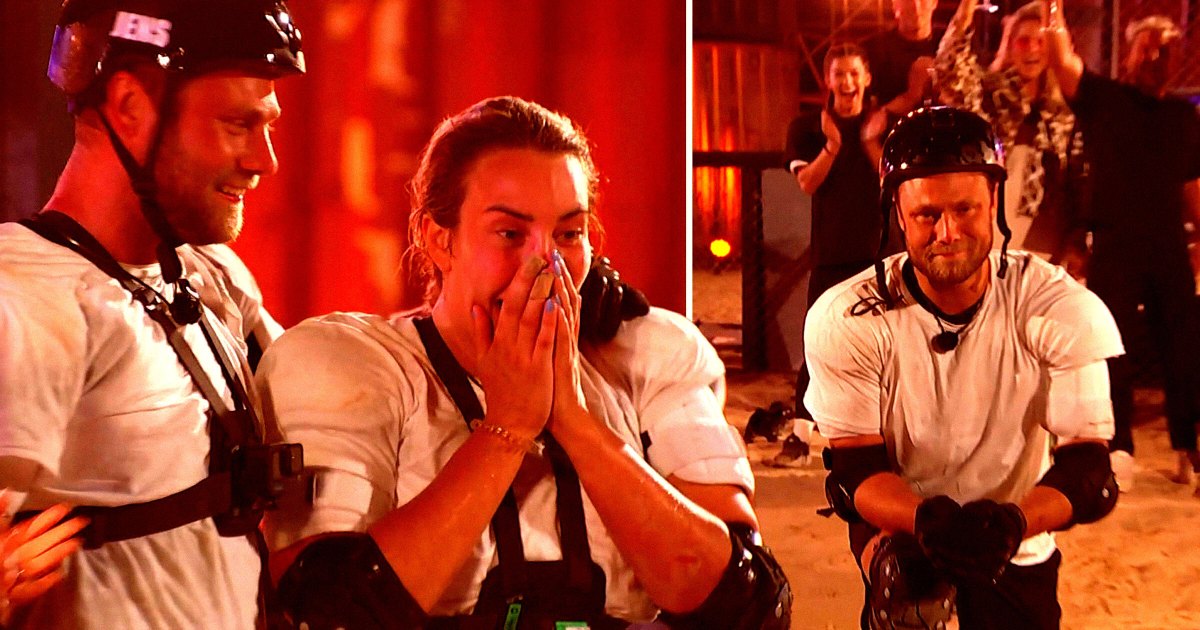
- 22Nov'The Challenge Sverige' originally scheduled (now delayed to 2027)4weeks away
- 30–3Nov–DecContent London 20265weeks away
- 30NovRose d’Or Awards5weeks away
- 4DecAI-made film opens in limited release6weeks away
- 4DecGods Don’t Give Gifts premiere6weeks away
- 4DecSingapore AI Safety Fellowship ends6weeks away
- 12DecKampala screening7weeks away
- 31DecDeadline to file data-centre grid standards10weeks away
- 11FebSouthern AI Summit, Savannah16weeks away
- NovAgent Profiles for shopping agents
- NovA5X Vera Rubin instances generally available
- Later OctAlpamayo 2 Edge weights
- NovSpaceX tries to catch Starship and its booster
- Q4 2026Combination with Churchill XI expected to close
- End 2026Artist Profile Protection opens to every artist
- H1 2027Digit 5 early access
- Early 2027DSX POD containerized AI systems
- End OctFFR's purchase of Faraday Future's robotics business expected to close
- End 2027First phase of the Cape Breton data centre




















Stories are summarized in plain language; follow the link before quoting a figure. Story images are shown from the publishers' own sites.