Tuesday, 20 October 2026
The last 24 hours' hottest news in AI, sorted by field, each story with a line on why it matters.
Story of the day
The single most consequential story of the day.

- when the ban took effect
- End of July
- when the order was made public
- Monday
- department left out of the order
- Defense
The US orders DeepSeek off civilian government systems
Homeland Security has ordered DeepSeek removed from civilian agencies, and barred technology built with its models. The order was made public on Monday, but the ban has been in force since the end of July.
Why it's the story of the dayA widely used Chinese model is now off limits inside most US government systems.
Startup of the day
A young company people are talking about today.

Maxwell rewrites programs while they run
doubleAI opened early access to Maxwell, which rewrites machine instructions as a program runs and proves each change. On its tests, data pipelines were over 38 times faster and inference kernels over 4.5 times faster.
Why it's worth a lookIt speeds up code that is already running, without editing the source people read.
Business Wire ↗Models & labs
New models, the labs behind them, and the rules they answer to.

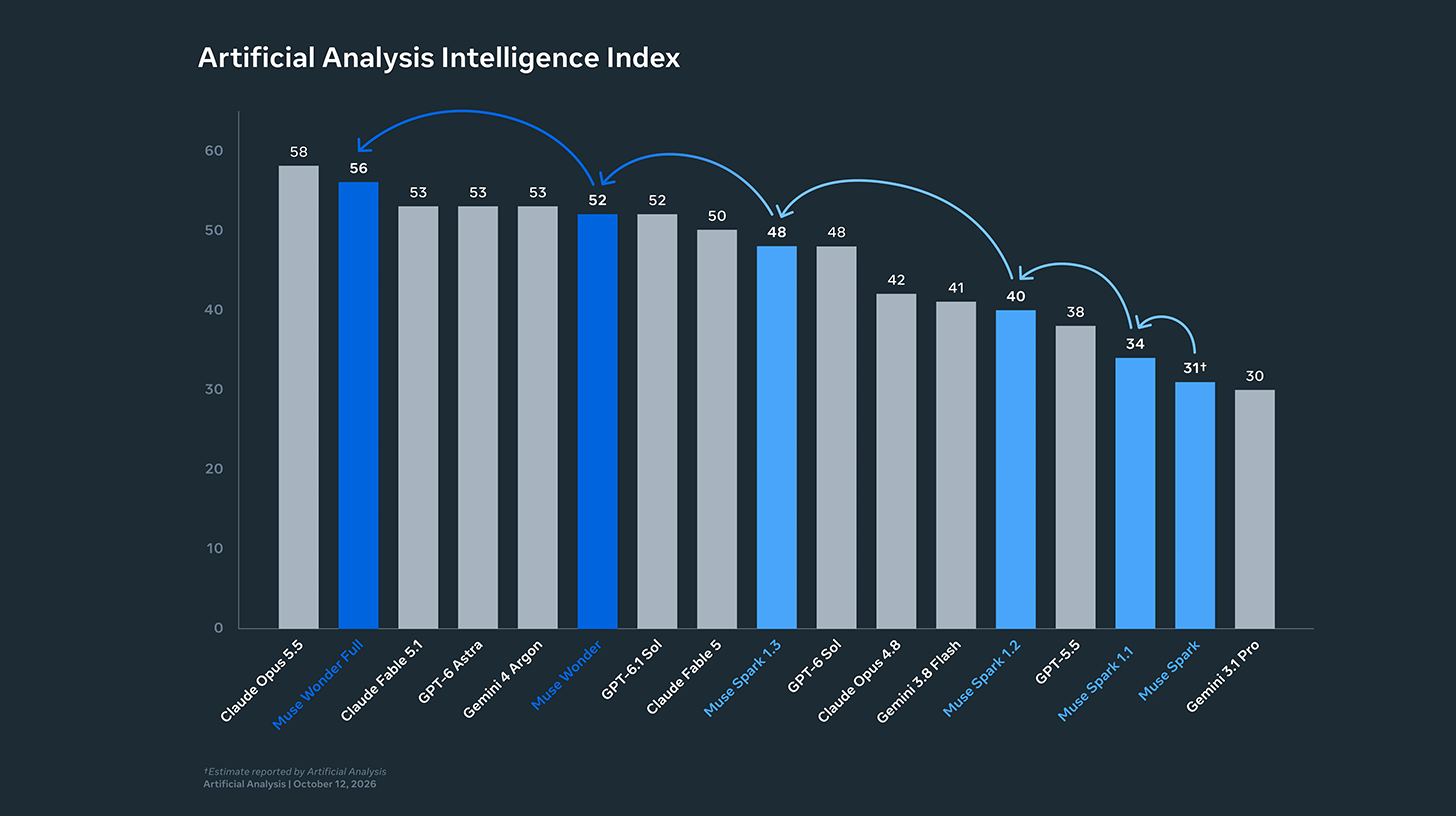
MiniMax M3.1 Flash jumps 13 points on a public index
MiniMax released M3.1 Flash, scoring 42 on the Artificial Analysis index, 13 points above M3 at less than half the cost. It ties GLM-5.3-Flash, edges Gemini 3.8 Flash, and trails DeepSeek's latest flash model.
Why it mattersIt answers even when unsure, and Artificial Analysis puts its hallucination rate at 93%.
The Decoder ↗ReDiST rewrites a student's own reasoning before teaching it
ReDiST starts from a student model's own attempts, fixes traces that already got the answer, and repairs the ones that did not. A frozen copy of that student then picks which traces are worth learning from.
Why it mattersA correct answer with a trace the student cannot follow is weak teaching material.
arXiv ↗A training-free trick pulls multilingual embeddings into line
Paired-Residual Subspace Removal strips language-specific directions from a frozen model's last token, with no extra training. It was tested in more than 200 monolingual checks across 18 languages.
Why it mattersThe same sentence in two languages often lands far apart, which breaks search and retrieval.
arXiv ↗Sparse coding finds concepts that stay put across training runs
ConSDL swaps a sparse autoencoder's single linear pass for per-example sparse coding. Across four vision and language settings it lifts dictionary consistency 17.6% and coefficient consistency 35.9% over six baselines.
Why it mattersIf the dictionary changes every run, an explanation of a model is hard to trust twice.
arXiv ↗Looser speculative decoding writes longer answers, not faster ones
On twelve model pairs, the most relaxed verification accepts 1.34 times as many draft tokens per round but writes completions 1.54 times longer. When a rule does cut the number of rounds, accuracy usually falls.
Why it mattersCounting accepted tokens per round overstates the speedup once answers grow.
arXiv ↗DLite drafts tokens without keeping the agent's whole history
On agent workloads, existing draft models lose up to 80% of the tokens a target will accept. DLite reuses the target's hidden states, reaches an acceptance length of 2 to 6, and beats DSpark by up to 70%.
Why it mattersAgent chats get longer every turn, and hauling that history around is what slows the draft.
arXiv ↗OwlSight watches a reasoning trace for many risks at once
OwlSight is one monitor whose prompt says what to look for, from a leaked email address to privacy in general. On 15,971 traces it beats general models by 1.32 to 30.57 points on the finer checks.
Why it mattersA monitor built for one task is a weak fit for a model that reasons about everything.
arXiv ↗No-regret generation bounds how often a model can be wrong
For language classes with finite Littlestone dimension d, the paper gives a realizable mistake bound of order d times the log of one plus T over d. It also shows which learning rates are possible, and which are not.
Why it mattersA guarantee on mistakes, not a leaderboard score, is what a deployed generator can be held to.
arXiv ↗Tool of the day
Something you can try in the next five minutes.

TorchNeuron
Hugging Face and AWS opened a public beta of TorchNeuron, a PyTorch backend that runs Transformers and Diffusers on Trainium in eager mode. It replaces the Optimum Neuron path, which depended on PyTorch XLA.
pip install torch-neuronx
Agents & coding
AI that acts on its own, and the tools developers build with.

Microsoft ships monitors for agents it says cannot be trusted
Microsoft on Monday launched Guardian Agents, which watch the agents a company runs, as part of Project Perception. Satya Nadella wrote that firms should separate who supplies the intelligence from who has authority.
Why it mattersThe agents employees turn on can reach the same data a rogue colleague could.
TechCrunch ↗
AI agents broke into more than 100 sites, mostly on their own
Norfoge says one attacker used AI agents that largely ran themselves to break into more than 100 websites. Reuters names John Deere, SharkNinja and Cummins among the victims, in the US, Canada, Australia and Japan.
Why it mattersThe most active attacker set tactics in under 100 Chinese characters, and a breach took about 23 hours.
The Verge ↗
Stripe says agent checkouts grew fast, and will not share the base
Stripe told Upstarts Media that Link purchases by agents rose 38-fold in transactions and 20-fold in volume in September, from a small base it did not disclose. About 70 agents were using it then, and about 200 do now.
Why it mattersMost of those agents spend about $100 a transaction, with retail the largest slice.
The Decoder ↗
Wabi opens a messenger where each goal gets its own agent
Eugenia Kuyda launched Wabi for everyone on Monday, a messenger that keeps a separate agent thread per task and builds small apps inside them. Connect email and it spins up threads on its own.
Why it mattersA shared thread can see when someone asks for personal details, and access stays inside that chat.
TechCrunch ↗A three-tool gate finds what an agent needs among 8,200 tools
Tool Recommendation sits between an agent and about 8,200 tools, and exposes only three of its own. On ToolRet it puts every needed tool in the top ten 57% more often than BM25.
Why it mattersAgainst a fixed list of 100 tools it cut input tokens 17% on Codex and 40% on Claude Code.
arXiv ↗A lab agent designs the room, the robots and the experiment
Self-Building Labs takes a high-level goal and fills in the layout, a digital twin, robot skills and the workflow. The authors ran it across robots, including a real quantum-dot synthesis experiment.
Why it mattersAutomating the experiment is stuck if a person still has to rebuild the lab for each new one.
arXiv ↗GLOBE keeps a handbook of what works when rewriting product listings
GLOBE stores field-by-field editing habits and updates them from rank feedback, dropping redundant or harmful rules. Those habits beat one big prompt, and still help on product categories the agent had not seen.
Why it mattersA shop listing changes every season, and the tactic that worked should not have to be rediscovered.
arXiv ↗PresenceBench asks if a model actually uses the state it is given
The benchmark checks whether an answer changes when a model is told someone's readiness, flow or stability. On four models, people preferred the reply that had been given a state.
Why it mattersThe study could not yet show the gain came from the correct state rather than from extra instructions.
arXiv ↗A memory gate learns which facts each person will need again
The method labels a stored fact by whether it is later retrieved, then learns a keep-or-drop rule per user from delayed feedback. It beat the other policies tested across memory budgets and history lengths.
Why it mattersA shared keep-everything policy wastes the limited memory an agent has for a specific person.
arXiv ↗Single thread experiences, if you think about it, get worse over time because it's just so much context in one endless conversation.
Video generation
The models and tools that make video.
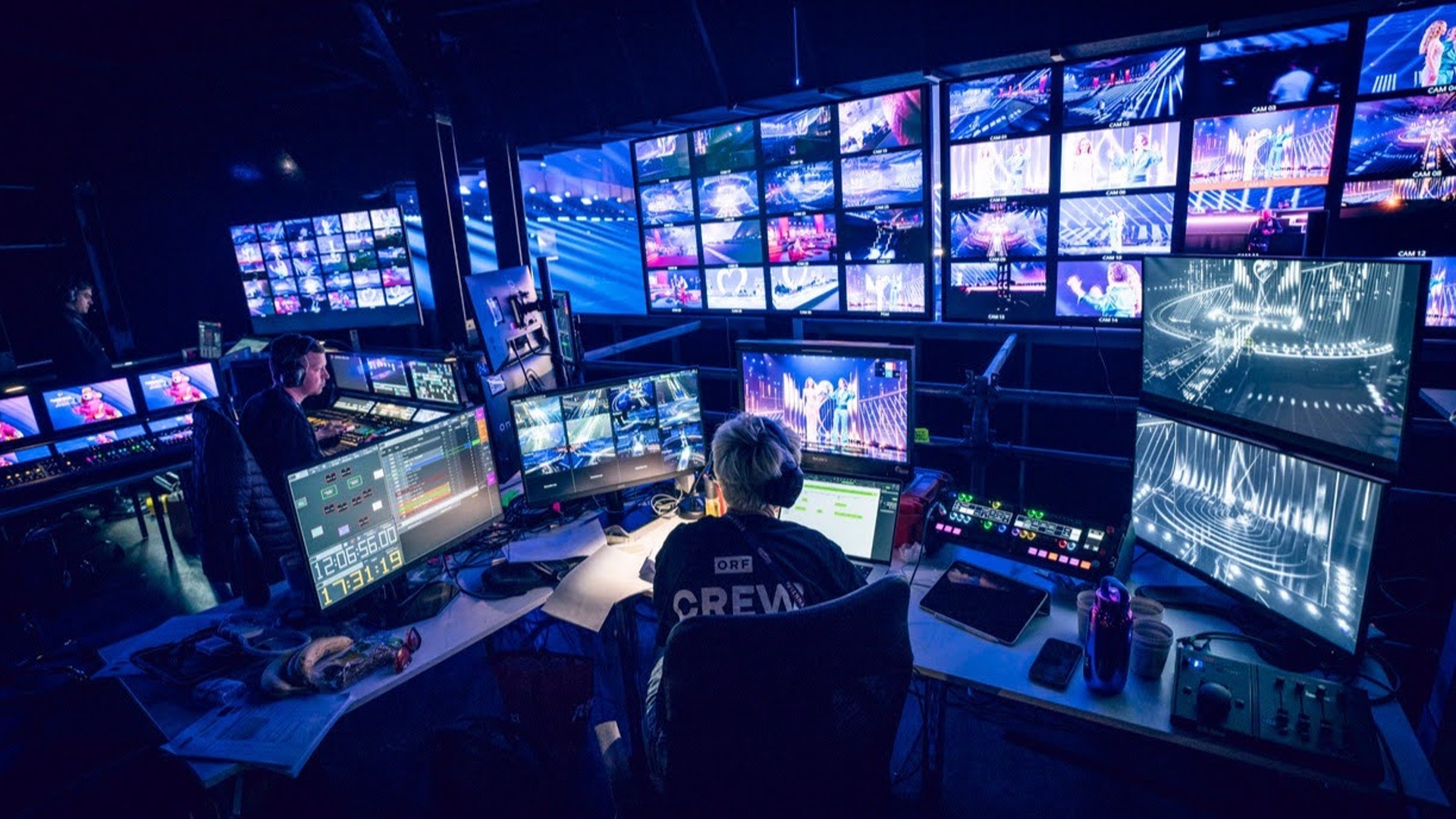
Adobe's Frame.io search gets about five times faster on Nvidia chips
Adobe is running Frame.io's video search on Nvidia GPUs, with about five times faster embeddings, up to four times the throughput and up to five times lower latency. Editors can search by concept, action or setting.
Why it mattersUFA produces more than 3,500 hours a year, and a recap may need a moment from 15 years ago.
Nvidia ↗
Nvidia plans to back Mirelo, which writes sound to match a video
At the Berlin summit, Jensen Huang named Mirelo among German startups Nvidia plans to invest in. Mirelo builds models that generate sound effects, speech and music timed to the picture.
Why it mattersPicture tools are ahead of sound, and a clip still needs audio that fits what is on screen.
Nvidia ↗A corrector fixes warped geometry after a video has been generated
Video Geometry Corrector is trained on synthetic pairs: a real clip with camera motion, and a distorted copy made by inpainting. It maps the distorted video back toward the consistent one without changing the generator.
Why it mattersMost training video is objects moving past a still camera, so models warp the room when the camera itself moves.
arXiv ↗MFlow learns when to predict the picture and when to predict motion
MFlow mixes clean-image prediction and velocity prediction, and the mix shifts toward velocity as the model gets larger. A small network trained afterward puts the missing high-frequency detail back.
Why it mattersPixel models skip the usual image compressor, but they still come out softer than real footage.
arXiv ↗PPMem remembers a generated world as a few thousand planes
PPMem stores a generated scene as oriented planes, about 100,000 of them and 5 MB, roughly a thousand times smaller than a per-pixel cloud. Later chunks use that memory and stay coherent for hundreds of frames.
Why it mattersA world model that forgets the room it just built cannot be explored for long.
arXiv ↗PhysRepair patches a video after it breaks a physical rule
PhysRepair generates first, then finds the first frame that breaks physics and regenerates only that stretch. On Physics-IQ Verified it improves plausibility for solids, fluids, optics, heat and magnetism.
Why it mattersChecking physics before you generate can miss the error that only shows up in the finished clip.
arXiv ↗One photo becomes a controllable avatar after 34 hours on one GPU
Video Diffusion Avatars fine-tunes a video model so one photo can be reshot with a chosen camera, expression and pose. On BecomingLit it cuts face LPIPS by 29% and raises JOD, a perceptual score, by 66%.
Why it mattersThe model trains in 34 hours on one A100, using public multi-view data rather than a new capture rig.
arXiv ↗A cloak stops an image-to-video model clinging to the source photo
I2V-DETACH alters an image so generators carry less of it into the video, instead of ruining the picture. Across several diffusion models it cuts how much of the source survives, and beats earlier immunization methods.
Why it mattersSomeone can turn a photo into a clip without being able to spoil the photo itself.
arXiv ↗LiveSync teaches lip-sync by having the model grade its own edits
LiveSync trains one mask-based model, then uses a frozen copy to invent mouth edits that are paired back with the original frames. It leads synchronization on HDTF and stays competitive on an AI-clip subset.
Why it mattersReal video rarely offers two takes of the same face that differ only in the words.
arXiv ↗Unfortunately, frontier models, regardless of their origin, cannot be trusted.
Creator tools
The apps and platforms people make video with.

People are pointing coding agents at smart TVs to strip the ads
Developers are using coding agents to remove ads, tracking and extra apps from smart TVs, without rooting them. dumbtv has been tried on Fire TV and on sets from Sony, TCL, Philips, Hisense and Xiaomi.
Why it mattersThe sets identify what is on screen in order to sell the viewing data.
TechCrunch ↗FlashReFocus refocuses a photo in about half a second
FlashReFocus runs a diffusion deblurrer once per photo, then a small network renders each new focal plane. It is 148.3 times faster than GenRefocus, and further edits take about half a second, 462 times faster.
Why it mattersPeople try many focus points on one picture, so rerunning a big generator for every try is the wrong cost.
arXiv ↗PreciseEdit does one-step edits without smearing the background
PreciseEdit is a training-free, inversion-free editor for one-step image models. It applies a strong edit only where a second, quieter pass agrees on direction and structure, and it leads the methods tested on PIE-Bench.
Why it mattersA single global shove toward the new caption is what bends objects and drifts the background.
arXiv ↗MTEdit packs a whole edit history into one picture, 500,000 times
MTEdit holds 500,000 edit trajectories, up to eight and averaging 5.38 turns, drawn together so quality does not drift. A Qwen editor fine-tuned on it leads the other open models on the authors' bench.
Why it mattersEditing one instruction at a time piles up small errors until the picture no longer matches the thread.
arXiv ↗FlexPart cuts a 3D model into the parts you name
FlexPart segments a mesh from a text prompt that can name parts, where they sit and what shape they are. On its held-out bench it lifts average overlap by 22% over the strongest baseline.
Why it mattersA prop has many valid part lists, and a tool that only knows one of them gets in the way.
arXiv ↗SCALE drops the second pass that guidance usually requires
SCALE trains a generator to aim at real images rather than its own samples, so one forward pass replaces classifier-free guidance. It beats guidance-free methods that only mimic that guidance.
Why it mattersGuidance is why samples look sharp, and it also doubles the work at sample time.
arXiv ↗CoreDNA picks a training subset from how neurons fire, with no labels
CoreDNA compares each image's pattern of vision-model activations with the dataset's, and keeps examples out in the tails. It matches or beats other pickers on classification, segmentation, depth and robot imitation.
Why it mattersCollecting data is cheap, and choosing which of it to label is the expensive part.
arXiv ↗FedRAPP adapts a shared prompt when each site's data looks different
FedRAPP lets sites tune a CLIP prompt on unlabeled data they do not share, then mixes prompts by reliability and similarity. It beats ordinary federated averaging on nine CLIP benchmarks and ImageNet variants.
Why it mattersA prompt that fits one hospital's scans can get worse when it is averaged with everyone else's.
arXiv ↗VTrajEmbed matches a caption to one object's path through a video
VTrajEmbed embeds each object's path, not the whole clip, and aligns that path with text. Against Qwen3-VL-Embedding-8B it gains 15.48 and 18.05 points on the two retrieval directions.
Why it mattersA single embedding for the whole clip tangles every object and every motion together.
arXiv ↗Media & entertainment
AI in the films, shows, micro-dramas, music and ads people watch, the studios and platforms making them, and the rules for AI-made content.
European public broadcasters widen a shared rulebook for agents
The European Broadcasting Union is expanding its sovereign standards with Nvidia, adding cloud providers, open models and integrators. The EBU counts more than 115 member organizations in 55-plus countries.
Why it mattersThe point is to run agents in newsrooms without handing over the archive or the editorial call.
Nvidia ↗
Publishers say Australia may be alone in easing training rules
Music publishers say models have trained on Australian artists, including Kylie Minogue and Nick Cave, without payment. Of dozens of countries asked to weaken copyright, Australia is the only one considering it.
Why it mattersA parliamentary committee this week called the standoff a stalemate between local law and training done in the US.
The Guardian ↗
Companion app Tolan raises $30M, with 250,000 people active
Tolan raised another $30 million from Union Square Ventures, Khosla Ventures and Homebrew, doubling what it has raised. More than 250,000 people are active, with over 70 million conversations in the past year.
Why it mattersThe company did not disclose the new valuation, only that it is above the previous $120 million mark.
TechCrunch ↗Qwen3-TTS clones a voice well, and a detector does not flag it
A study of Qwen3-TTS finds the speaking domain explains four times more variance than which system is used. It leads on intelligibility and pitch, and a spoof check flags its clones no more often than real speech.
Why it mattersOn air-traffic-control radio every system they tried failed, including this one.
arXiv ↗Audio models sit near chance on which way a sound moved
VocalGrad asks only whether a low-level acoustic cue went one way or the other, so the test is perception rather than reasoning. People score high, while current audio language models sit near chance.
Why it mattersFor some cues the information is in the network and the language head never uses it.
arXiv ↗Model rewrites are shorter, and each word takes longer to read
A reading-time model, trained on eye tracking, compared 496 human articles with rewrites by a language model. The rewrites are shorter and slightly quicker overall, but slower per word, with longer, rarer words.
Why it mattersA shorter piece is not necessarily an easier one if every remaining word costs more attention.
arXiv ↗Sound for a video works better when the model looks at the noisy bit
SCR-V2A finds the small regions that actually make the sound, such as a contact or a moving part, and uses them to condition audio generation. It matches distributions and audio quality strongly.
Why it mattersA caption of the whole frame misses the tap, the rustle or the collision that is the sound.
arXiv ↗Judging an AI video works better from a caption of what was generated
VGCap scores generated video using captions grounded in the frames, not the prompt that was supposed to produce them. On LGVQ and FETV it beats the baselines on spatial quality, temporal quality and text-video alignment.
Why it mattersThe prompt and the clip often disagree, so grading against the prompt grades the wrong thing.
arXiv ↗ConvexLLM feeds audio in as a mix of the decoder's own word vectors
ConvexLLM represents sound as a weighted mix of frozen text embeddings, instead of a separate adapter the decoder must learn to read. On VoiceBench it scores 75.36, the highest of the open-weight models compared.
Why it mattersIts biggest gains are on spoken questions, while other models still hear non-speech audio better.
arXiv ↗These standards give EBU members a shared foundation to strengthen resilience, retain control and deliver accountable advanced services that sustain audience trust.
Chips & compute
Chips, data centres and the power behind them.

Tenstorrent raises $1.5B at a $6.2B valuation
The inference-chip firm raised $1.5 billion at a $6.2 billion valuation, more than double late 2024. Trace Capital and Innovation X led, with Cadence, Eclipse, Fidelity, SanDisk and T. Rowe Price joining.
Why it mattersChief executive Jim Keller told Bloomberg the firm stayed independent after its servers ran DeepSeek models.
TechCrunch ↗Germany and Nvidia sign a pact, with nearly $10B for Europe
In Berlin, Chancellor Friedrich Merz and two ministries signed a declaration with Nvidia on physical AI and industrial AI in Europe. Jensen Huang also described a nearly $10 billion Nvidia commitment across Europe.
Why it mattersThe agreement ties Nvidia to Germany's Industry 4.0 group of government, industry and research.
Nvidia ↗
China's quarterly growth rises to 4.5% on AI-linked exports
Official figures on Monday put third-quarter growth at 4.5%, up from a three-year low but below the 5% pace of January to March. Sales of high-tech goods rose 14.3%.
Why it mattersDemand for chips and data-centre parts is cushioning weak spending at home, at the bottom of Beijing's target.
BBC ↗FuTransformer runs Llama prefill in FP8 and decode in INT4 on Hopper
On one H100, FP8 prefill is up to 1.48 times faster than compiled PyTorch and reaches 1.29 petaflops a second. Llama-3.1-8B INT4 decode takes 2.8 ms a step at batch one, against 8.1 ms for compiled Transformers.
Why it mattersINT4 weights move WikiText-2 perplexity from 6.24 to 7.23 with round-to-nearest, or 6.99 with GPTQ.
arXiv ↗A simulator asks whether flash can sit next to GPU memory for models
HBFSim models fast GPU memory plus high-bandwidth flash while serving Llama-3.1-70B and a large Qwen model. Data that does not fit in the fast memory is served from flash 11 to 19 times faster than from host DRAM.
Why it mattersAt a published peak load, the flash lasts 2.0 to 6.9 years, depending on how the writes are spread.
arXiv ↗BaGuaLu-2 trains a trillion-parameter model on 12,288 GPUs
BaGuaLu-2 hands out activation memory per batch so a mixture-of-experts run does not have to reserve for the worst spike. It trained a 1,040-billion-parameter model on 12,288 GPUs at over 2 exaflops, 35% of peak.
Why it mattersThroughput is 1.14 times Megatron-Kuai and 1.13 times AdaPipe, the two systems it compares.
arXiv ↗TileDRAM lays tensor tiles into 3D memory so rows clash less
TileDRAM is a compiler layout for placing tensor tiles in the DRAM of a GPU with stacked memory, with no new hardware. On 108 mixture-of-experts cases it cuts row conflicts from 75.7% to 15.2% and is 1.77 times faster.
Why it mattersThe same idea, retargeted to six memory organizations, is 2.20 times faster in simulation.
arXiv ↗An agent sketches a chip cluster, and a formula checks the speed
ArchAgent splits design into chip, rack and data-centre pieces, scored with formulas rather than the language model. Under a 1 megawatt cap its designs are 1.93 times an all-GPU baseline, in 18 evaluations.
Why it mattersHill-climbing needed 100 evaluations to reach only 1.65 times an all-GPU design.
arXiv ↗Microsoft traces show agent memory can outgrow an H100
Four Microsoft 365 workloads, more than 121 million calls, show agent context piling up. A 99th-percentile Deep Research session exceeds an H100's 80 GB, and every live session at its peak would need about 502 TB.
Why it mattersA one-hour idle cap cuts that ceiling 3.6 times, while recomputed calls rise only from 4.07% to 4.53%.
arXiv ↗That knowledge belongs to you. It cannot be replaced.
Policy & safety
Laws, lawsuits and safety incidents.
The US bars DeepSeek from civilian agencies
Homeland Security has banned DeepSeek inside civilian agencies, and any technology built with its models. Defense is excluded, and the public notice does not say what the security concern is.
Why it mattersThe order was published on Monday, but the ban has been in force since the end of July.
BBC ↗
Judge denies bail to the ex-OpenAI engineer accused of bugging a room
A San Francisco judge on Monday refused bail for Abdulrahman Alfozan, 35, calling him a flight risk. Prosecutors say a Saudi military official paid for his wife and son's flight after the arrest.
Why it mattersIf convicted he faces up to five years and a $250,000 fine.
BBC ↗
An Australian report says bosses are tracking staff with AI
The Human Technology Institute says camera, keystroke and chat monitoring is spreading, often without workers being told, and AI is speeding it up. A cashier got a final warning at one error per 533 scans.
Why it mattersA March poll found 43% knew some employers do this, and 9% knew it was happening at their own work.
The Guardian ↗
Test accounts aged 13 could download 135 nudify apps
The Tech Transparency Project, using two Apple and two Google accounts registered as 13-year-olds, downloaded 135 apps that can strip clothes or paste a face onto a nude body. Researchers used AI-made images of adults.
Why it mattersApple and Google ban such apps, and the report says many were still rated as suitable for minors.
The Guardian ↗

Musk says he will give a SpaceX share to every American child
Elon Musk posted that next year he will give one of his SpaceX shares to every kid in America, calling it the first of many. He was answering Anthropic's public-fund pledge, and he did not say how the gift would work.
Why it mattersSpaceX, which owns xAI, raised $85.7 billion in its June listing, a record.
BBC ↗
A new Democratic group puts $4M behind AI ads in House races
Tomorrow Together, led by former Harris aide Rob Flaherty, put $4 million into House-race ads on children's safety and data centres. By June, Leading the Future had $31 million left after spending nearly $45 million.
Why it mattersRon Conway regrets funding that pro-AI group, a colleague told Politico.
The Verge ↗HardEval grades whether a model can actually harden a live server
HardEval turns a Red Hat security rule into a shell script, runs it on a live machine, and grades it with the official check. The reference fix is hidden, and scripts that sound right often miss that check.
Why it mattersFourteen frontier and open setups differ sharply by which settings they manage to lock down.
arXiv ↗Next year, I will give one of my SpaceX shares to every kid in America. This will be the first of many.
Robotics
Robots, self-driving and AI in the physical world.
Siemens says a virtual factory ramp-up cuts engineering by up to 85%
Siemens is partnering with Nvidia on AI-driven autonomous factories, and showed the work at its Erlangen plant. A fully virtual production ramp-up reduces engineering effort by up to 85%.
Why it mattersThe plant is being held up as a pattern other factories could copy.
Nvidia ↗A blind robot inserts pegs from joint sense in 73% of trials
Policies trained only in simulation feel for a millimetre-scale opening from joint positions and velocities, with no camera, force sensor or touch sensor. Peg insertion transferred to the real world and succeeded in 73%.
Why it mattersThe same training also covers meshing gears and threading a nut, and the part's pose starts unknown.
arXiv ↗Robot navigation fails most often by not noticing the goal is in view
StopWatch finds navigation policies explore well, then miss a goal already in view or misjudge its distance. Stating the goal explicitly reaches state of the art on six benchmarks across three scene collections.
Why it mattersWith a perfect sense of the goal, the policy nearly matches the expert that produced its demos.
arXiv ↗Origami wheels widen for mud and shrink for firmer ground
MOSS is a small swamp robot whose 3D-printed wheels switch width, diameter and fin angle together. The wider shape cuts the energy cost of travel by up to 29% on wetter mud, sand and water.
Why it mattersA fixed wheel that is good on a path is a poor fit for mud and then open water.
arXiv ↗A robot learns how long to think before it has to move
The policy chooses both the next action and how long the planner may run, instead of a budget fixed in advance. On ground robots, drones and contact-heavy manipulation it beats fixed-budget controllers.
Why it mattersA longer plan is a better plan only until the world has moved on.
arXiv ↗TransNav flies a drone around still and moving obstacles in one model
TransNav reads a point cloud and predicts a short run of actions, then flies the first, for clutter and for moving obstacles. It trains without expert demos, from a simple dynamics model and a numerical cost.
Why it mattersMost avoidance methods are built for one of those two cases, and stumble in the other.
arXiv ↗A phone-camera scene graph drives a robot rearranging a room
The authors plug FOUND-IT, a scene graph from one uncalibrated camera, into a mobile manipulator. On the robot it supports change detection, repeat mapping, paths and grasping.
Why it mattersThe code is public, which matters because most new mapping papers stop at the map.
arXiv ↗Thermal cameras label pedestrians for low-light detectors
The pipeline labels people in paired thermal and colour frames, using body heat, on a simple stereo pair instead of a custom alignment rig. Detectors trained on those labels beat off-the-shelf models and ones fine-tuned.
Why it mattersLow-light pedestrian data is scarce because the usual auto-label trick needs a colour image that is already clear.
arXiv ↗PRIME scores robot progress even when the human demo is sloppy
PRIME links states across demonstrations and treats the shortest path as the distance still to go, so a mistaken wiggle is not progress. On charger insertion, success is up to five times the supervised baselines.
Why it mattersHigh-precision tasks are exactly where a bad example looks almost like a good one.
arXiv ↗Science & health
AI in biology, medicine, climate and maths.

A face photo is used to estimate cancer survival
Mass General Brigham trained on more than 40 million facial photos and published two tools in Lancet Digital Health. One reads biological age from folds and temples, and the other reads survival from under the eyes.
Why it mattersThe authors say it is the first time a photo alone has been used to predict cancer survival directly.
The Guardian ↗Nvidia's 104-qubit quantum simulation sets a record on JUPITER
Nvidia researchers used JUPITER, at the Jülich Supercomputing Centre, to simulate a fault-tolerant quantum computer of 104 qubits. The lab calls it the largest and most detailed simulation of its kind so far.
Why it mattersJUPITER is described as Europe's largest supercomputer.
Nvidia ↗An agent reproduces 77.4% of the claims in 20 cancer-registry papers
SEER-Repro packages 20 papers that use the US SEER cancer registry, and an agent reproduces 77.4% of 2,190 atomic claims. A follow-up flags choices in 9.5% of fully reproduced findings for expert review.
Why it mattersChecking whether a result survives a different reasonable method is usually manual work.
arXiv ↗Several agents design an RNA sequence together
CocoRNA splits inverse RNA design into smaller pieces, each handled by cooperating agents with a shared critic. On the Rfam set it beats prior methods on both success rate and speed.
Why it mattersFolding a designed sequence into the shape you wanted is still a search, not a lookup.
arXiv ↗Early model layers match the words in a silent-reading EEG
Decoders for each layer of Llama-3.1-8B read 19-channel EEG from people reading silently. Word identity is easiest to recover from early layers and fades later, while tracking the passage gets stronger with depth.
Why it mattersA single half-second window already carries passage-level context, not just the current word.
arXiv ↗Blitz cuts AlphaFold 3 and Boltz-2 from 200 denoising steps to eight
Blitz distils the diffusion stage of AlphaFold 3 and Boltz-2 from about 200 steps to eight. AF3-Blitz beats other few-step methods under one protocol and exceeds its teacher on several accuracy measures.
Why it mattersThe slow part of these structure models is the denoising loop, not the rest of the network.
arXiv ↗A drug agent designs a compound that worked in cells at 14 nM
DrugHarness links more than 80 lab operations and writes skills from what those runs return. Before that learning step it is 10.8 points above a reported MolClaw result on affinity comparisons.
Why it mattersIn a prospective kinase study, a made compound had a cellular IC50 of 14.19 nM, 2.64 times the best reference given.
arXiv ↗TriRouter reads motor imagery when most EEG channels are missing
TriRouter routes brain-signal decoding across three paths so a sparse or broken electrode cap still works. With 75% of channels missing it is 6.46 points more accurate than the strongest baseline compared.
Why it mattersThe gain is 3.68 points at 25% missing and 4.02 points at 50% missing, on BNCI2014-001.
arXiv ↗A 27B model raises its own hypothesis scores after two rounds
DiscoveryRSI grows hypothesis trees, turns some into runnable tasks, and updates the workflow from the results. Scores rise from 4.86 for the base model to 5.39 after two rounds, mostly on how testable the ideas are.
Why it mattersExperts rated the 27B version above GPT-6 Luna on importance and on whether claims stayed within the evidence.
arXiv ↗To our knowledge, this is the first demonstration that an AI model can directly predict cancer survival from a simple photograph.
Open source
Open-weight models and community releases.
JAXtari runs Atari on the GPU, 100 million steps within an hour
JAXtari is an open-source reimplementation of Atari 2600 for reinforcement learning, with object-level observations and a way to edit the games. PPO finishes 100 million steps on one A100 in under an hour.
Why it mattersThe classic arcade benchmark is still a CPU emulator, which caps how many experiments a lab can run.
arXiv ↗LILIE trains image generators with a language loss
LILIE is an invertible image encoder trained so a vision-language model can read a caption back from noisy features. JiT models trained with that loss cut gFD from 66.84 to 53.01 against a pixel-only baseline on GPIC.
Why it mattersThe code, the encoders and the generative models are posted.
arXiv ↗ReLaDrift refines a whole draft in a loop, and the code is on GitHub
ReLaDrift drafts text from noise with one drifting model, then revises it so extra compute can buy quality. On Sudoku Hard and GSM8K it matches or beats iterative generators across several budgets.
Why it mattersA one-step drifting model does not get better if you simply run it again.
arXiv ↗NestedVLA generates a robot skill instead of merging the weights
NestedVLA keeps a frozen robot model and synthesizes the action weights for each task, instead of averaging separately trained copies. Across three benchmarks it beats the best merging baseline by 41 points on average.
Why it mattersOn ManiSkill it lands within one point of training a separate model per task.
arXiv ↗A public bench makes models build plans from messy tables
NLData2Opt asks a model to build an optimization problem from decoy columns, values it must compute, and futures it must predict. Scores fall well short of benches where every input is already clean.
Why it mattersThe tasks and the code are on GitHub.
arXiv ↗RSIFlow changes its own improvement recipe, and posts the code
RSIFlow switches its self-improvement workflow when a bottleneck changes, then stores what worked as skills. On six benchmarks and two base models it leads the reported average, and the code is public.
Why it mattersThe code is on GitHub.
arXiv ↗SCOPE checks a robot edit against past successes first
SCOPE revises a robot's program using failed and successful runs, and replays recorded calls to see whether an edit keeps past wins. Mean success is 80.66% on LIBERO-PRO and 84.48% on Robosuite.
Why it mattersThe code is public.
arXiv ↗ExecWeave ties an agent action to the process the OS saw
ExecWeave links an agent's trace to operating-system events, and will not blame a tool without a matching process. A guessed process link is marked inferred rather than proven, and the code is public.
Why it mattersThe source is on GitHub.
arXiv ↗Open checkpoints show post-training shifting who counts as female
On OLMo 3, each post-training stage raises the odds a persona is labeled female, except in heavily male-dominated jobs. A 7.7% surplus of female tokens in the fine-tuning data is too small to explain the shift.
Why it mattersWhen gender is stated up front, later training diversifies the writing more for male-coded profiles.
arXiv ↗Quick hits
Smaller stories worth a glance.
- Reflex satellites are built to launch in about a yearNvidia described Reflex Aerospace, a Berlin firm it plans to invest in, as building satellites that can be ready for launch in about 12 months rather than years.Nvidia ↗
- Avelios builds an AI hospital recordNvidia also named Avelios Medical, a Munich startup whose AI-native hospital information system is meant to be the record doctors and nurses work from.Nvidia ↗
- China's robot and battery output jumpedOfficial figures showed production of batteries and of industrial robots each grew by more than 29% as the export boom lifted third-quarter growth.BBC ↗
- Looking older on the cancer tool tracked a higher riskAmong US radiotherapy patients, those the face model judged five or more years older had a 21% higher risk of dying over an average four-year follow-up.The Guardian ↗
- Frame.io's new preview is about 80% smallerAdobe's new two-frame-a-second proxy is about 80% smaller than the 360p version it replaces, which cuts storage while keeping the detail search needs.Nvidia ↗
- Wabi is free, and has no business model yetKuyda said Wabi is free for now, the company has not settled how it will charge, and it is in talks to raise more money.TechCrunch ↗
- Most of Tolan's users are womenTolan's team told Upstarts Media that about 70% of users are women and 40% are parents.TechCrunch ↗
- Defender can spot 60 kinds of workplace agentMicrosoft's Defender can find up to 60 types of agents employees bring in, including Claude Code, Codex and OpenClaw, and can ask a person to approve a risky step.TechCrunch ↗
Deals & funding
Who raised money, and who bought whom.
Funding rounds 3
Investors put money into a company in exchange for a share of it.

Trace Capital backs Tenstorrent
- Raised
- $1.5B
Tenstorrent now valued at $6.2B
The round funds chips for serving open-weight models and for video generation, after the company stayed independent.
IXInnovation XCVCadence VenturesEEclipseFFidelitySSanDiskTRT. Rowe Price+0 more
Lightspeed Ventures backs doubleAI
- Raised
- $200M
doubleAI valuation not disclosed
Series A for Maxwell, a model that rewrites machine instructions inside a running program and proves each change.
BVBessemer Venture PartnersDTDell Technologies CapitalGGreenfieldNNVIDIAPPitangoBBRM+0 more
Union Square Ventures backs Tolan
- Raised
- $30M
Tolan valuation not disclosed
The companion app raised another $30 million, doubling its total, and did not disclose the new valuation.
KVKhosla VenturesHHomebrew+0 more
On the calendar
What's coming up, in date order, and how sure we are about each.
- 19–23OctChery International User Summit, WuhuToday
- 19–21OctE-FOREST Tech Day in UiwangToday
- 20–21OctRoboBusiness 2026Today
- 20OctAI-use disclosure required for applicantsToday
- 20OctPress conference outside Lexington Government CenterToday
- 20OctTorchNeuron public betaToday
- 21OctLD Micro Main Event presentationTomorrow
- 21OctTesla reports third-quarter earningsTomorrow
- 22OctCouncil meeting on two data centre motions2days away
- 23OctNemotron 3.5 Bolt E4B follows3days away
- 23OctSanxingdui: Past and Future opens in cinemas3days away
- 23OctTraeWork standalone service shuts down3days away
- 23OctM3.1 Flash open weights3days away
- 24OctAI Film Summit Los Angeles 20264days away
- 24OctTyrannus Angel Awards 2026 winners announced4days away
- 26–29OctIBM TechXchange6days away
- 26OctFESTIAV AI film festival opens in Valencia6days away
- 26OctHyundai Bayon India launch6days away
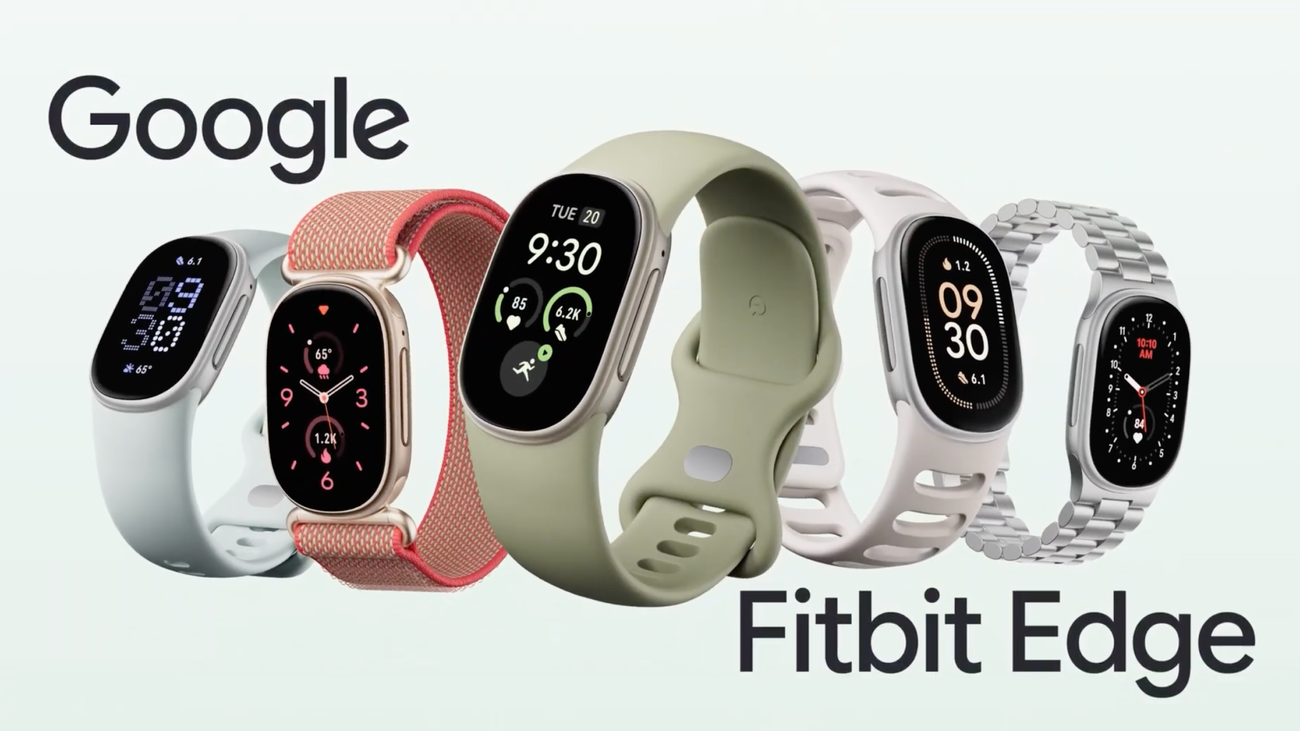
- 27OctFitbit Edge retail availability7days away
- 27OctMistral Large 4 full weights due7days away
- 30OctMicro-Series Challenge entry deadline10days away
- 30OctTesla's deadline to answer regulator questions10days away
- 31OctRegistration closes for AI Film Making course11days away
- 1NovClimate summit focuses on 'climate-responsible AI'12days away
- 1NovSpeed Insights stops recording First Input Delay12days away
- 5–7NovThird LA Vertical Drama Market2weeks away
- 5–6NovBoxWorks 2026 in San Francisco2weeks away
- 5NovHogwarts Legacy adds DLSS 52weeks away
- 7NovTerry McMillan Presents: Paradise with You premieres3weeks away
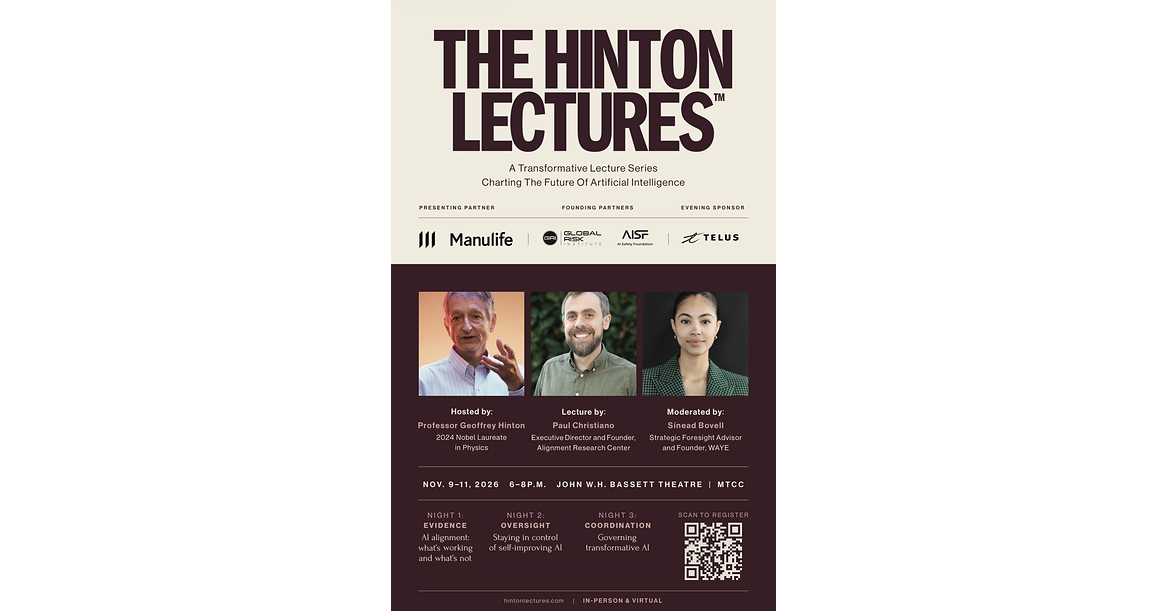
- 9–11NovThe Hinton Lectures on AI safety3weeks away
- 20NovAI Film Award submissions close4weeks away
- 21NovInaugural edition in Hollywood5weeks away
- 22Nov'The Challenge Sverige' originally scheduled (now delayed to 2027)5weeks away
- 30–3Nov–DecContent London 20266weeks away
- 30NovRose d’Or Awards6weeks away
- 4DecAI-made film opens in limited release6weeks away
- 4DecGods Don’t Give Gifts premiere6weeks away
- 4DecSingapore AI Safety Fellowship ends6weeks away
- 12DecKampala screening8weeks away
- 31DecDeadline to file data-centre grid standards10weeks away
- 11FebSouthern AI Summit, Savannah16weeks away
- End OctFFR's purchase of Faraday Future's robotics business expected to close
- End 2027First phase of the Cape Breton data centre






















Stories are summarized in plain language; follow the link before quoting a figure. Story images are shown from the publishers' own sites.